None
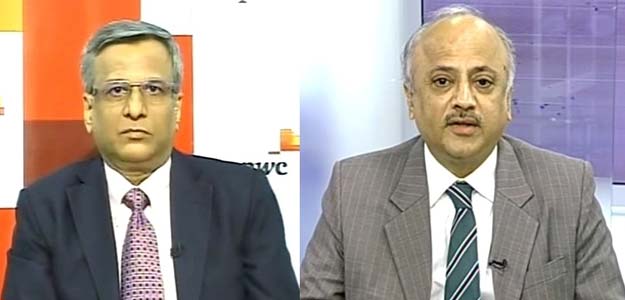
The Shome Committee, set up by Prime Minister Manmohan Singh to address the concerns of foreign investors on General Anti Avoidance Rules (GAAR), has recommended the postponement of the controversial tax provision by three years to 2016-17. In an interview to NDTV Profit, Uday Ved, Head of Tax, KPMG and Ketan Dalal, Joint leader, Tax and Regulatory Services, PwC India share their views on this development.
Below is the complete interview. Also watch the accompanying video.
Q: Mr. Ved, if indeed there is going to be a rethink on the whole issue, then can the damage done be reversed?
A: Clearly, the government has done a rethink and I think it is a very welcome move. We have seen the GAAR getting deferred by three years. It means that the government is very serious. There is uncertainty over the last three months, the investment climate has become negative and the repercussions have been very bad from the country perspective. So, certainly, this is a very welcome move and I'm sure that with the changes that have been proposed and implemented in the timeframe, at least it looks like that, and one can revive the situation and revive the path back to stability, which is really the need of the hour.
Q: Mr. Dalal, if the idea really is to dilute the impact that GAAR implementation has had, the negative impact regarding the lack of clarity, etc. How do you think this can be done without making the government lose face?
A: I think as Uday mentioned, the investment climate has been what it is and I don't think it is a question of losing face. One can always have a rethink on issues such as these in a country where the tax architecture has a problem of dispute resolution being as long as winded as we have. And the accountability of the tax official is something which one can question. In that situation, as Dr. Shome very correctly pointed out, it requires a lot of training and understanding. And remember, GAAR is not a revenue collection measure; it is a deterrent measure. I don't think it is a question of losing face. We have to remember that this is at the moment a recommendation of a panel and not yet law. I hope that these recommendations are accepted and GAAR is deferred till 2016.
Q: Mr. Ved since GAAR implementation has been deferred by three years, what it means that this government is not going to take a call on this. In coming elections, whoever comes into power, will deal with this. Then why put a timeline at all?
A: There is a timeline essentially, because this is again an international phenomenon. GAAR is a more deterrent measure than collecting the taxes and it is implemented only in exceptional circumstances. In the report, Dr. Shome has clearly suggested that pre-intimation is a global norm. For example, in UK, when they wanted to announce GAAR, they announced it four years in advance. The tax department gets trained; the tax officials get an appropriate training in terms of international tax issues. From the corporate perspective, certainly they have time for the next three years in this example to put their house in order, restructure and do it in such a manner that there will be substance. So, I think it is more of intimation for the tax payer and tax administration to implement it in a right manner. I don't think it has anything to do with which government is in power, it is more about administering it properly in exceptional circumstances, which is also the global norm as I mentioned.
Q: Mr. Dalal, let us come to Vodafone now. Are there any loopholes in the taxation laws so the government can use them to ask Vodafone to pay up?
A: As you know that the law has been retrospectively amended, and the notice to Vodafone has not yet been issued. Technically, the government can issue a notice at any given point of time if they want to challenge it. There seems to be a rethink. The issue is not whether they can issue the notice or not but how can they reverse a possible issue. I don't think they will want to do it through a circular because as I said it is already in the law and they can't do it in any other way as I can think of except by amending the law. I think there may need to be some amendment in the law and they may keep it pending and that amendment in the law is of course a major decision. As Mr. Chidambaram said, they are waiting for the recommendation from the GAAR panel. Currently, one is in a limbo. I think it is more of a question of how to reverse it if indeed that is the intention or the case as opposed to how they will implement an already existing law.
Q: We have already heard the Shome panel is recommending rather doing away entirely with capital gains tax and he has also suggested raising the proposal of STT to make that tax neutral. Yesterday, we had Dr. Shome on the channel explaining the metrics of that proposal but how feasible is that proposal in your view?
A: There are 2-3 aspects to this. One can always say that capital gains is an earned income and can non-earned income be not taxed at all when earned income is taxed. So, there are socialist arguments on that. But we have to step back and look at the broader picture. Even today, long term capital gains on listed securities one anyway doesn't pay. That is one part. Secondly, as far as cross border investments are concerned, let's say FIIs who come in through Mauritius; today there is an India-Mauritius or India-Singapore treaty for that matter, where capital gains, either long term or short term are not payable. Thirdly, the panel has pointed out that total collection of the panel on short term gains is approximately Rs 300 crore. So, it is not such as huge amount. I think the panel has gone on the basis of the larger issue of incentivizing investment and partly neutralizing the damage that has been done. Of course, the damage has not been done because of the tax reasons. It has been done as a result of a multitude of factors, global as well as Indian. So to that extent, i think it is a very bold suggestion and one needs to probably view it in that light. So, i think it is a good suggestion. For a few years, if that can help to partly change the sentiment.
Q: Mr. Ved, don't you think that perhaps implementing this proposal could have an impact on the volumes of the market?
A: Certainly, the confidence measure is important. The collection from FIIS is to the tune of Rs 300 crore. The panel has taken a broader view when this issue came several years back in the context of FII taxation. The Supreme Court had taken a large view to have more of foreign investment flowing in vis-a-vis the tax collection, which has been done for the second time. Considering where we are today in terms of improving the climate, I think it is more a tradeoff.
Essential Business Intelligence, Continuous LIVE TV, Sharp Market Insights, Practical Personal Finance Advice and Latest Stories — On NDTV Profit.