(Bloomberg) -- A long road lies ahead to repair confidence in crypto after unprecedented bankruptcies and hacks, including the major challenge of giving investors a way of insuring against such events.
Stock brokerage accounts often come with some cover against outcomes like bankruptcy but digital-asset platforms provide few if any shields, a reality underlined by the November collapse of Sam Bankman-Fried's FTX exchange.
Investors seeking such policies face a tough task. Traditional insurers are wary and crypto-native solutions in decentralized finance — or DeFi — account for a fraction of the $1.1 trillion digital-asset sector. For instance, funds locked in DeFi insurance protocols amount to about $300 million, compared with more than $80 billion in DeFi services overall, according to data from DeFiLlama.
DeFi uses digital ledgers and automatically executing software programs known as smart contracts to deliver services, cutting out intermediaries.
‘Very Difficult'
“Last year highlighted the importance of insurance but it seems a very difficult problem for DeFi to solve,” said Riyad Carey, a research analyst at crypto data provider Kaiko. “To properly protect a protocol or position is challenging.”
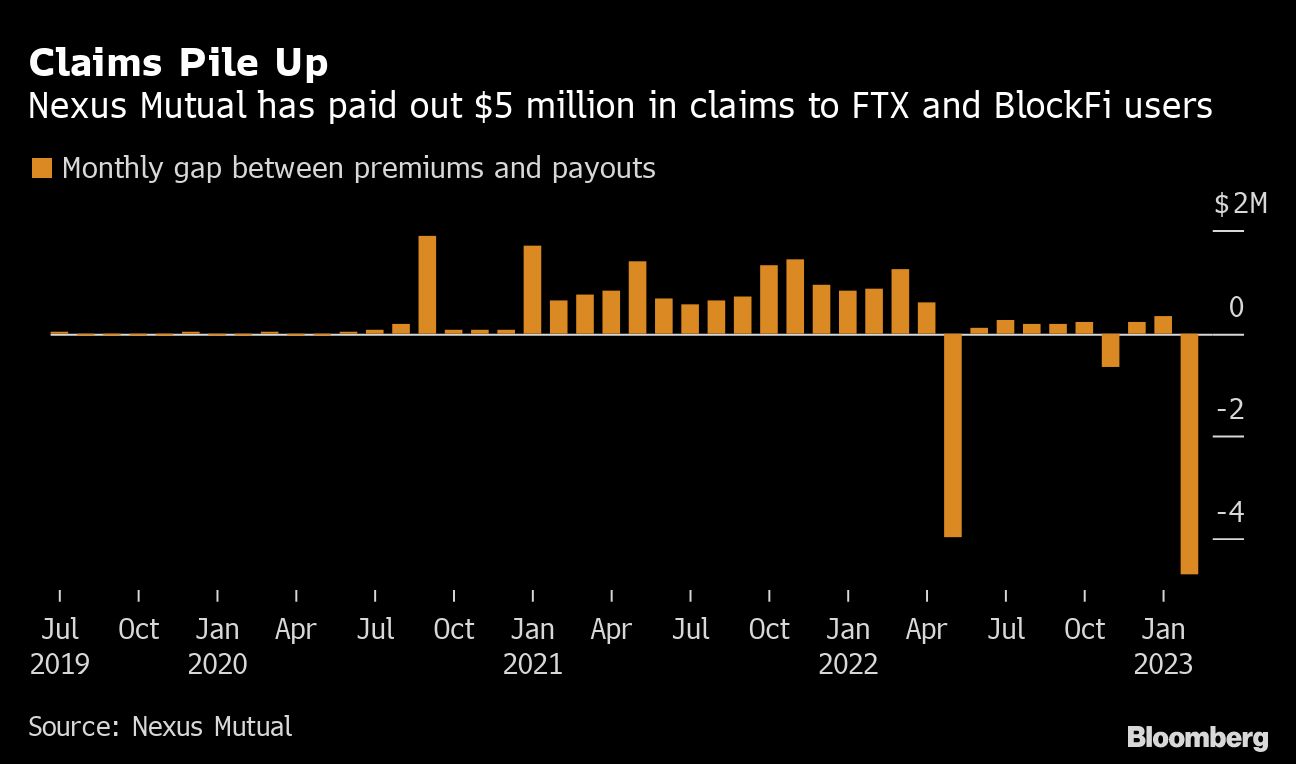
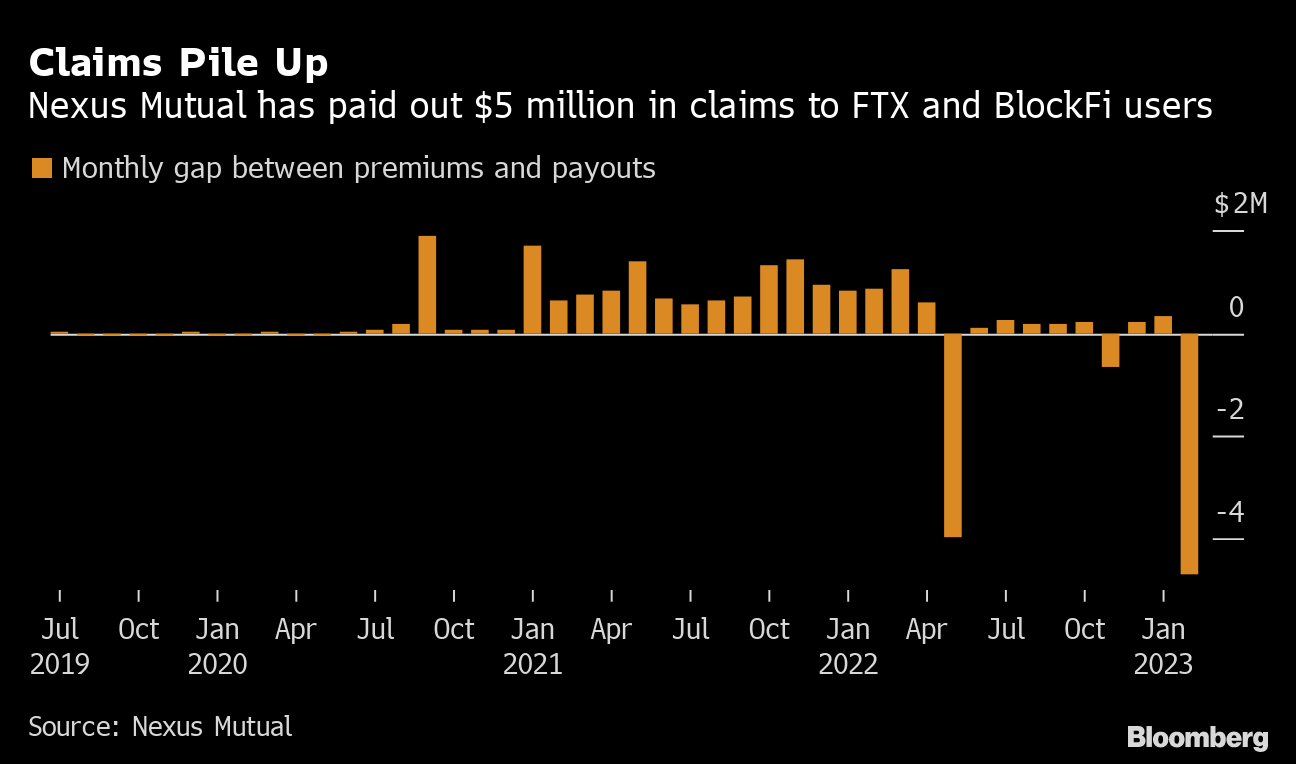
The largest DeFi insurance provider is Nexus Mutual, a member-based service accounting for about 70% of funds locked in crypto-native insurance protocols. Nexus Mutual has paid out roughly $5 million in claims from the bankruptcies of FTX and crypto lender BlockFi. It expects to pay another $2 million but those figures are dwarfed by the billions of dollars eviscerated by FTX alone.
“One of the things we underestimated a bit was how correlated they were,” said Nexus Mutual founder Hugh Karp, referring to the risk profiles of centralized crypto lenders and custodians. “They all kind of went down at the same time — they weren't necessarily independent.”
Stablecoins, Bridges
Nexus Mutual's risk experts, did, however decide against offering cover for algorithmic stablecoins and software bridges that connect different blockchains. Both those segments incurred huge losses last year: the TerraUSD stablecoin ecosystem suffered a $60 billion wipeout, while hacks of cross-chain bridges accounted for 64% of the estimated $3.1 billion stolen from DeFi services.
The spurt of recent bankruptcy-related claims led to payouts exceeding premiums in January by a record $4.7 million at Nexus Mutual. Karp said the insurance pool has sufficient funds to absorb the trend.
Karp argues that DeFi insurance will play a bigger role as the digital-asset industry matures. Kaiko's Carey sees a lot of unmet demand that could be captured by new entrants, such as legacy insurers.
At the same time, Bitcoin and Ether reserves at centralized crypto exchanges have sunk since the unraveling of FTX — a sign that many investors have opted for the extra protection of retaining custody of their tokens offline, rather than on digital-asset platforms.
CRYP; TOP CRYPTO.
More stories like this are available on bloomberg.com
©2023 Bloomberg L.P.
Essential Business Intelligence, Continuous LIVE TV, Sharp Market Insights, Practical Personal Finance Advice and Latest Stories — On NDTV Profit.