Emerging Nations Bloc to Open Development Bank
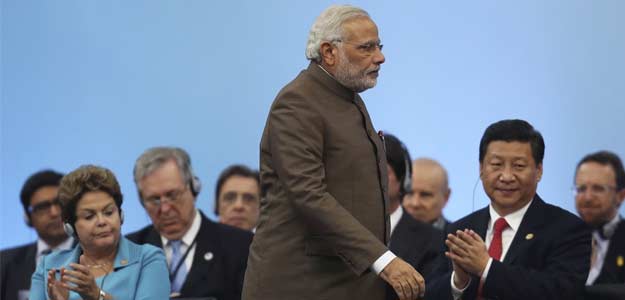
At a meeting in Brazil on Tuesday, the leaders of Brazil, Russia, India, China and South Africa announced they were establishing a development bank to challenge the influence of venerable institutions like the World Bank and the International Monetary Fund.
The New Development Bank, which will be based in Shanghai, will open with an initial capitalization of $50 billion. India will name the first president, according to a statement from the leaders of the so-called BRICS group of nations who have gathered in the northeastern city of Fortaleza, and Russia and Brazil will select other top officers.
The five-nation bloc also said it would create a $100 billion fund of currency reserves for members to use during balance of payments crises. Pointing to concerns that the U.S. Federal Reserve was stepping back in its aggressive efforts to stimulate the U.S. economy, possibly opening the way for interest rate increases in the U.S., Brazil's president, Dilma Rousseff, said the fund could mitigate the volatility that could emerge from such shifts.
"This provides security, a kind of safety net for BRICS countries and others," Rousseff said.
Taken together, the New Development Bank and the contingency fund reflect ambitions of forging a new global economic framework.
Nations like Brazil already have huge development banks that dwarf the World Bank in size. Still, leaders in emerging economic powers chafe at the policy prescriptions coming from the World Bank and the IMF, which emerged from the Bretton Woods monetary conference in New Hampshire 70 years ago.
While the U.S. has long wielded influence in the global economy through those institutions, China, which accounts for about 70 percent of the collective gross national product of the countries represented at Fortaleza, has tried to play down its staggering economic weight in the bloc. But that could change over time, analysts said, if animus grows over China's trade surpluses with other members.
"There may be potential cracks in the facade of unity once China asserts its interests," said Eric Farnsworth, vice president of the Council of the Americas and the Americas Society in the United States.
The BRICS countries face other challenges like slowing economic growth.
While Jim O'Neill, the former Goldman Sachs executive who coined the term BRIC 2001 (before South Africa joined the group in 2011), had predicted that Brazil would grow 5 percent a year over this decade, the economy has eked out much slower growth since 2011, forecast at just 1.6 percent this year.
Still, while the bloc involves countries with varying levels of economic growth, vastly different political systems and an array of simmering issues like the hostilities between Russia and Ukraine and the territorial disputes between China and its neighbors, analysts caution that its potential clout should not be taken lightly.
"They still have just shy of half the world's population," said Kevin P. Gallagher, a professor of international relations at Boston University, emphasizing the influence the countries already have within organizations like IMF and the World Trade Organization. "They are a force regardless of their growth rate, which will remain faster when averaged than the West's for years to come."
© 2014, The New York Times News Service

-
High US Salaries, No Green Card Certainty: The Financial Calculation Facing Indian H-1B Families

The suspension of PERM processing at eight technology employers does not cancel existing H-1B visas. What it does is force a question many Indian families have been avoiding: is the US salary worth tying your career and family plans to one employer?
-
Swiggy vs Eternal: Food Delivery's Two Rivals Are No Longer In The Same Race
Eternal is building a private AI assistant, dark.ai. Swiggy is still working out how to make Instamart pay, with an operating loss of Rs 895 crore in the July-September quarter while Blinkit stayed profitable.
-
Where You Live Shapes How You Get To Work | The Reason Why
Two-wheelers are the most popular way to get to work in India, accounting for nearly 43% of workplace commutes.
-
Unhedged Position: Can India See An Indonesia-Style Time Correction?
The Nifty is trading below levels it first clocked in 2024. Is there, then, as I have suggested in the headline, potential that the current time correction drags on painfully for the next three-five, even ten years?
-
Navigating Friction And Energy Realities: An Analysis Of Marco Rubio's October Visit To India
Occurring at a critical juncture marked by stalled trade negotiations and escalating geopolitical pressures over global energy supplies, the visit offers a profound window into modern US-India relations.
-
India Exports Capital. Why Not Export Trusteeship?
The big question, then, is whether India can build an institution that global borrowers, investors, banks, and lawyers can trust, even without an Indian connection.
-
France's Economy & Politics Are In Crisis | The Reason Why
Let's look at how the French economy and politics evolved under Nicolas Sarkozy, Franois Hollande and Emmanuel Macron.
-
You May Inherit The Business. You Must Earn Its Credibility.
Succession tests the founder's ability to share authority as much as it tests the next generation's readiness to assume it.
-
Signing Deals Is One Thing; Making Them Work Is Another | The Week In Whys
Sometimes, things don't turn out as planned. Indian companies have lost some bids to rivals, some projects won't produce until 2030.
-
FOMC Wall, PERM Suspension, Hospital Stocks | Talking Points This Week
A PERM suspension would directly affect green-card sponsorship rather than H-1B visas, so the near-term earnings impact could remain relatively limited. The key question is whether this marks a new phase in US scrutiny of Indian IT.









