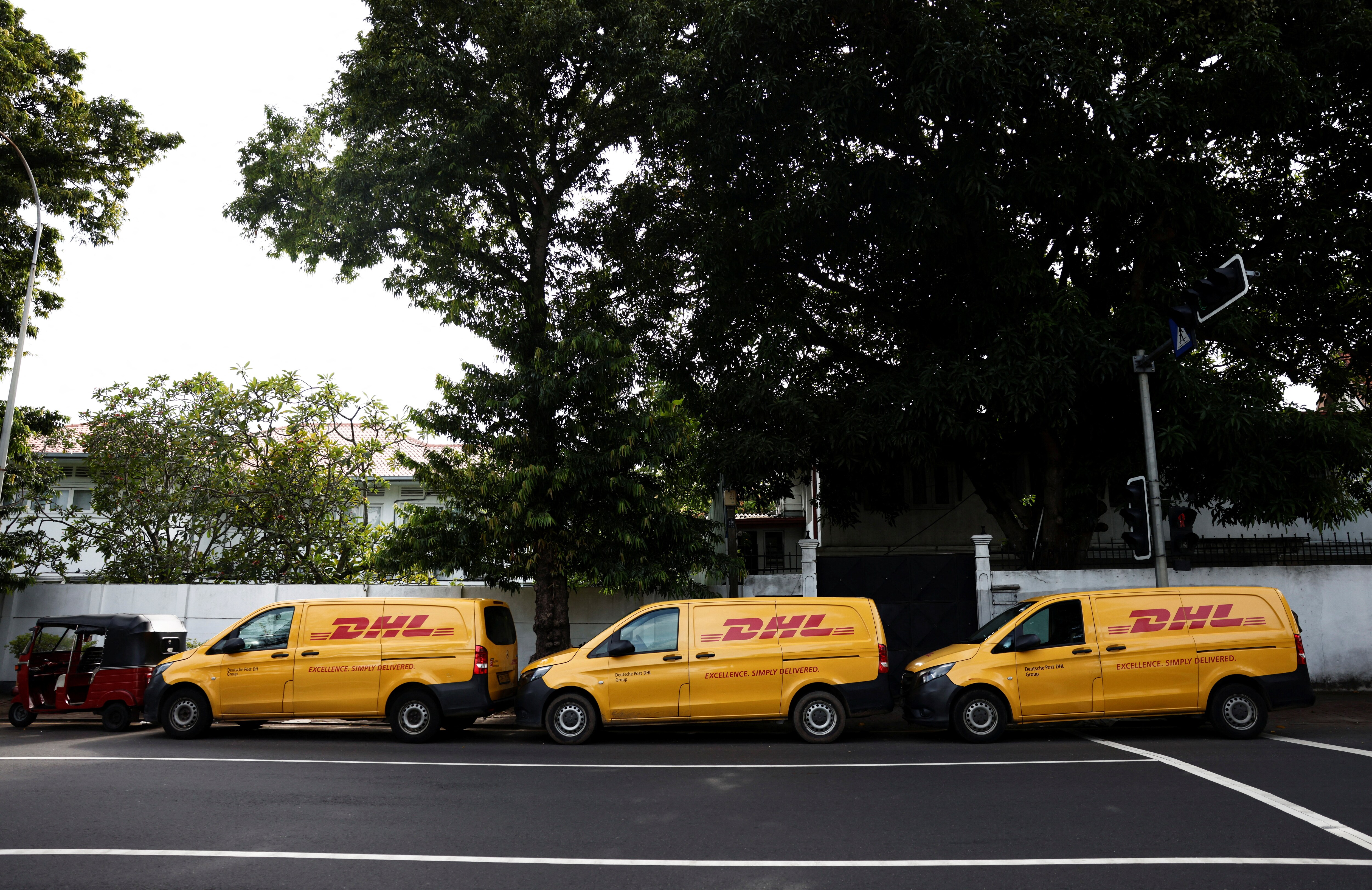
(Bloomberg) -- Port congestion should ease next year as new container vessels are delivered and demand from shippers softens from pandemic highs, but not enough to restore global supply-chain flows to where they were before Covid, according to the head of DHL's freight-forwarding unit.
“It's going to ease in 2023, but it's not going to go back to 2019,” DHL Global Forwarding, Freight Chief Executive Officer Tim Scharwath said in an interview Wednesday. “I don't think we're going to go back to this overcapacity situation where rates were very low. Infrastructure, especially in the US, isn't going to get better overnight, because infrastructure developments take a long time.”
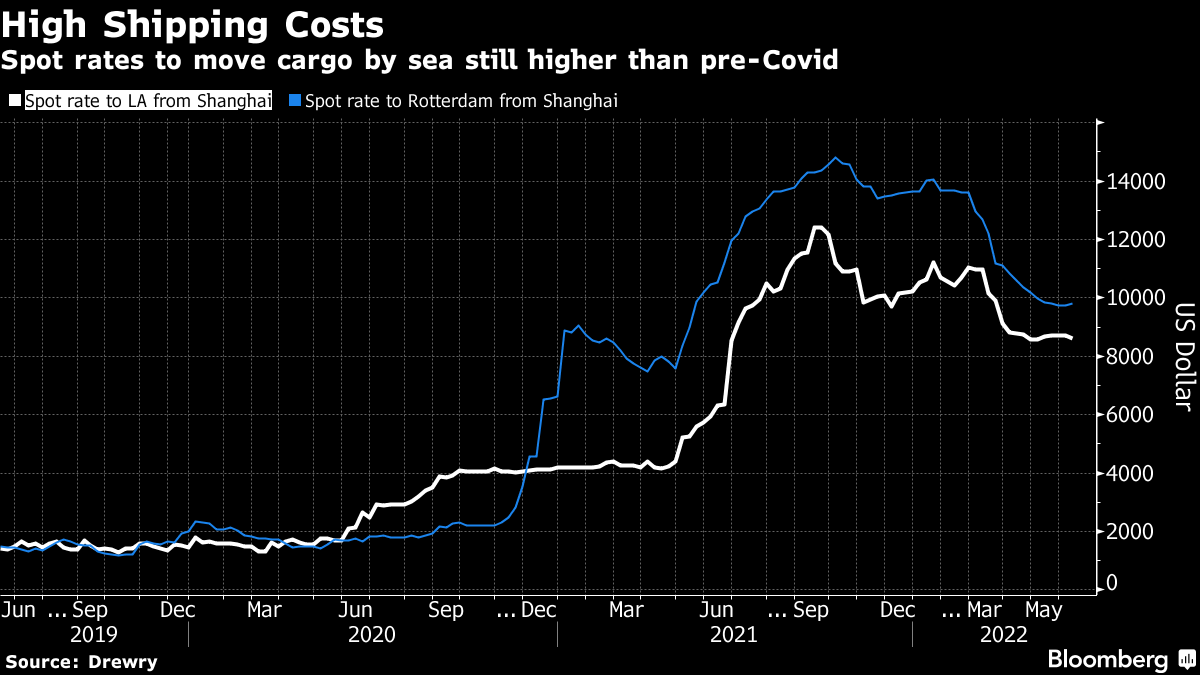
Coronavirus outbreaks and related restrictions led to a shortage of workers and truckers at several major ports around the world last year, slowing the movement of goods in and out of freight hubs and pushing container shipping rates to record highs. Spot prices to Los Angeles from China jumped more than eightfold to as high as $12,424 in September from the end of 2019.
While the situation has eased in most places as workers return, further stress on the supply chain could materialize as the key port of Shanghai tentatively emerges from a two-month lockdown and cargo backlogs there are cleared.
“The Shanghai situation was like a clog in a pipe,” Scharwath said. The city is “smart to open up slowly to make sure that this clog goes out piece by piece and bit by bit to get the flow running.”
The reopening of the Chinese financial and manufacturing hub comes as more goods are being shipped from Asia to the US and Europe ahead of the year-end holidays, he added.
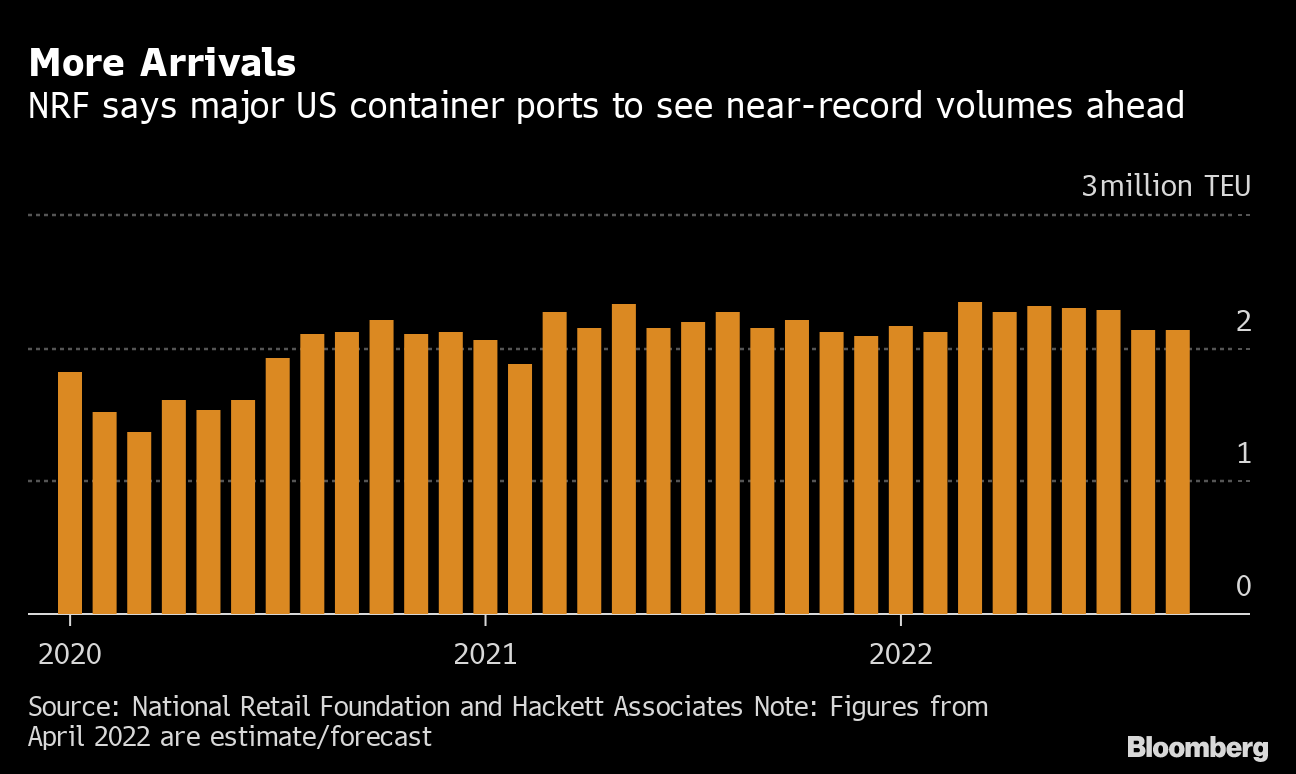
US ports should brace for a surge in imports in the coming months, with shipments expected to stay close to March's record high of 2.34 million 20-foot containers, the National Retail Federation said Wednesday.
Congestion is worsening at major European ports such as Hamburg and Rotterdam as more vessels arrive from Asia, while a strike by truckers in South Korea will strain the supply chain, Scharwath warned.
“Any stress you put on top of it, doesn't matter where in the world, will have influence in other parts of the supply chain,” he said. “Five years ago, the Korea situation wouldn't have had an impact. Now it has.”
Container lines have been ordering new ships during the pandemic as the port bottlenecks pushed rates to historic highs and helped them post record profits after years of losses.
At the end of 2021, the global orderbook for container ships was 9.8% of the world's existing fleet, about 6.5 percentage points higher than a year earlier, according to Bloomberg Intelligence.
More stories like this are available on bloomberg.com
©2022 Bloomberg L.P.
Essential Business Intelligence, Continuous LIVE TV, Sharp Market Insights, Practical Personal Finance Advice and Latest Stories — On NDTV Profit.