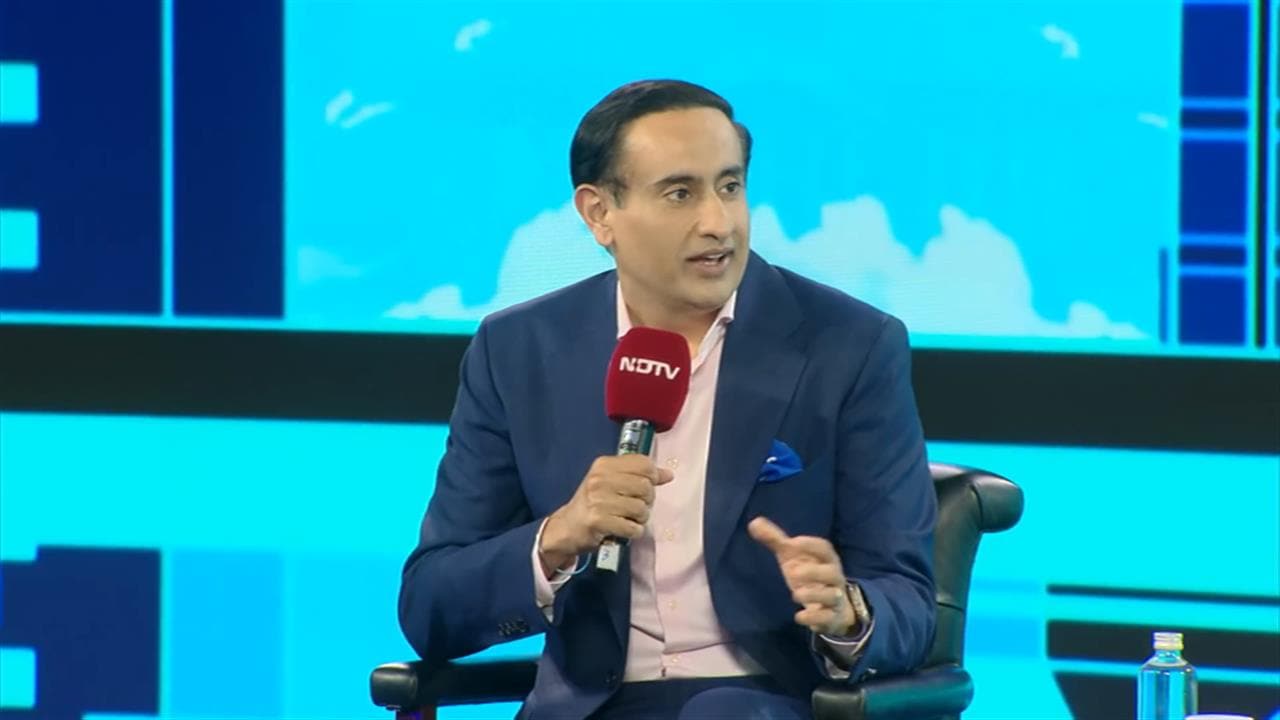
India should continue engaging with the US government for access to the world's most advanced artificial intelligence models, but at the same time aggressively test its own critical infrastructure using powerful open-source alternatives, according to Nasscom Chairperson Srikanth Velamkanni.
India should not remain dependent on access to a handful of proprietary frontier AI models and should instead make full use of rapidly improving open-weight models to strengthen the country's cyber resilience, the Fractal Analytics chief executive officer said.
"India can download recently released open-source, open-weight models and test our own systems," he told NDTV Profit, referring to models such as Kimi K2.7, GLM 5.2 and Qwen 3.7. These models, he said, are increasingly capable of solving complex problems and can be deployed to identify vulnerabilities across India's financial and other critical infrastructure.
His comments come amid concerns over access to some of the world's most advanced AI models, following tighter US export controls on frontier AI technologies.
Velamkanni said India should continue diplomatic efforts to secure access to leading US AI models while simultaneously accelerating investments in its own foundation models to reduce long-term dependence.
Beyond AI access, Velamkanni said the wave of multi-billion-dollar investments announced by Microsoft, Amazon and Google into India's AI infrastructure would have benefits far beyond data centres.
These investments will create jobs, spur ancillary industries and improve the experience for Indian consumers by reducing latency as AI workloads are processed locally. Hosting critical AI infrastructure in India also strengthens the country's strategic position in the global technology landscape, he said.
On concerns that rapid advances in AI could hurt India's $280-billion IT services industry, Velamkanni struck an optimistic note. While entry-level hiring has slowed and could remain muted in the near term, he said AI would ultimately increase demand for software rather than reduce it.
Citing Jevons paradox, which is the economic principle that lower costs often lead to higher consumption, he said cheaper AI would dramatically expand software usage, creating fresh demand for technology talent. "The world will need a thousand times more software than it has today," he said.
Traditional IT companies are also expected to change the way they recruit, with hiring increasingly focused on AI-native talent possessing strong AI fluency, while recruitment processes themselves are likely to become AI-driven, Velamkanni added.
ALSO READ: Rashi Peripherals: Why This AI-Focused Tech Stock Has More Than Doubled In 2026
Essential Business Intelligence, Sharp Market Insights, Practical Personal Finance Advice, Daily Fuel, Gold and Silver Prices and Latest Stories — On NDTV Profit.