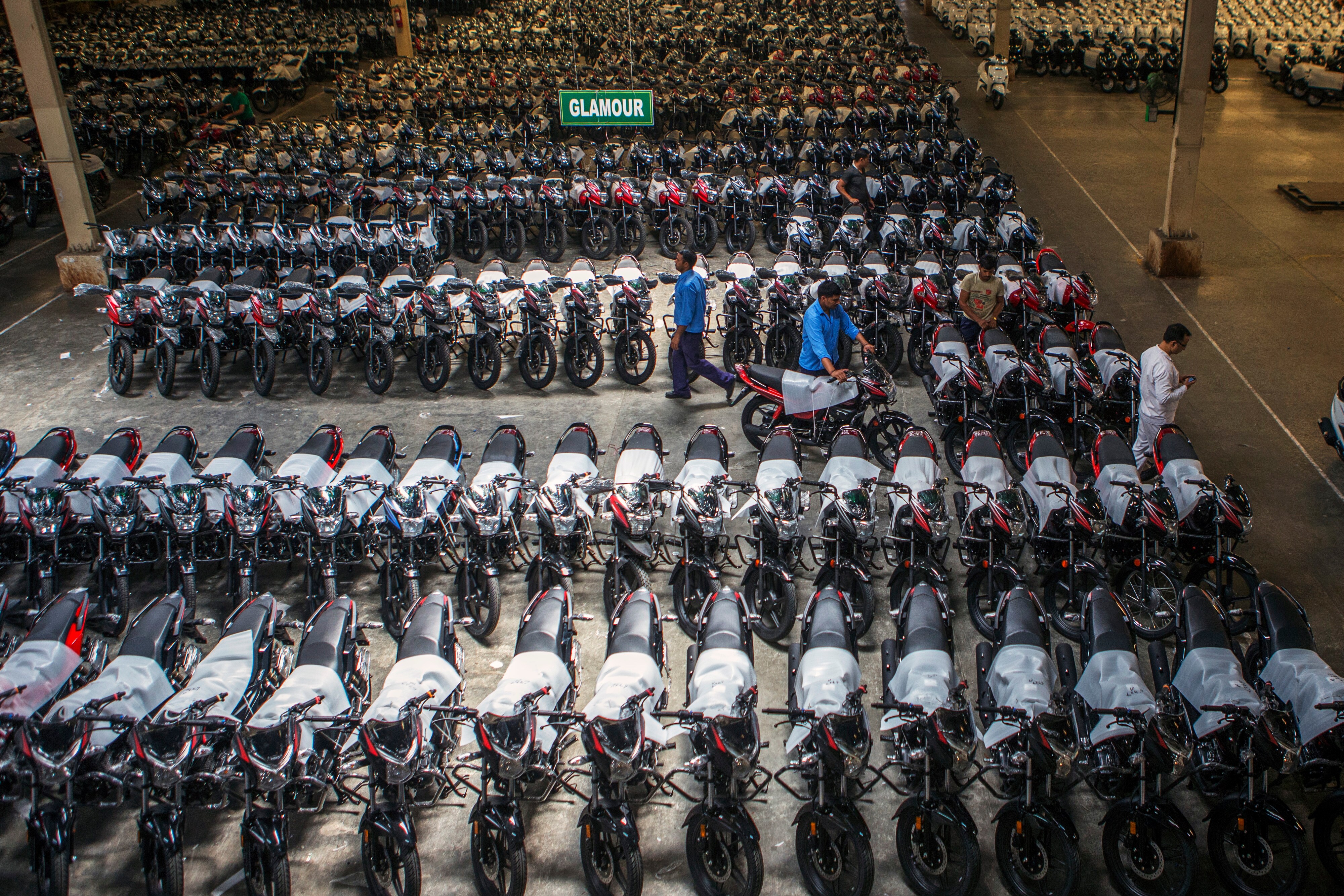
Scooters and motorcycles are the biggest contributors to inventory piled up at dealerships even as India's automobile sector hopes for the demand to revive.
Demand for cars, two-wheelers and trucks has slowed, and is reflected in year-on-year drop in both wholesales or units moving out of the factory gate, and retail volumes based or vehicle registrations, according to data collated from the Society for Indian Automobile Manufacturers and the Ministry of Road Transport and Highways.
There has been uptick in month-on-month volumes though, and they stood at their highest since December in May for all categories. But that masks the actual problem.
BloombergQuint calculated the ratio of wholesales-to-retail volumes for a clearer picture. That revealed two-wheelers continue to be the worst hit with the highest inventory. The ratio for the category declined in December and March as dealers pared stock at the end of calendar and fiscal years. But it has again risen since then and remains higher than the average of all segments.
Two-wheeler inventory stood at 55-60 days at the end of May, Federation of Automobile Dealers Associations had revealed earlier. That's also the highest among all categories.
One reason could be that the makers of two-wheelers have not announced any production cuts, unlike their passenger vehicle counterparts.
Inventory levels of passenger vehicles are lower than the industry average. That's because makers of cars and utility vehicles cut output, pulling down the wholesale-to-retail sales ratio below 1, according to the data. Which means registrations outpaced the number of units moving out of the factory gate.
“We have been adjusting our production to ensure that inventory both at factory and dealer levels remain within the norms prescribed,” RC Bhargava, chairman at Maruti Suzuki India Ltd., had told BloombergQuint in an earlier interview. “At a maximum, we keep only one month's inventory. One month's inventory norm is over 1.5 lakh cars. I don't think that inventory is higher. It's still lower than that.”
Three-wheeler and commercial vehicle inventory levels, too, are lower than the industry average. The two categories have the wholesale-retail ratio of either 1 or a little lower, suggesting that monthly retail demand is as good as shipments from the factory.
Essential Business Intelligence, Continuous LIVE TV, Sharp Market Insights, Practical Personal Finance Advice and Latest Stories — On NDTV Profit.