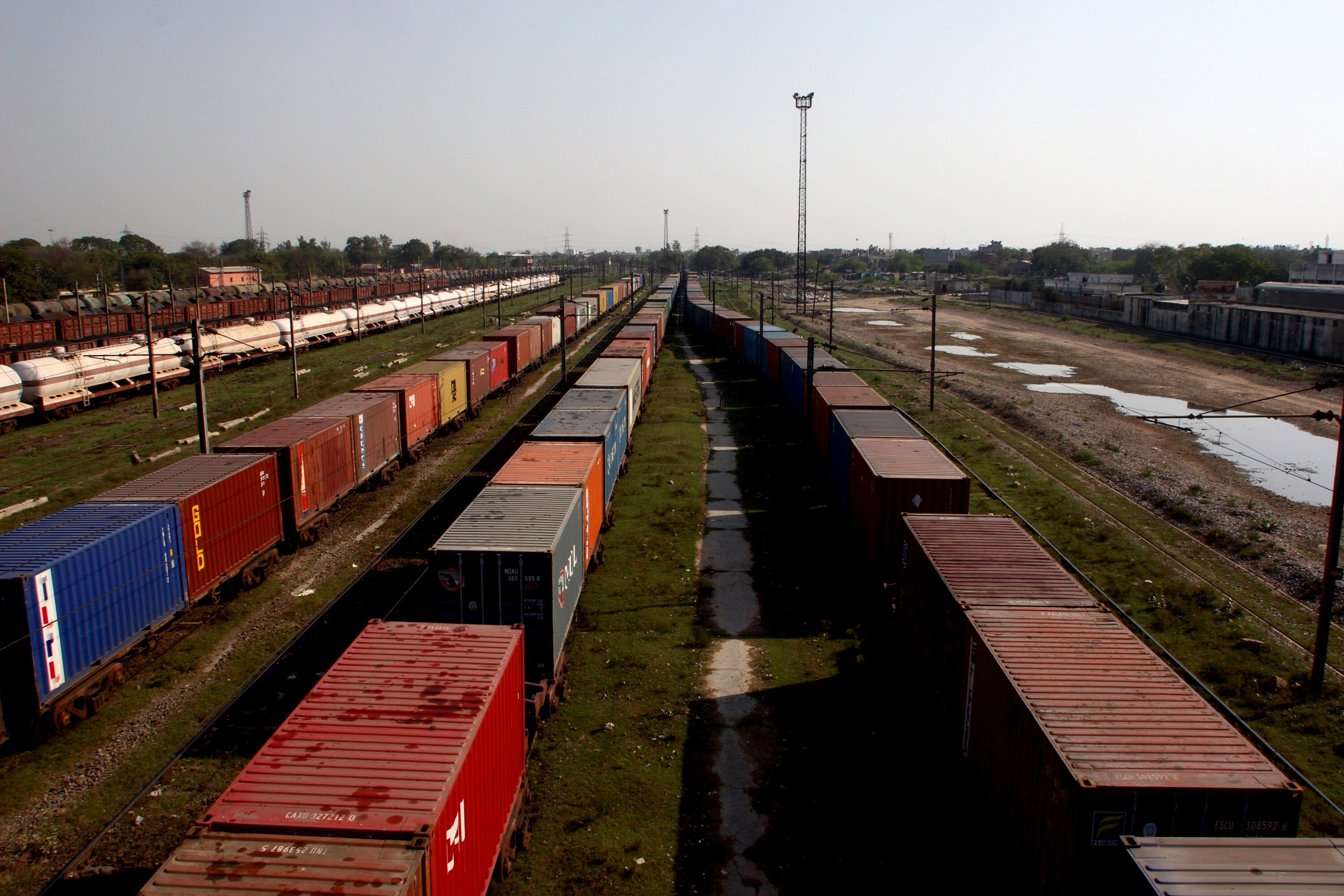
The Indian Railways is ferrying more goods and people than ever. Yet, its growth has slowed.
Revenue from freight rose 6.9 percent and from passengers grew 6.5 percent in the five years between 2014 and 2019, according to data available with the Railway Board that was reviewed by BloombergQuint. That compares with an increase of 12 percent and 10 percent, respectively, in the previous five years.
Surendra Singh Khurana, former chairman of the Railway Board—the apex body of the Railways Ministry—blamed it on cross-subsidisation or higher freight rates to keep passenger fares low. That, he told BloombergQuint, made movement of goods via rail less lucrative compared to road transport. “Railways are losing traffic of white goods to roads where the margins are higher,” he said. Moreover, most of the freight routes in the country are already running at over 100 percent capacity.
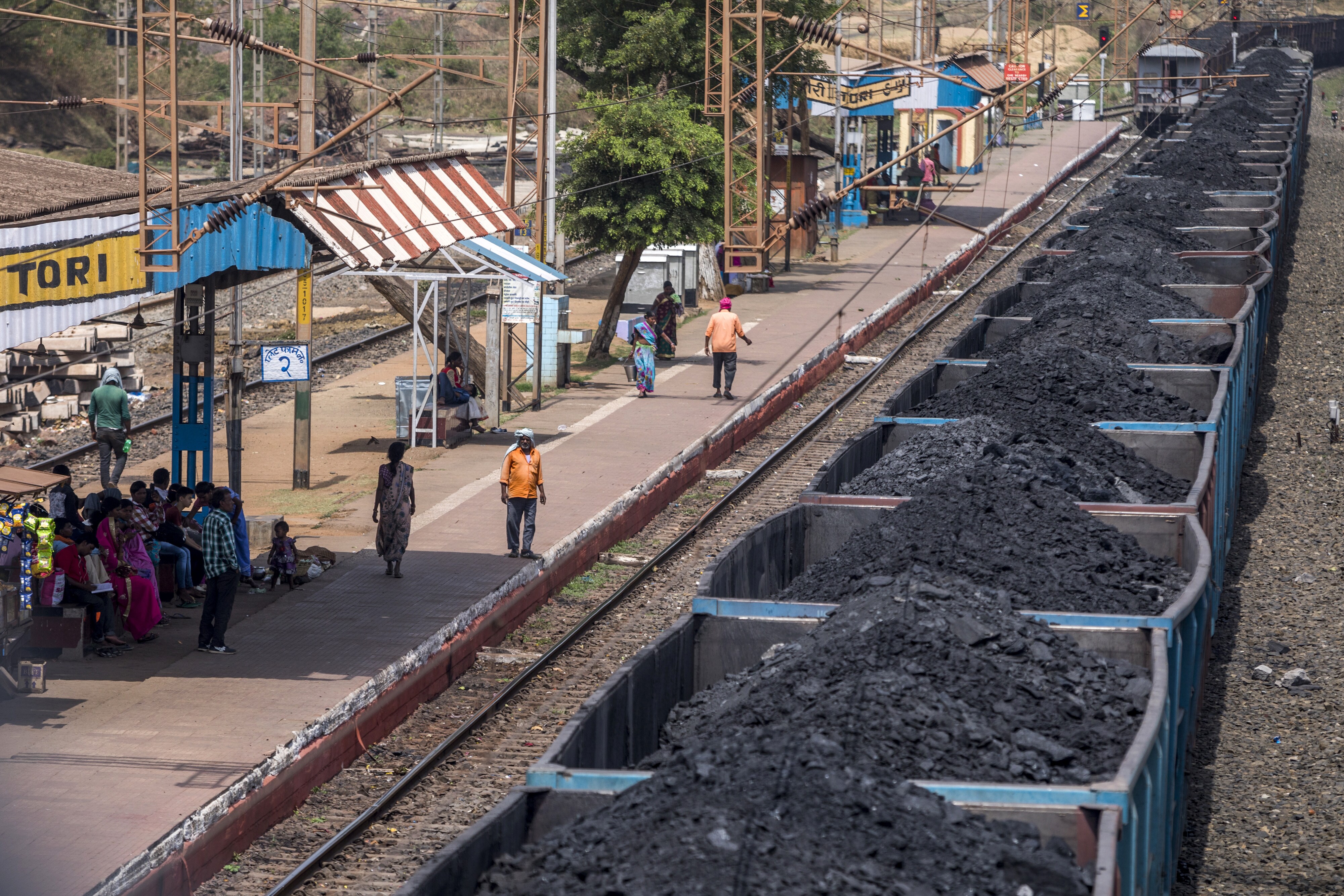
The world's third-largest rail network carries at least 3 million tonnes of freight and ferries about 23 million passengers daily. An increase in passenger fares was one of the first decisions Prime Minister Narendra Modi took to improve its finances when he was elected in 2014. That was also the last time a proper fare hike was implemented.
Shipping via rail is cheaper by up to Rs 2/tonne compared to road transport, according to a NITI Aayog's September report. But that isn't incentive enough for people to switch to rail transport as trucking costs are kept artificially low due to overloading and making drivers work extra everyday. Efficiencies have also improved after the goods and services tax, the report said. Also, excessive inventory costs because of longer transport period keeps shippers away from the Railways.
Roads account for 59 percent of the cargo movement in India, followed by rail freight at 35 percent, the NITI Aayog report said citing 2014 data. In other countries that share similar geography and freight compositions, including China and U.S., truck shares are as low as 40 percent and 30 percent.
Crisil now estimates the Railways' share in goods transport to have fallen to about 24.8 percent in 2018-19. The rating and research agency expects it to further decline in the ongoing financial year as the share of roads grows at a faster pace.
The transition to road transport is a matter of concern, said Jagannarayan Padmanabhan, director-transport and infrastructure, Crisil Infrastructure Advisory. “Only for longer haul the stickiness has remained for freight, while the short haul has started to move away to road.”
Blighted Financials
All of these factors have blighted the financial health of Asia's oldest rail network. The transporter's operating ratio—expenses as a proportion of revenue—is 97.3 for the year ended March, a senior railway official told BloombergQuint on the condition of anonymity. That's marginally lower than 98.4 percent it clocked a year ago after hovering around 95 percent in the past three years. The metric, according to Crisil Research estimates, is expected to decline in 2019-20 due to capacity constraints.
The official also said that the Railways' passenger service reported a loss of around Rs 40,000 crore as social obligation costs in the last fiscal.
The government, however, increased its investments in the national carrier.
While investments remained stagnant at Rs 40,000-50,000 crore during 2010-14, they nearly jumped threefold to Rs 1,48,000 crore in the budgeted estimates for 2018-19, growing at an annualised rate of 26 percent over the last four years, according to an HDFC Bank Ltd. investment advisory group's March 2018 note. That, for 2019-20, is pegged at Rs 1,58,000 crore.
Working expenses—incurred on operation, maintenance, administration and repairs, among others—too, have steadily increased, by over 7 percent in the last five years.
Hopes Hinge On Freight Corridors
A lot, therefore, is riding on the roll-out of the dedicated freight corridors—spanning over 3,300 km that would link industries in the north to ports in the east and west at an estimated $12 billion outlay—which would significantly boost capacity and speeds of freight trains.
Padmanabhan said the real benefit of the corridors could be realised only after they attract capacity and result in lower transportation costs. “Due to cross-subsidy, there's little head room in freight pricing as nobody knows the cost of carrying freight,” he said, stressing that it should be commissioned at the earliest.
He suggested targeted subsidies as another way to increase revenue from passenger service.
Khurana agreed that the freight corridor will help Indian Railways improve profitability as it will open up capacity but said the transporter should reduce expenditure by slashing its social obligation costs related to passenger service.
Impact Of Recruitments
The transporter—among the world's largest employers—hired over 1,35,000 people in junior positions ahead of the general election, and that's expected to cast its shadow on its operating ratio.
Khurana said the Railways is in a difficult situation. “They have been reducing staff costs over the years and have never hired so many people at this scale.”
Essential Business Intelligence, Continuous LIVE TV, Sharp Market Insights, Practical Personal Finance Advice and Latest Stories — On NDTV Profit.