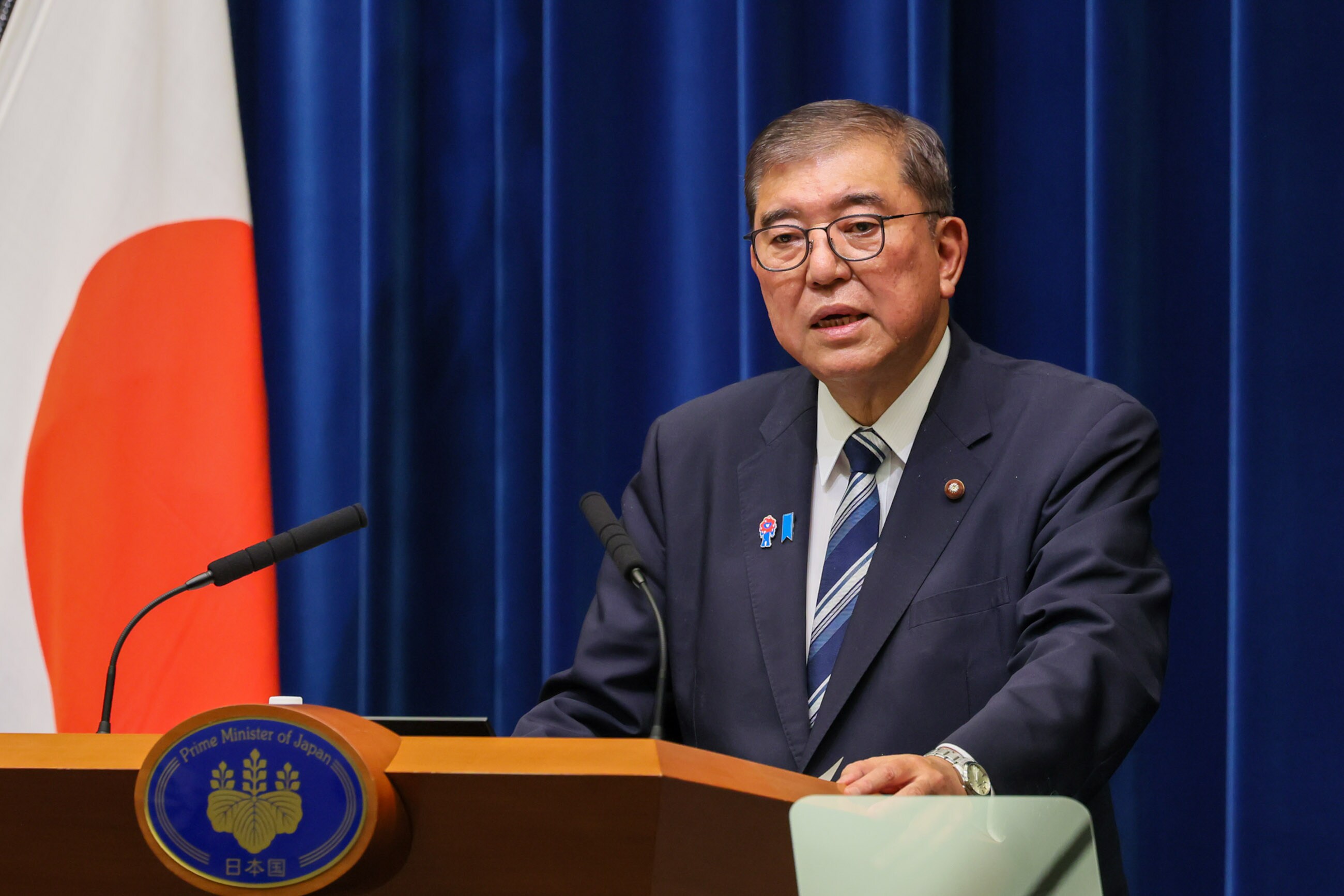
- Japan’s PM Shigeru Ishiba announced resignation amid LDP pressure after July elections defeat
- Ishiba cited US-Japan tariff talks as a key reason for stepping down at a turning point
- He accepted responsibility for election setbacks and promised a leadership vote in October
Japan's Prime Minister Shigeru Ishiba announced his resignation on Sunday amid mounting pressure from colleagues within his Liberal Democratic Party (LDP) after the defeat in the July Parliamentary elections.
Facing increasing demand for an early presidential election, which was widely seen as a signal for him to resign, Ishiba chose to step down to prevent further discord within the party. LDP is now preparing to initiate the selection process for a new leader.
During an emergency press conference, the Prime Minister outlined the recent agreement on tariff talks with the United States as the key factor behind his decision to step down now.
According to Nikkei, he said that “a turning point has been reached” following US President Donald Trump's signing of an executive order that lowers automobile tariffs on Japanese exports.
“I thought that now was the right time, having reached a turning point, and I have decided to hand over the position to my successors," he said, according to the Nikkei report.
Ishiba acknowledged his accountability for the election outcomes, including the setback experienced in the July House of Councillors poll. "I have said for some time that I am not attached to my position," he said.
He assumed office in October last year with a commitment to address soaring prices. However, he has found it challenging to gain public confidence amid Japan's economic difficulties, increasing living expenses, and a complex political dynamic with the United States.
As per Japan's public broadcaster NHK, US President Trump reacted to Ishiba's resignation by saying, “I was surprised. I knew him and I liked him. I was a little surprised that he was planning to resign. I thought he was a very good person. We were getting along very well.”
In July, the ruling coalition under Ishiba was unable to maintain a majority in the 248-seat upper house during a pivotal parliamentary election. This setback came on the heels of a loss in the more influential lower house.
What Happens Next
Ishiba announced that he plans to initiate a leadership election within the party to select his successor. The voting is expected to take place in October. He will continue to serve as PM until the Parliament approves the new leader.
Potential successors to Ishiba include Agriculture Minister Shinjiro Koizumi, along with ultra-conservative former Economic Security Minister Sanae Takaichi. Chief Cabinet Secretary Yoshimasa Hayashi, a moderate figure who is regarded as a protege of former PM Fumio Kishida, is also a potential candidate for the post.
Essential Business Intelligence, Continuous LIVE TV, Sharp Market Insights, Practical Personal Finance Advice and Latest Stories — On NDTV Profit.