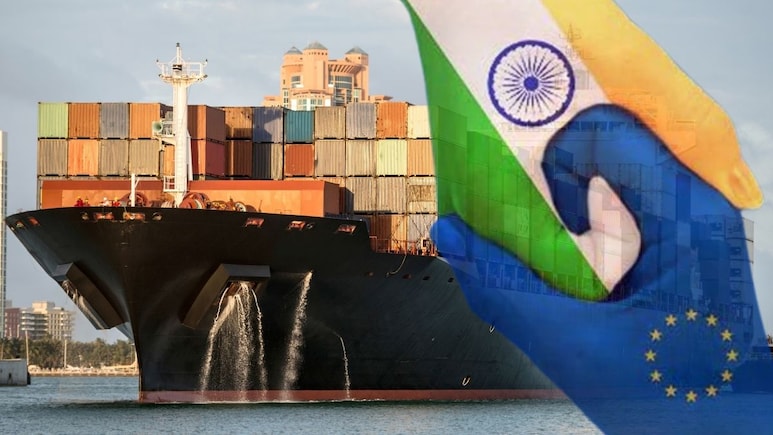
India and the European Union are close to finalising a long-awaited Free Trade Agreement, potentially ending negotiations that began nearly two decades ago, according to a strategy note by Jefferies. Talks were first initiated in 2007, stalled in 2013, and gained fresh momentum in 2022 as both sides sought a broad-based agreement while largely setting aside politically sensitive areas such as agriculture and dairy.
Jefferies said the contours of the proposed pact appear similar to the recently concluded India-UK FTA, with goods trade taking centre stage and services expected to remain a key area to watch.
Also Read | Layoffs Are Rising In Tech, But These Skills Are Helping People Unlock Better Pay
Trade Ties Already Significant
India's annual goods trade with the EU is estimated at around $130 billion, broadly comparable to its trade with China or the US. Indian goods exports to the EU stand at roughly $75 billion, accounting for about 17% of total exports, while services trade is even larger at around $72 billion, with India enjoying a services surplus of nearly $9 billion.
Since 2022, India has also benefited from higher exports of petroleum products and electronics to the EU, resulting in a modest trade surplus. Jefferies noted that a comprehensive FTA could further deepen these flows, particularly in labour-intensive and manufacturing-heavy sectors.
Textiles Seen As Key Beneficiary
Among sectors, textiles and apparel are expected to emerge as major winners. The EU imports more than $125 billion worth of textiles and apparel annually, of which India currently holds a 5-6% share. China dominates with about 30%, while Bangladesh and Pakistan together account for another 20%.
Jefferies said zero-tariff access under an FTA could help India gain market share, particularly at a time when Indian textile exports face a 50% tariff in the US, making the EU a more attractive destination.
Autos, Aviation Face Mixed Outcomes
In automobiles, the EU is keen to boost car exports to India, where tariffs can be as high as 100%. While gradual tariff reduction could open opportunities, Jefferies cautioned that most EU luxury cars already enter India as Completely Knocked Down (CKD) units with localisation benefits, limiting the incremental impact. India's mass auto market is also highly competitive, which may cap gains for European players.
In aviation, India currently levies Basic Customs Duty of 2.5-10% on aircraft and parts. Tariff relief could lower costs, though its impact may be limited as GST largely offsets these duties.
Jefferies, however, flagged non-tariff barriers such as the EU's Carbon Border Adjustment Mechanism as a key concern for Indian exporters. The brokerage also noted that easing regulatory requirements in pharmaceuticals and improved mobility norms for Indian professionals could be meaningful positives if addressed in the final deal.
Also Read:
Essential Business Intelligence, Sharp Market Insights, Practical Personal Finance Advice, Daily Fuel, Gold and Silver Prices and Latest Stories — On NDTV Profit.