When Shein opened in Paris, showrooms drew queues and protests. Shoppers sought cheap fashion, while small businesses and activists pushed back over pricing and product concerns. After a year of controversies, the company will face European lawmakers on January 27 over pricing, sustainability and inappropriate products.
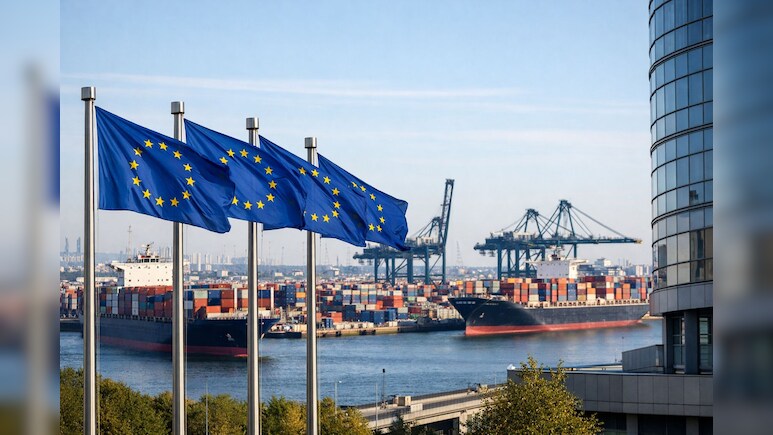
The timing is awkward. As EU lawmakers prepare to question Shein, European leaders line up for meetings in Beijing. The contrast reflects Europe's position: tensions with Chinese firms at home, engagement with China abroad, and strained ties with Washington.
China Steps Into the Gap
The return of Donald Trump has added uncertainty between the allies. As EU foreign policy chief Kaja Kallas said, “China and Russia must be having a field day” watching allies divide. China has moved to take advantage.
Also Read | Layoffs Are Rising In Tech, But These Skills Are Helping People Unlock Better Pay
In 2019, the EU labelled China a “systemic rival.” In recent months, that language has softened. French President Emmanuel Macron has called for more Chinese investment in Europe. The approach suggests the EU seeks broader partnerships.
The issue is dependence. Europe views China as short-term cover against uncertainty from the United States.
European shoppers have bought cheaper Chinese goods from Shein, Temu and TikTok Shop. That passed lower costs on to households under pressure from higher energy prices. China also redirected goods that could not enter the United States under Trump-era restrictions toward Europe.
That openness carries longer-term risks.
ALSO READ: Commodity, Ideology, Governance—The Divide Between Chile And Venezuela | The Reason Why
Europe in ‘China Shock 2.0'
Trade has tilted toward China. Europe now runs a €305 billion trade deficit with China, larger than the China-US deficit. Chinese competition has also pressured European firms.
Amazon cut seller fees across Europe. Meyer Burger, Germany's largest solar-module maker, shut down. ArcelorMittal and Thyssenkrupp closed multiple steel plants. Carmakers across Europe face pressure. Different sectors face the same cause: cheaper Chinese imports.
China subsidises production, produces at scale and exports excess supply at prices European firms struggle to match, supported by an undervalued yuan. From clothing and footwear to industrial machinery, pharmaceuticals and legacy chips, Chinese competition affects multiple industries. This disruption is known as China Shock 2.0.
ALSO READ: India Needs To Reimagine Its Airports As 'Economic Hubs' | The Reason Why
National Security Risks That Are Hard to Ignore
The effects extend to national security.
Chinese state-linked firms hold stakes in several European energy operators, including REN in Portugal, Terna via CDP Reti in Italy, Creos in Luxembourg, Enermalta in Malta, and IPTO/ADMIE in Greece. Those stakes provide access to operational data and, in some cases, influence over strategic decisions. Europe also relies heavily on Chinese solar inverters, which can be remotely accessed in theory. That raises risks to energy security.
Russia adds another layer. Moscow depends on China for dual-use goods that appear civilian but support military needs. China supplies close to 90% of goods on the G7's high-priority export-control list, many of which still rely on European components or technology. Closer ties with China without safeguards risk supporting Russia.
There is also a political cost. As dependence on China deepens, Europe may find it harder to speak openly about Xinjiang, Hong Kong, Tibet or Taiwan without fear of retaliation.
The Bigger Picture
Is Europe moving toward China because Trump unsettled relations, or is China drawing Europe in because the United States left space? Both factors apply. The broader issue is leverage over time.
European officials have privately told The Economist that recent openness to China aimed partly to rebalance ties with the United States. Europe may believe it can manage both sides. Its room for manoeuvre is narrower than it assumes.
Domestic constraints matter. Europe speaks of strategic autonomy but delays industrial renewal. Without progress, the concept lacks substance. Europe also lacks clarity on what it seeks from China, while praising, criticising and regulating it at the same time, as Beijing follows a long-term approach.
With the United States, Europe's pushback appears driven by frustration rather than strategy, despite dependence on US security, technology and capital. Mr Trump brings volatility, but he favours deals. Europe needs a measured approach.
The central risk is not choosing between China or the United States now. It is losing the ability to choose over time, as leverage shifts and China gains ground.
ALSO READ: Wars Hurt Some Stock Markets — And Help Others | The Reason Why
Disclaimer: The views expressed in this article are solely those of the author and do not necessarily reflect the opinion of NDTV Profit or its affiliates. Readers are advised to conduct their own research or consult a qualified professional before making any investment or business decisions. NDTV Profit does not guarantee the accuracy, completeness, or reliability of the information presented in this article.
Essential Business Intelligence, Sharp Market Insights, Practical Personal Finance Advice, Daily Fuel, Gold and Silver Prices and Latest Stories — On NDTV Profit.