- Women in India are redefining "bloodline" by celebrating personal milestones on social media
- Female literacy is rising, yet 28.5% of Indian women lack formal schooling, highlighting challenges
- Female enrollment in higher education surged 32% to 2.07 crore in 2021-22, showing progress
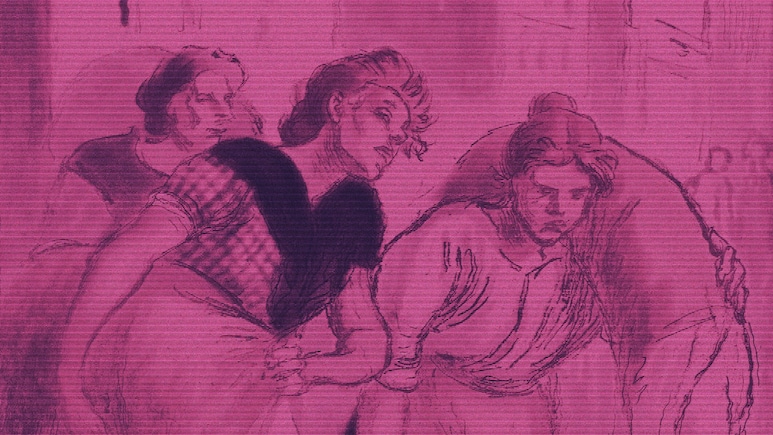
In the traditional Indian lexicon, the word 'bloodline' has rarely been gender-neutral. For centuries, it was synonymous with 'Vansh', the patrilineal chain of male descendants that carried the family name, the ancestral property, and the ritual duty of the Pinda Daan. In this framework, a daughter was a 'temporary resident,' often described as Paraya Dhan (someone else's wealth). Her purpose was not to continue her own bloodline, but to be the vessel that sustained another's.
Today, that vocabulary is being dismantled. On social media, a viral trend has seen thousands of Indian women posting photographs of themselves - graduating, traveling solo, or signing mortgage papers - with the caption: "First in my bloodline." By using a term that historically excluded them, these women are doing more than celebrating personal wins.
The Architecture of the Leap
To understand the weight of being the "first," one must look at the steepness of the climb. According to the National Family Health Survey (NFHS-5), while female literacy is rising, nearly 28.5% of women in India still have no formal schooling. For many, the transition from being the daughter of an unschooled mother to a university graduate is not just a personal achievement; it is a structural anomaly.
Also Read | Layoffs Are Rising In Tech, But These Skills Are Helping People Unlock Better Pay
ALSO READ: Celebrating Women — Easy. Changing Their World — Hard.
"In my family, education for girls was seen as a way to increase 'marriageability,' not to build a career," says Suman*, a 29-year-old first-generation lawyer from a small town in Andhra Pradesh. "My grandmother never stepped inside a school. My mother finished tenth grade and was married at seventeen. When I cleared my law entrance, I wasn't just getting a degree; I was ending almost a 200-year streak of domesticity."
Suman's story is reflected in the All India Survey on Higher Education (AISHE) 2021-22, which noted a historic surge: female enrollment in higher education has reached 2.07 crore, a 32% increase over the last decade.
From 'Paraya Dhan' to Financial Pillar
The most radical shift, however, is occurring in the realm of economic agency. Historically, Indian women were excluded from the 'bloodline' because they were not seen as permanent economic assets to their natal families. This perception is being upended as more women become the primary financial anchors for their parents.
The Periodic Labour Force Survey (PLFS) 2023-24 indicates that the female labour force participation rate (LFPR) has improved to 41.7%. While the numbers suggest progress, they don't capture the 'first-generation guilt' that often accompanies this newfound wealth.
"I am the first woman in my bloodline to earn more than my father," says Pooja*, an IT professional in Bengaluru. "It feels like a victory, but it also feels like a heavy responsibility. In our culture, a daughter's money is often considered 'inauspicious' to use for the natal home. I am the first to tell my parents that my earnings are their security."
The Emotional Cycle-Breakers
Beyond the tangible markers of degrees and salaries, a quieter revolution is taking place, and that's the breaking of emotional cycles. Women are identifying as the 'first' to prioritize mental health, set physical boundaries, or refuse the 'sacrificial mother' archetype that has long been the gold standard of womanhood. In a society where 'adjusting' and 'compromising' are often taught as female virtues, choosing oneself is a radical act.
"My mother's generation was taught that endurance is the highest form of love," says Ritu*, 32. "She stayed in an unhappy marriage for thirty years. I am the first in my bloodline to walk away from a relationship that didn't respect me. I am the first to choose my peace over 'log kya kahenge?'"
The Pioneer's Tax
Experts warn that being the 'first' comes with an invisible 'tax.' These women often experience "survivor's guilt"- a haunting sense of having escaped a reality that their mothers and grandmothers are still living. There is also the "perfectionist's burden": the belief that if the first woman to break out fails, she will be used as a cautionary tale to keep the others in.
"When you break a ceiling, you are the one who gets hit by the falling glass," says Suman. "You are constantly translating your life to your family." This trend serves as a reminder that these "firsts" are not just individual trophies. By documenting these moments, women are ensuring that for the next generation, these achievements will no longer be considered "breakthroughs."
As Pooja puts it: "We are the floor, and the women who come after us will build the skyscrapers."
*Names have been changed to protect privacy.
ALSO READ: Meet The Women Steering Some Of India's Largest Mutual Fund Portfolios
Essential Business Intelligence, Sharp Market Insights, Practical Personal Finance Advice, Daily Fuel, Gold and Silver Prices and Latest Stories — On NDTV Profit.