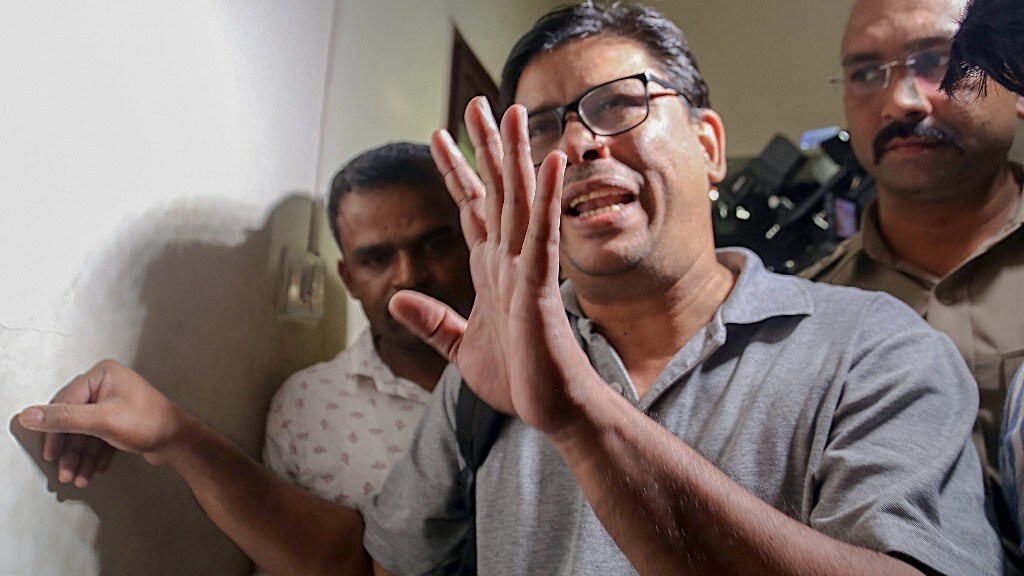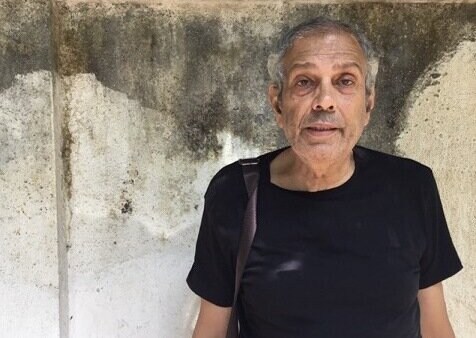
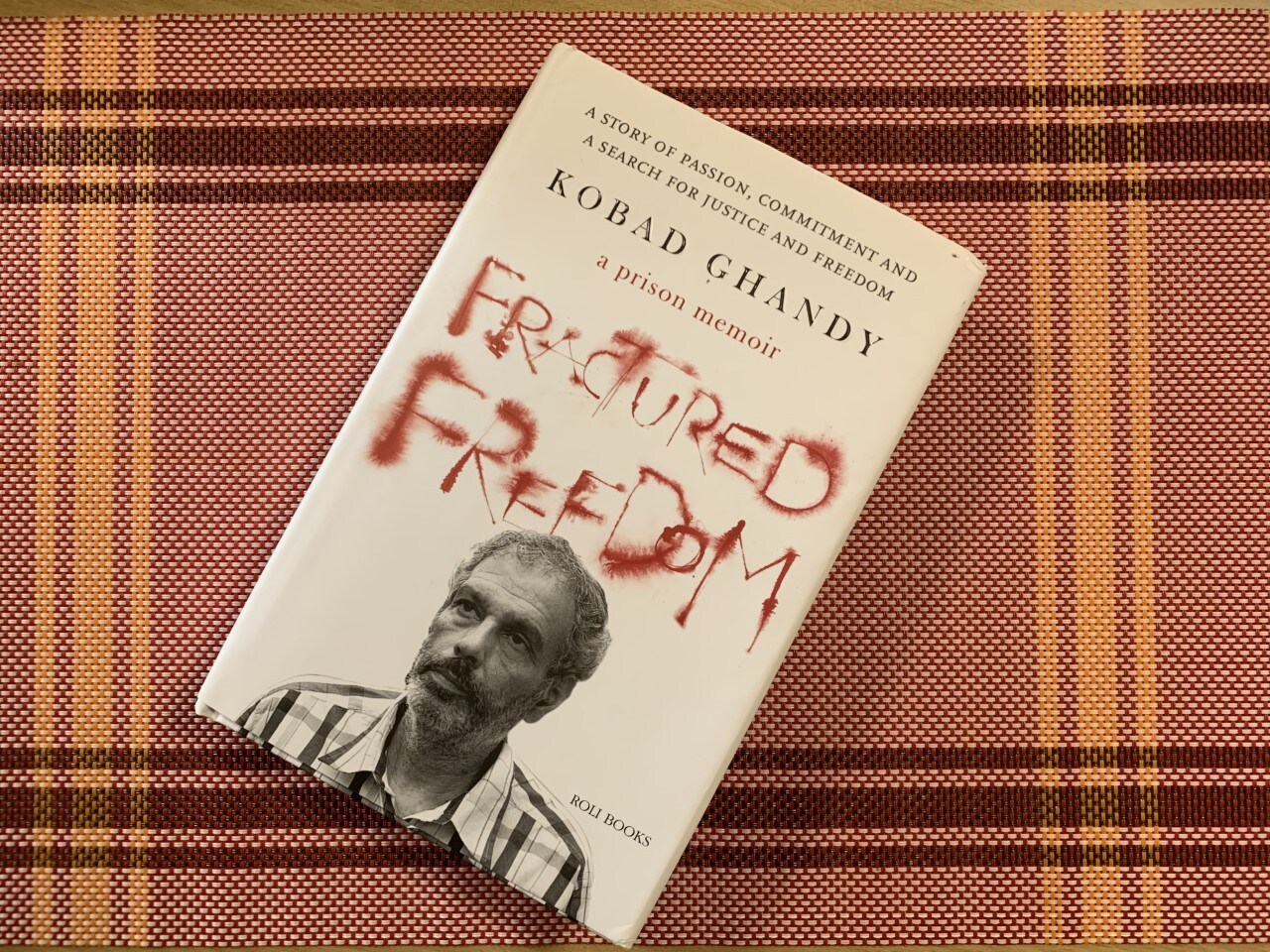
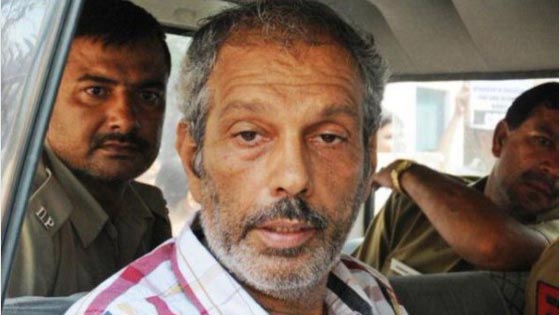
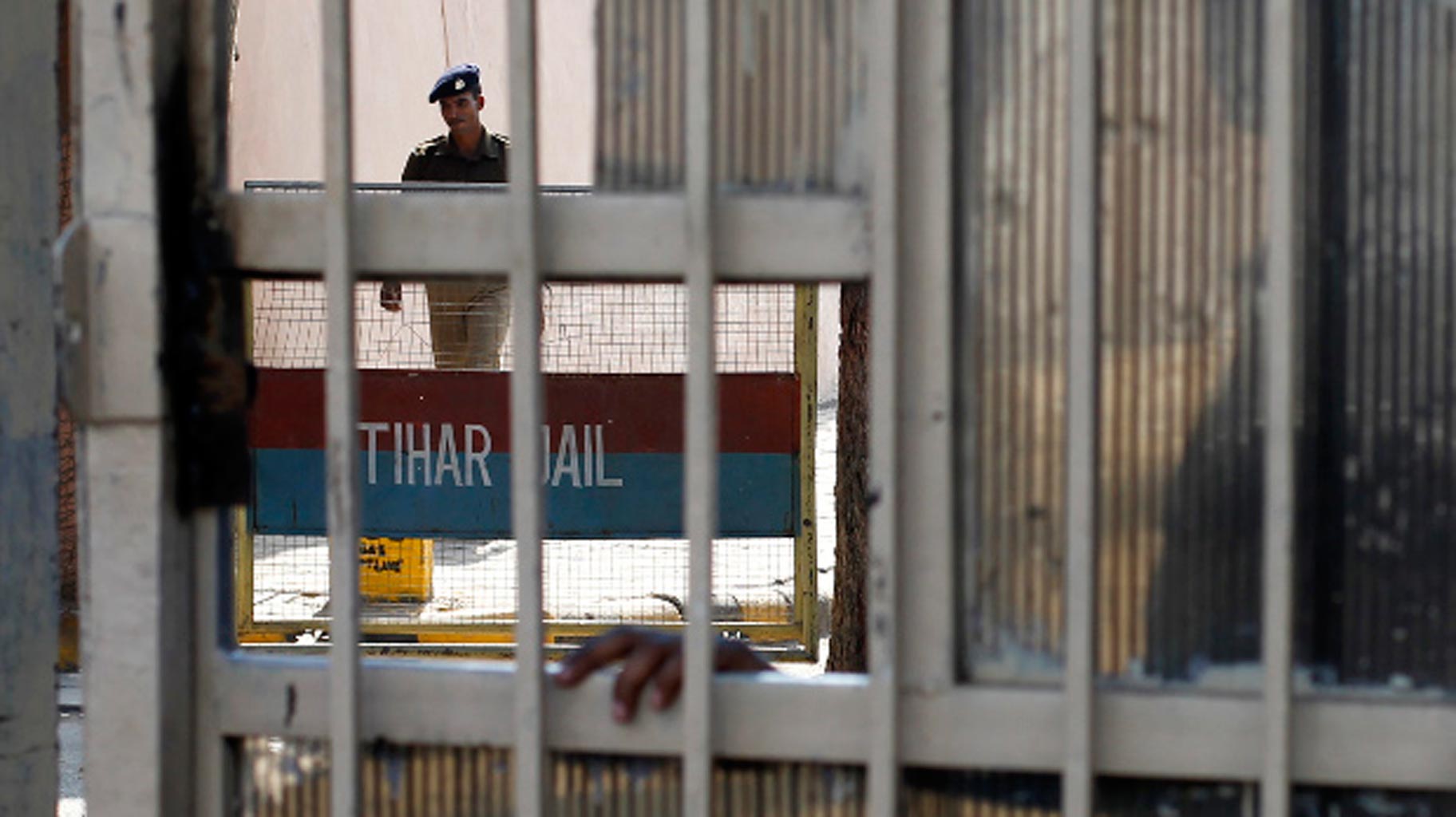
When 62-year-old Kobad Ghandy entered the High-Risk Ward of Prison No. 3 in Tihar Central Jail on Sept. 21, 2009—the start of a decade-long journey through seven jails in five states until he was released on bail in 2019—he was “greeted warmly” by Afzal Guru.

In his just-out prison memoir Fractured Freedom, Ghandy, an activist who worked with marginalised communities and who was arrested for allegedly being a top Naxalite leader by the Manmohan Singh government (Singh said famously in 2010 that Naxalism was the biggest threat to India's internal security) writes that when he entered the jail with maximum security in Tihar's vast complex of 10 jails and the one that housed death row prisoners, Guru was one of the first inmates he met.
Guru, an MBBS dropout, told Caravan magazine in 2006 that like many Kashmiris in the early 1990s he joined the Jammu & Kashmir Liberation Front and crossed over to Pakistan for a few weeks before he became disillusioned by that country and returned. He was convicted for his role in the 2001 Indian Parliament attack and received a death sentence in 2002.
From 2009 until the day before the Kashmiri prisoner was executed on Feb. 9, 2013—the first hanging in Tihar since 1989—Guru and Ghandy forged a friendship over more than a thousand cups of tea. On the day Guru was hanged, the other prisoners were not allowed out of their cells. So he drank his last cup of tea alone.
Though Guru is a minor character in an important narrative about a revolutionary couple (Ghandy and his wife Anuradha, who passed away 18 months before he was incarcerated) who believed in change through action, there's striking imagery in the daily chai ritual between the two men.
“As soon as the gates opened (5:30 am in summer, 6-6:30 am in winter) the tea would arrive in a big bartan. It was served with two slices of bread from the jail bakery,” Ghandy told me over the phone. “Afzal would collect the tea in a white thermos flask. The tea was virtually like hot water so we would purchase milk powder and tea bags from the canteen and add it to this to make it ‘proper' tea.”
“He really used to like his tea more than I,” added Ghandy. “For the next 45 minutes we would chat, I would tell him about India, he would tell me about Kashmir, and what Islam really stood for.” After tea, they would walk through the adjacent, tree-filled prison grounds which became inaccessible to inmates after Guru's hanging. Guru's body is buried here alongside Maqbool Bhat, separatist leader and the co-founder of JKLF.
His family got nothing, not even the prison diary Guru maintained assiduously every day.
Ghandy and Anuradha had spent decades working as activists mainly with Dalits in Maharashtra, immersing themselves in struggles linked to the Dalit Panther movement, living in a Dalit basti in Nagpur, but Ghandy was largely unexposed to the struggles of ordinary Kashmiris.
Though Ghandy, then in his 60s was decades older than 30-something Guru, the latter did most of the talking. Guru introduced the Doon School-educated Parsi to the poetry of Rumi and Iqbal and books authored by leaders of the Muslim Brotherhood.
Inspired by a Rumi poem he first heard from Guru, Ghandy wrote an ode to Anuradha on her sixth death anniversary.
The two men discussed oppression, communism, and Sufism. Ghandy said he never discussed the details of Guru's case. “I was more interested in philosophical questions,” he told me. On occasion they were joined by other prisoners such as Rafiq Shah who was in the same prison for a year around the time of Guru's hanging, said Ghandy. Shah was acquitted in 2017.
“Why is everyone so interested in Afzal Guru?” Ghandy asked me over the phone, citing, among others, his interview with Karan Thapar where the interviewer asked him multiple questions about Guru's hanging, including why jail staff cried when he walked to the gallows. “It's only a small part of the book.”
Possibly because in the years since he was executed, it has become increasingly questioned whether Guru's hanging was a travesty of justice, a familiar tale of a forced police confession, lack of proper legal representation, and political wrangling.
In 2017, columnist Apoorvanand asked why Guru's memory still haunts us “when the very reason the apex court decided to hang him was to satisfy ‘the collective conscience of its society'?”.
Ghandy unwittingly answers this question. His portrait of a kind, humane soul who sang ghazals to his wife on the phone, a voracious reader who had studied six volumes of Rumi and quoted Noam Chomsky stands out because it is a stark reminder of the man we failed.
In 2020, something Guru had said all those years ago suddenly assumed new importance. In the Caravan interview, his first from jail, Guru told Vinod Jose that he had been framed by a senior policeman called Davinder Singh who “asked me to do a small job for him…He told me that I had to take one man to Delhi”. Guru had written the same thing previously in a letter to his lawyer from Tihar, but it was never investigated.
“I had hardly any options left, when DSP Davinder Singh asked me to do a small job for him. That is what he told, ‘a small job' He told me that I had to take one man to Delhi,” Afzal Guru told @vinodjose in 2006. #AfzalGuru https://t.co/0AvFiaFA6P
Last year the National Investigation Agency charged Singh with anti-terror law the Unlawful (Activities) Prevention Act for aiding terror group Hizbul Mujahideen and “waging war” against India. The question that had always lingered in the shadows was suddenly in focus: Could Guru have been telling the truth all along?
To date, mobile internet services are shut down in Kashmir on Guru's death anniversary.
Additionally, Ghandy's story about Guru hits home at a time when prominent human rights activists, senior citizens, and students are languishing in jail for speaking out against the state. The camaraderie of two known figures interacting behind bars has depressingly familiar echoes: Vernon Gonsalves and Arun Ferreira helping an ailing Varavara Rao; Anirban Bhattacharya and Umar Khalid's conversations of hope when they were detained together; and Devangana Kalita, Natasha Narwal, and Gulfishan Fatima washing Safoora Zargar's clothes.
These images are also reminiscent of the Emergency when political prisoners were packed into Tihar. You can read a gripping account of the “caste system” of detainees in Christophe Jaffrelot & Pratinav Anil's book India's First Dictatorship.
More importantly, Ghandy's story is a reminder that reforms are long overdue in the Indian prison system where a majority of faceless, nameless undertrials languish for years, not yet convicted of any crime. Ghandy and Anuradha's story is also the story of how much hard work it takes to change the system.
After Guru's hanging, Ghandy and Shah requested the jail authorities for the white tea flask. Their request was denied.
Updated to correct an error in Vernon Gonsalves' name.
Priya Ramani is a Bengaluru-based journalist and is on the editorial board of Article-14.com.The views expressed here are those of the author, and do not necessarily represent the views of BloombergQuint or its editorial team.
Essential Business Intelligence, Continuous LIVE TV, Sharp Market Insights, Practical Personal Finance Advice and Latest Stories — On NDTV Profit.