.jpg?downsize=773:435 "Digital Divide Closing Between Poor And Rich In India")
India opening up its digital landscape for big foreign companies has hampered its own homegrown market for technology innovation, Quintillion Media founder Raghav Bahl writes in an article on Mashable, A Tale of Two Indias: An Emerging Tech Superpower or Market for the Rest of the World.
Bahl looks at India's developmental trajectory from the perspective of the expanding digital ecosystem. He delves into the two demographics of India – “First India” and “Second India” – where they are situated in India's digital ecosystem, and the role they could play in the near future.
On one side of the spectrum we have the “first India,” a nuclear- and space-exploration power, home to a bustling tech and startup ecosystem, the world's most active Whatsapp user base,second-largest network of Facebook users, and early adopters of high-street western brand technology. At the same time, we have the “second India,” which — while still experiencing crippling poverty — is now at the cusp of joining the global digital community, thanks to advances in the mobile internet and increasingly affordable mobile technology.Raghav Bahl, Founder, Quintillion Media
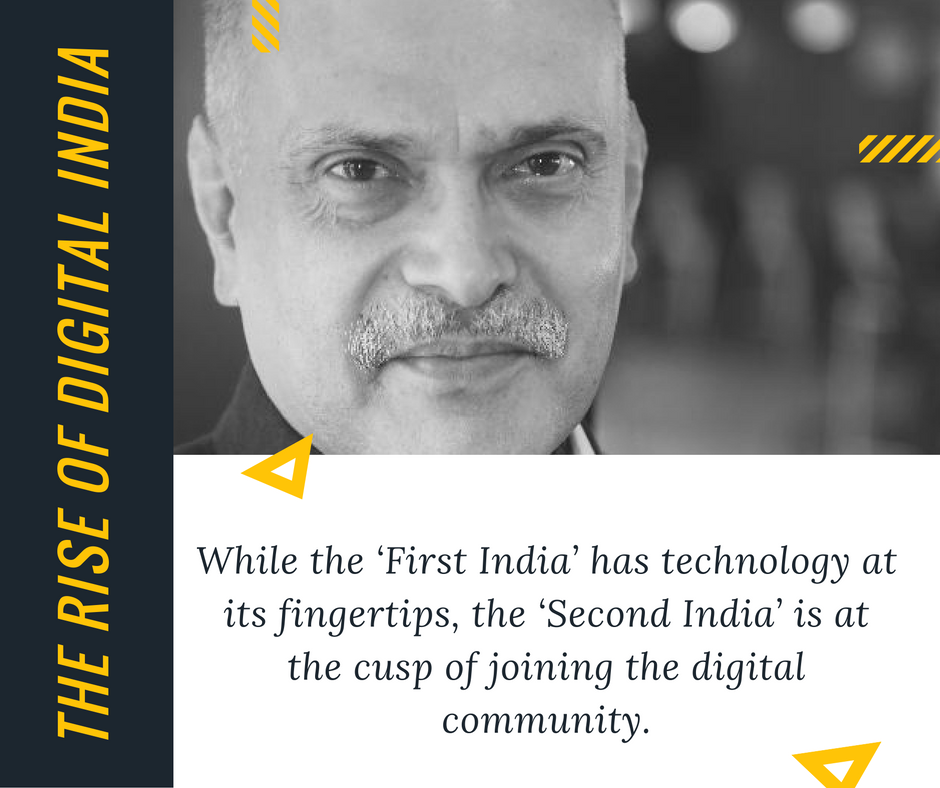
If recent growth and development trends are anything to go by, within the next three to five years, India could effectively add hundreds of millions of potential new, digitally savvy consumers, Bahl adds.
While Bahl extensively talks about the two Indias, which may seem “decades apart”, he asserts that technological advancement is “slowly but surely closing the gap”.
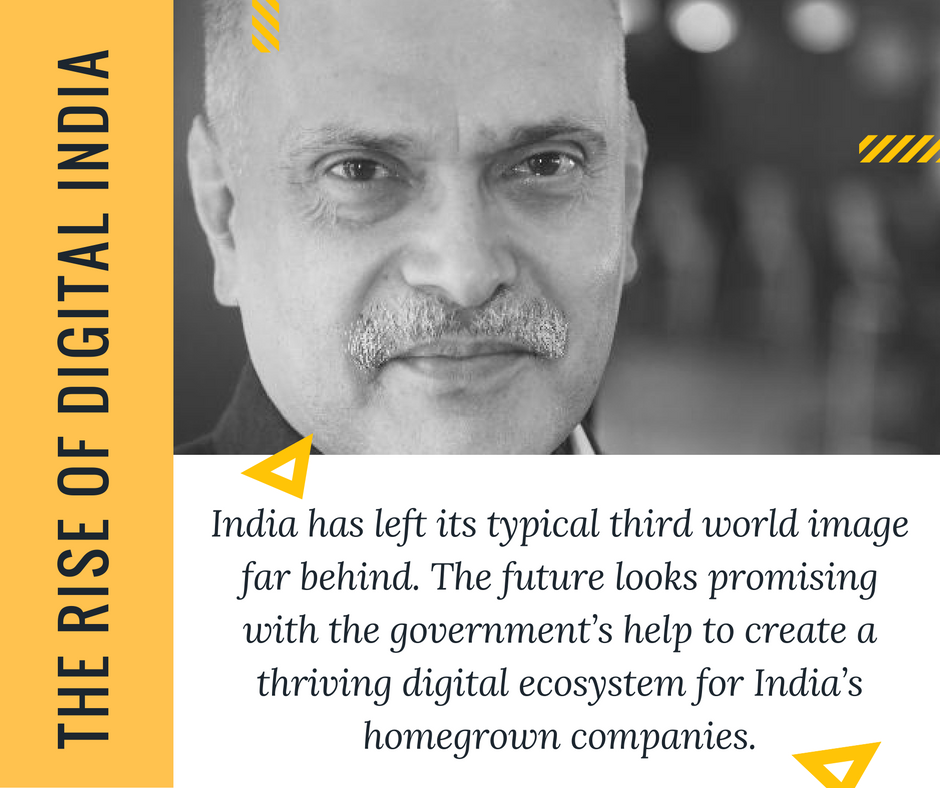
But at the same time, Bahl points out that the lack of innovation in the homegrown Indian tech scene has resulted in the domination of foreign companies in the country. It is therefore unlikely that India can cement a place as the next tech superpower, Bahl argues.
While the Indian government might be putting their foot down about smaller issues such as local sourcing and policy technicalities, civil servants opened up the digital landscape too much and allowed too many big foreign companies in before the Indian digital baby had even learned to walk. As a result, India has failed to develop its own home market for tech innovation.Raghav Bahl, Founder, Quintillion Media
As an example, Bahl cites the success of homegrown companies like Ola Cabs and Flipkart, which was limited due to big foreign entrants like Uber and Amazon setting up base in the country.
But a digital revolution is surely underway with the future looking bright for India. It will be up to the legislators, Bahl says, to make sure that this digital colony transmits as many benefits to its citizen as possible.
..this is not the first time that foreign entities have placed themselves in India in the name of positive change, but one can only hope this time will be more beneficial on both sides of the table.Raghav Bahl, Founder, Quintillion Media
This article was originally published on Mashable.
Essential Business Intelligence, Continuous LIVE TV, Sharp Market Insights, Practical Personal Finance Advice and Latest Stories — On NDTV Profit.