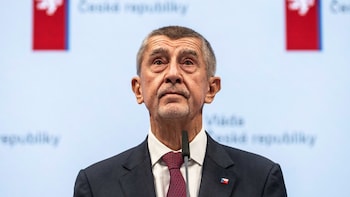
(Bloomberg) -- Bank of Japan Governor Haruhiko Kuroda said on Friday that he didn't see an immediate need to reduce the central bank's asset purchases as it shifts its focus from expanding the monetary base to targeting interest rates.
Responding to questions in parliament, Kuroda acknowledged that it may not be necessary in the future to continue buying Japanese government bonds at the current pace of 80 trillion yen ($770 billion) annually.
Haruhiko Kuroda speaks on Oct. 21.
Investors are seeking clues to how the BOJ will implement its new easing framework, introduced last month. In addition to maintaining JGB buying, it targets both a short-term rate on some bank reserves, currently at minus 0.1 percent, and aims to peg the yield on the 10-year JGB at around zero.
Investors are also curious about how much fluctuation in the 10-year yield the BOJ will tolerate. Kuroda said on Friday that setting a specific range isn't necessary or appropriate.
The central bank is scheduled to hold its next meeting Oct. 30-Nov. 1.
'Implicit Tapering'
Some economists said the new framework would enable the BOJ to reduce its asset purchases without confirming that it was tapering. Among them is former BOJ board member Sayuri Shirai, who said Friday that the BOJ's policy shift signaled a tightening of monetary policy and a tapering of bond purchases.
“The characteristics of the policy announced in September are implicit tapering,” she said in a press conference in Tokyo, adding that there was "no room for objection" to this view.
The BOJ couldn't sustain its current JGB purchases and should gradually cut them to 60 trillion yen, Shirai said.
Shirai, whose term ended March 31, voted with Kuroda most of the time during her board tenure, but was one of four dissenters when the BOJ decided in January to introduce negative interest rates.
Any slowdown in JGB purchases risks giving the impression of tapering, which could trigger gains for the yen that would hurt efforts to revive Japan's economy.
The BOJ last month also committed for the first time to overshooting its 2 percent inflation target. It is scheduled to announce its latest outlook for inflation at the conclusion of its next policy meeting.
Kuroda said in an interview with Bloomberg Television this month that it may take a few more months than currently forecast to reach 2 percent. The current outlook calls for hitting it in the fiscal year through March 2018.
Japan's core inflation gauge shows prices have fallen for six straight months.
To contact the reporter on this story: Yoshiaki Nohara in Tokyo at ynohara1@bloomberg.net. To contact the editors responsible for this story: Brett Miller at bmiller30@bloomberg.net, Henry Hoenig
Essential Business Intelligence, Continuous LIVE TV, Sharp Market Insights, Practical Personal Finance Advice and Latest Stories — On NDTV Profit.