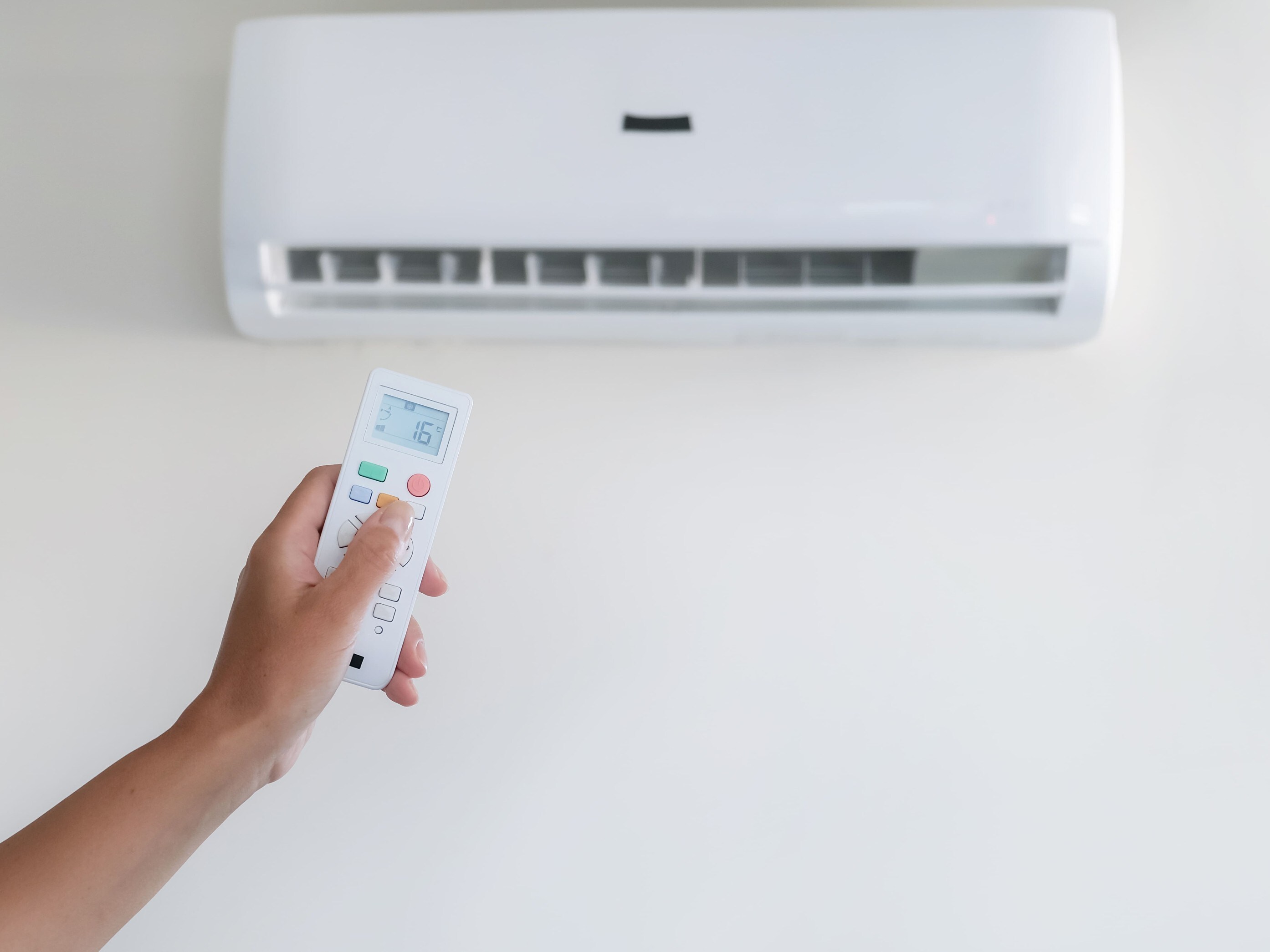
The government is planning to introduce a rule that could prevent air conditioners across India from being set to a temperature below 20°C. The measure, which will apply not only to home units but also to ACs in hotels, commercial establishments and vehicles, is part of an initiative aimed at curbing electricity consumption and improving energy efficiency.
At a recent event in Delhi, Union Power Minister Manohar Lal Khattar said that a new provision is being finalised to standardise air conditioner temperature settings across the country. Under this initiative, ACs will be programmed to operate only within a range of 20°C to 28°C. The move is aimed at regulating temperature limits for improved energy efficiency.
What To Expect From Proposed Guidelines?
The directive will restrict operational temperature ranges for all air conditioners, whether installed in residential or commercial settings. Presently, many air conditioners allow users to set temperatures as low as 16°C or 18°C, and heating options as high as 30°C. Under the proposed rule, manufacturers would be required to re-programme devices or issue software updates to enforce the 20°C to 28°C range.
Why The Government Is Pushing For Capping AC Temperature?
According to Khattar, the primary objective of this initiative is to manage India's growing electricity demand, particularly during peak summer months when widespread AC usage puts immense strain on the power grid.
Pankaj Agarwal, the power ministry's top bureaucrat, said air conditioners already contribute around 50 gigawatts, or one-fifth, of the country's maximum power load. He stated at the same event, as reported by Bloomberg, that studies show each 1°C increase in AC temperature leads to a 6% reduction in power consumption. Raising the temperature to 20°C could help save an estimated three gigawatts of peak demand, he added.
Potential Long-Term Impact Of New AC Temperature Rules
Citing a study published by the University of California, Berkeley in March 2025, Bloomberg reported that tightening energy efficiency standards for cooling could help India avoid 60 gigawatts in peak electricity demand by 2035.
India's maximum electricity demand reached a record 250 gigawatts during the summer of 2024 and is projected to rise by another 8% this year. While unusually frequent rains in May temporarily helped ease the load, recent heat waves in June have pushed consumption back up. The national grid controller reported a maximum demand of almost 241 gigawatts on Monday, June 9, which is the highest so far this year, according to Bloomberg.
Essential Business Intelligence, Continuous LIVE TV, Sharp Market Insights, Practical Personal Finance Advice and Latest Stories — On NDTV Profit.