When geopolitical tensions flare, markets don't freeze—they react, rotate, and, more often than not, recover. Amid the ongoing geopolitical tensions flaring up in the Middle East, data from Creed Capital tells a story investors often forget in the heat of the moment: panic is temporary, but positioning is everything.
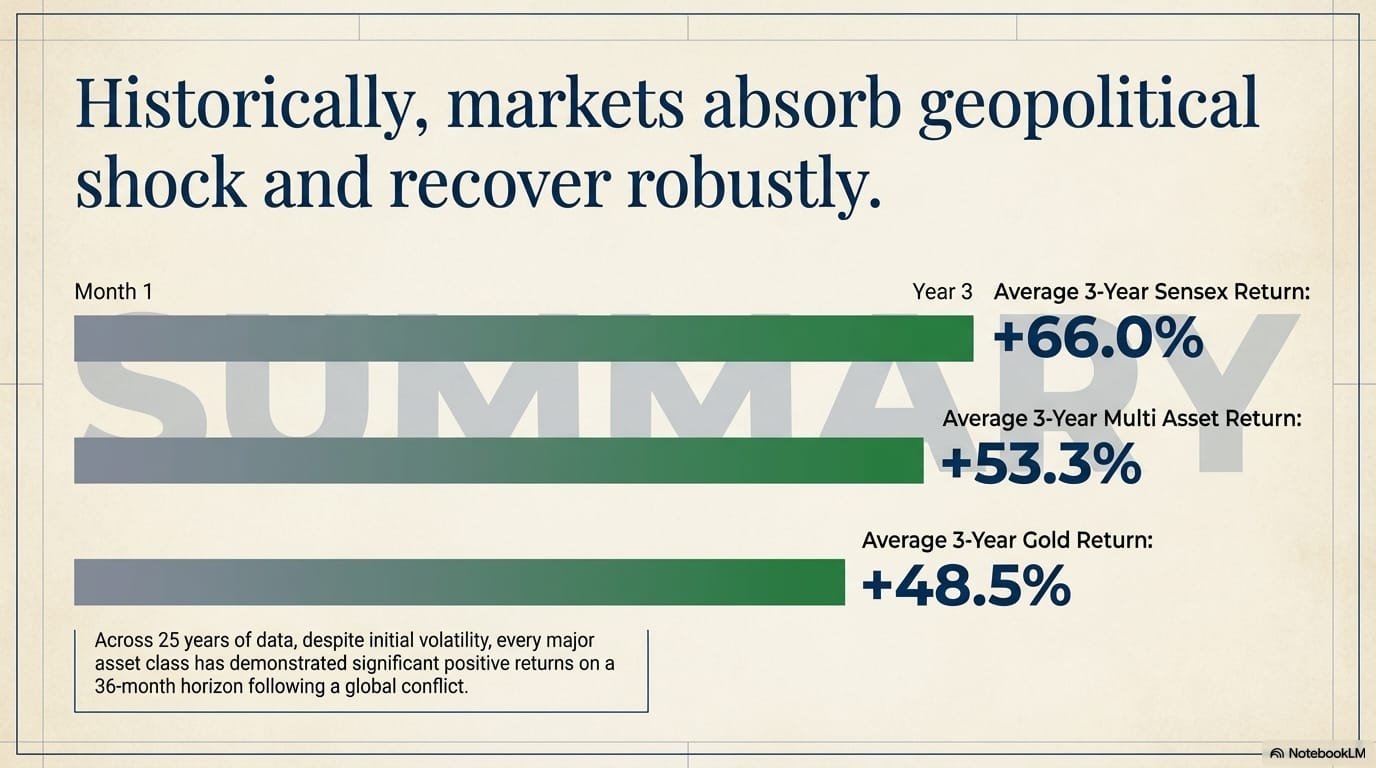
Across 25 years of global conflicts, the pattern is strikingly consistent. Equities take an initial hit, but over a 3-year horizon, returns turn decisively positive. The Sensex, on average, delivers +66%, outperforming gold (+48.5%) and even diversified multi-asset portfolios (+53.3%). The takeaway: time, not timing, is the ultimate hedge.
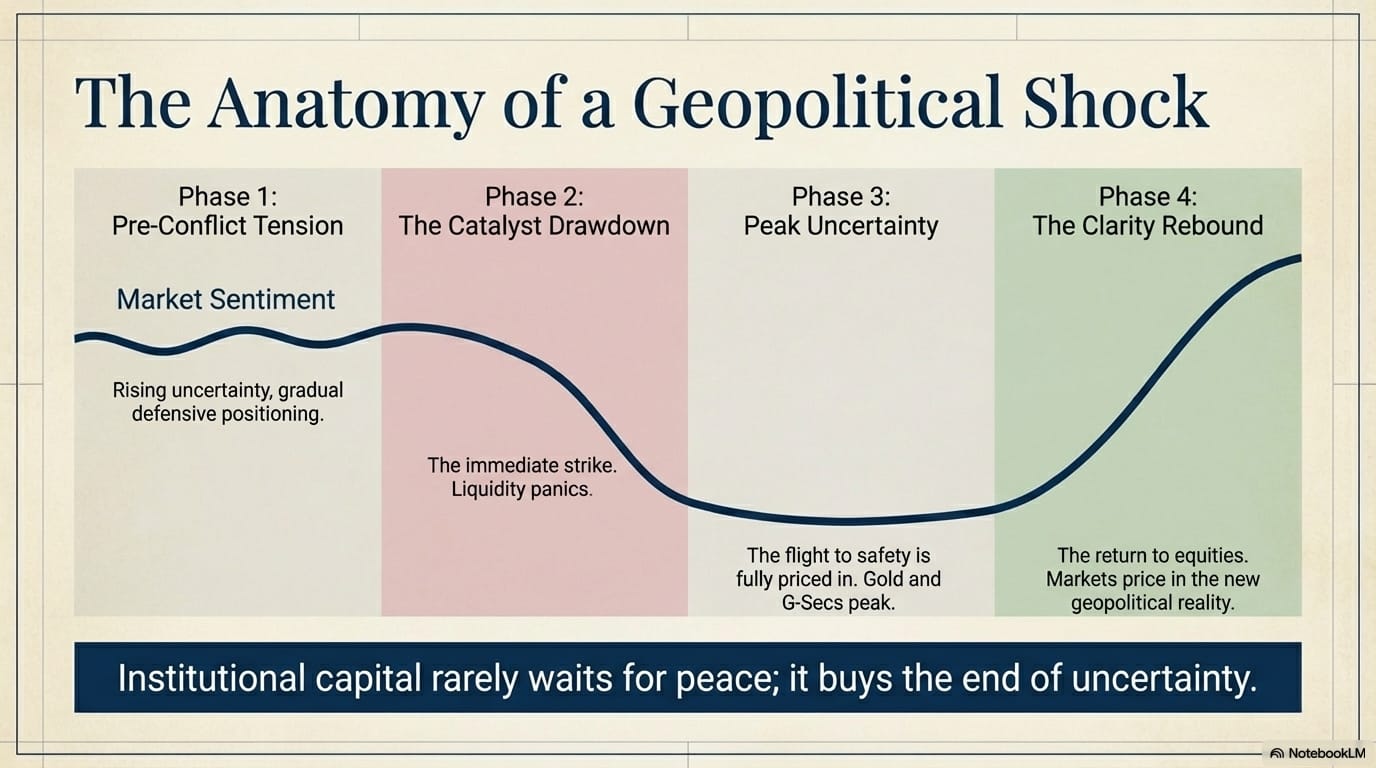
Markets move in four clear phases.
Also Read | Layoffs Are Rising In Tech, But These Skills Are Helping People Unlock Better Pay
- Phase 1: Rising tension, cautious positioning.
- Phase 2: The trigger—sharp drawdowns, liquidity panic.
- Phase 3: Peak uncertainty—flight to safety, gold and government bonds surge.
- Phase 4: Clarity rebound—equities rally as markets price in the new normal.
Crucially, institutional money doesn't wait for peace—it moves at the first signs of uncertainty easing.
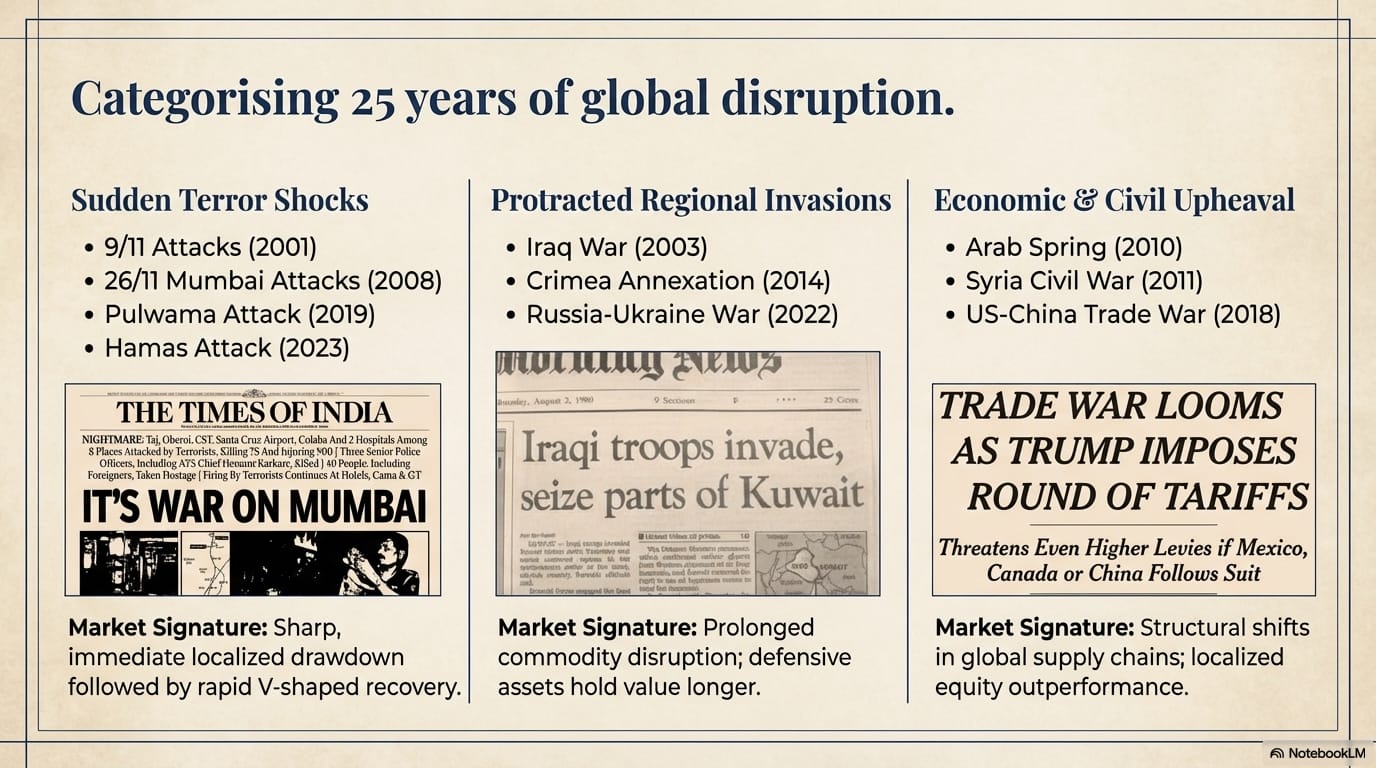
Not all shocks are equal. Sudden terror attacks (like 9/11 or 26/11) trigger sharp but short-lived corrections. Prolonged conflicts (Iraq, Ukraine) stretch volatility but sustain defensive asset demand. Economic upheavals reshape supply chains and create new winners.
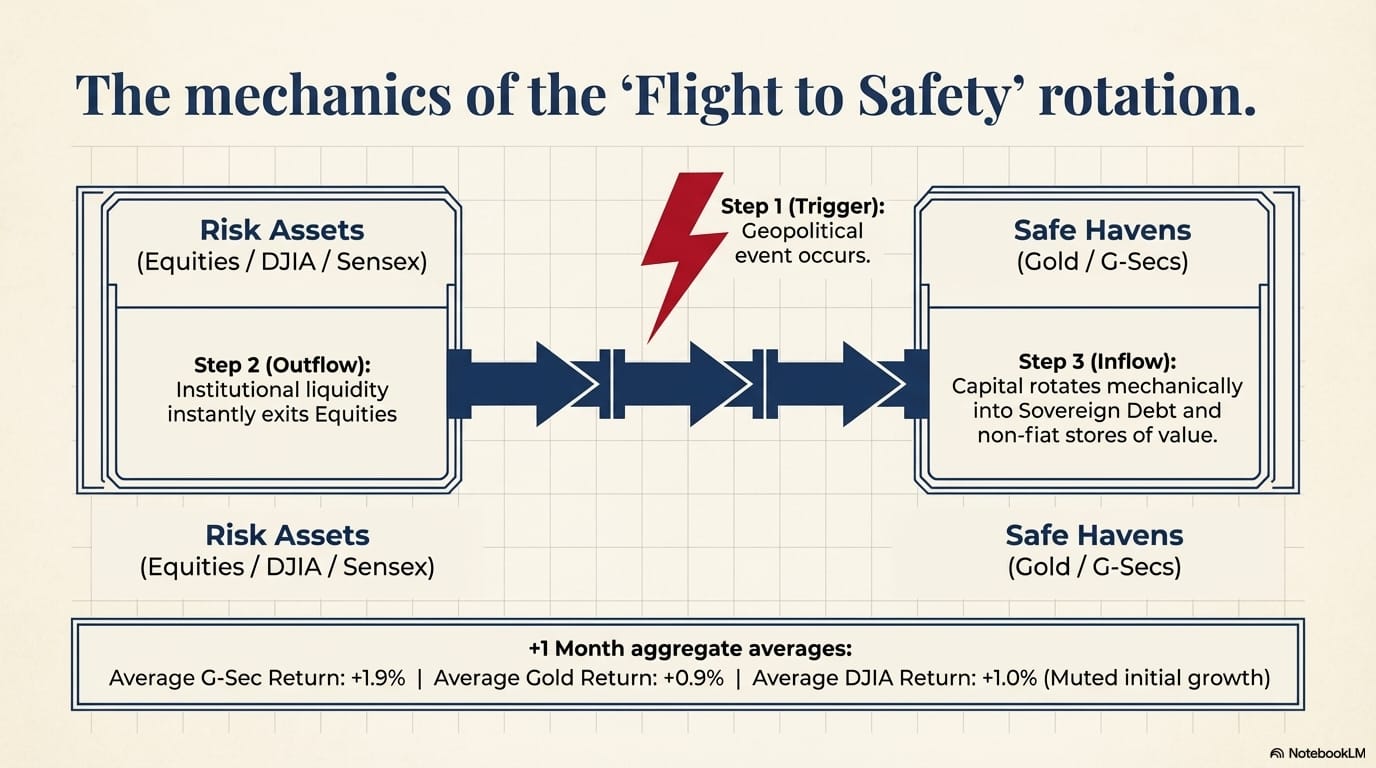
The rotation is almost mechanical. Capital exits equities instantly and flows into safe havens like gold and government securities. In the first month, bonds and gold often outperform, while equities show muted or negative returns.
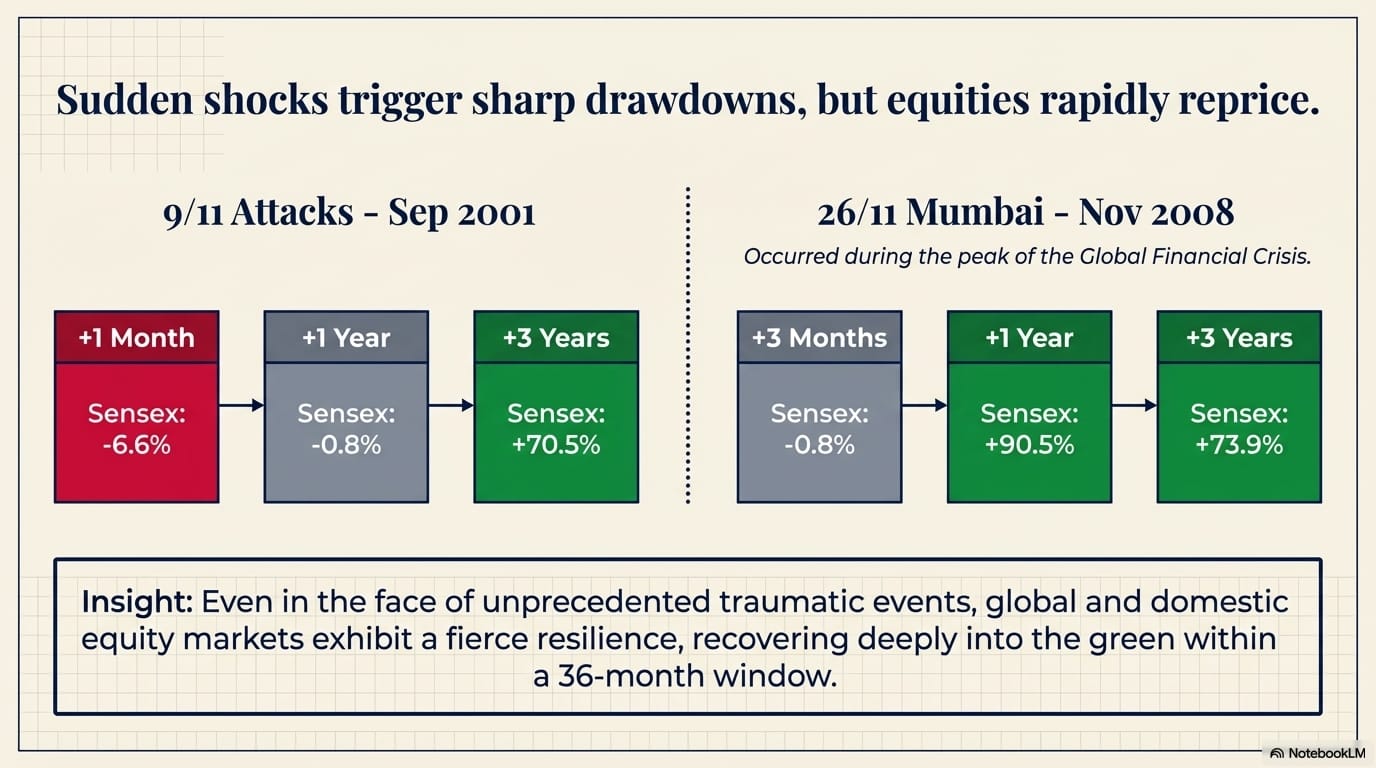
Even in extreme scenarios, recovery is swift. Post 9/11, the Sensex fell 6.6% in a month, but surged 70.5% over three years. After the 26/11 attacks—amid a global financial crisis—markets still delivered nearly 74% returns over three years.
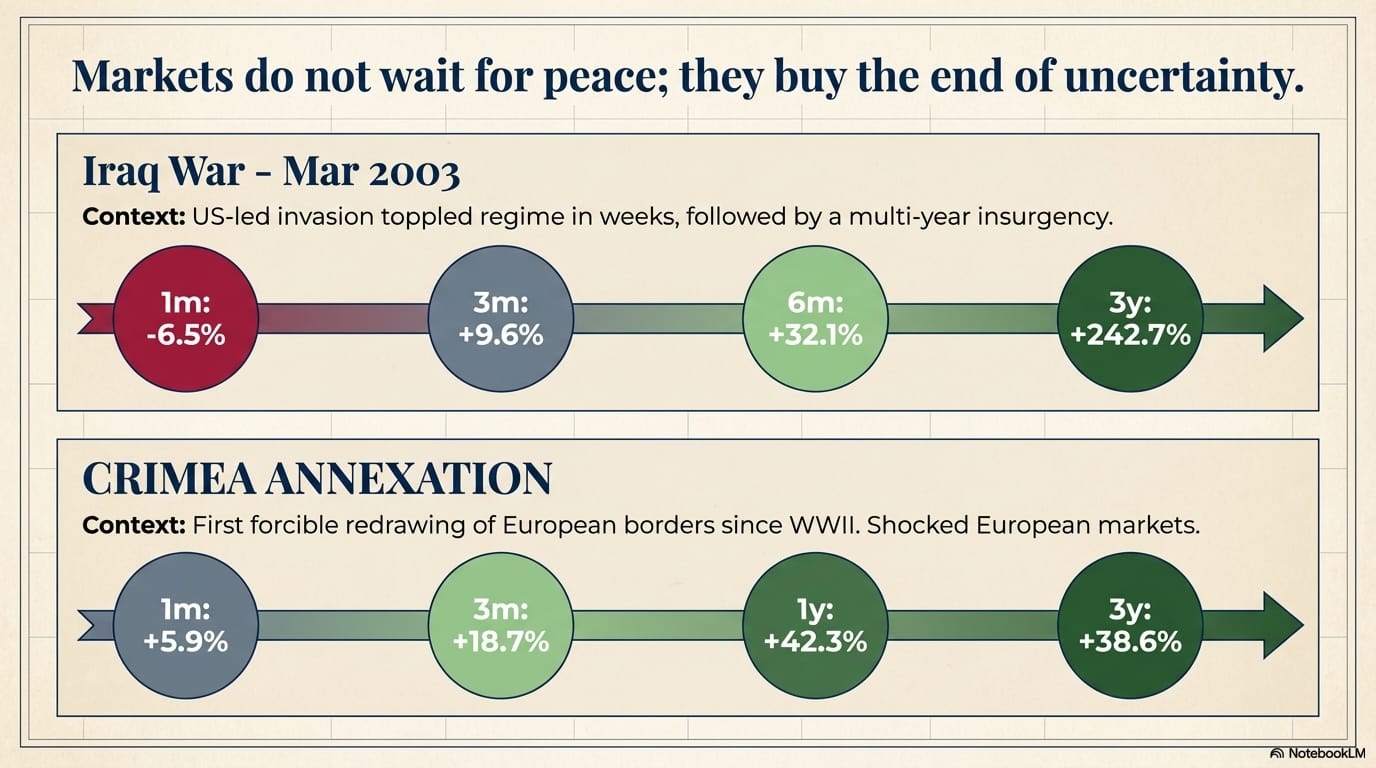
The Iraq War and Crimea annexation reinforce this: initial drawdowns are followed by strong rebounds within months, not years.
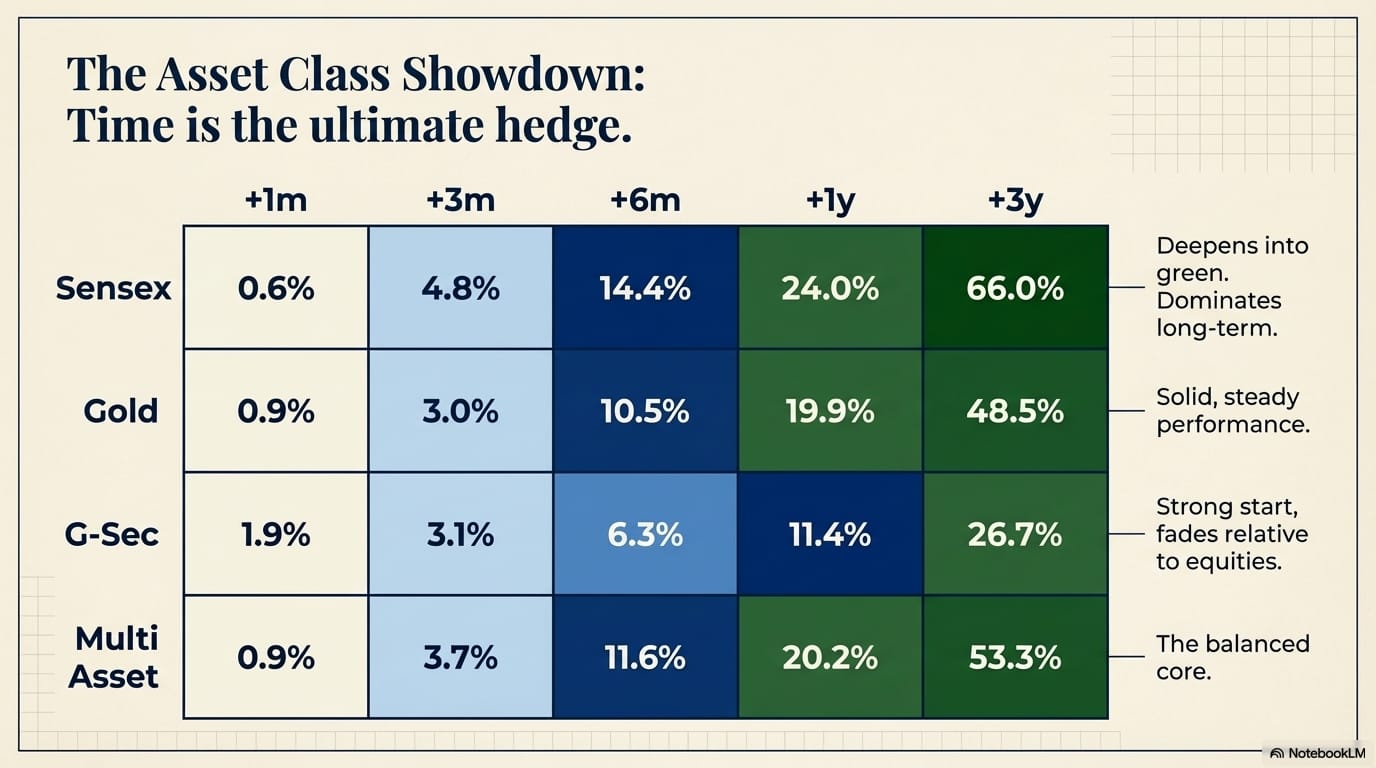
Gold and bonds offer stability early on, but equities dominate over time. Multi-asset strategies smooth the ride, but rarely beat pure equity in the long run. War shifts money—but it doesn't destroy opportunity. The smartest capital doesn't hide forever; it rotates, waits, and then returns—often before the headlines turn hopeful.
Essential Business Intelligence, Sharp Market Insights, Practical Personal Finance Advice, Daily Fuel, Gold and Silver Prices and Latest Stories — On NDTV Profit.