US Stock Markets Today: Nasdaq And S&P 500 Open Lower, Dow Jones Up Ahead Of Fed Rate Decision
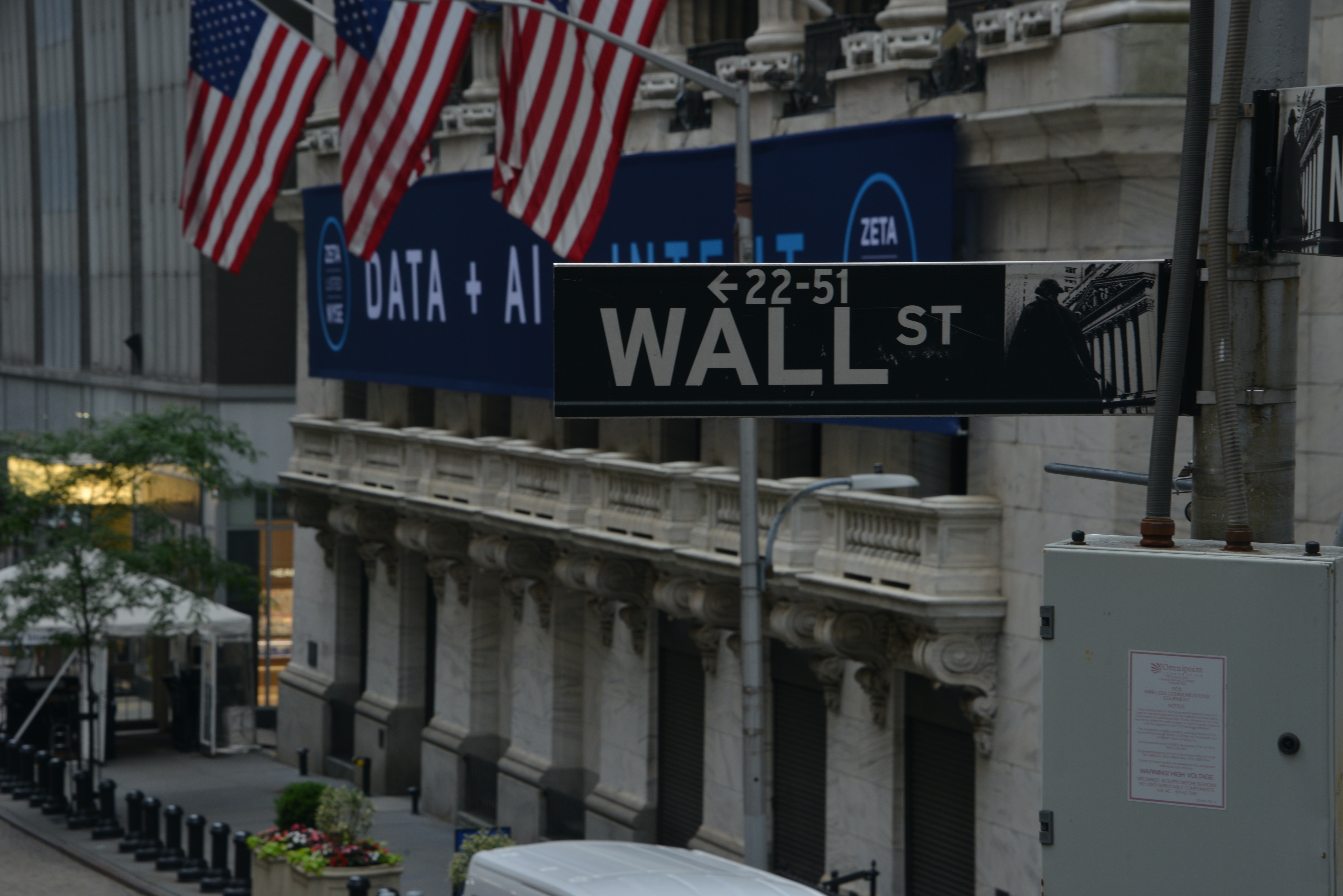
US stocks opened mixed on Wednesday, ahead of the Federal Reserve's interest rate decision.
The tech-heavy Nasdaq slipped 0.07% to below 23,000 level. The Dow Jones Industrial Average rose as much as 0.3% to 43,566, to snap its longest losing streak since 1978.
The broader S&P 500 was down 0.06% at 6,048. Eight out of the eleven sectoral indices were trading in the red, led by declines in consumer discretionary, consumer staples and telecom. Industrials, healthcare and information technology were the only sectors seeing gains.
Among major companies, shares of Nvidia Corp., UnitedHealth Group, Uber Technologies Inc. and CVS Health Corp. witnessed gains in early trade. On other hand, Moderna Inc., Super Micro Computers Inc., Tesla Inc. and Microsoft Corp. saw a decline.
The markets are clearly focused on the Fed's last rate decision of 2024. A quarter-point cut is widely expected, but uncertainty looms over the future course of action.
Despite the resilience of the US economy, the potential for inflationary import tariffs under Donald Trump's incoming administration may cause Fed officials to reconsider the pace of future rate hikes.
The Fed's future rate projection and Chairman Jerome Powell's speech is will also be closely monitored. The decision will be announced at 12:30 a.m., as per Indian Standard Time, and Powell will address a press conference at 1:00 a.m. (IST).
Among other asset classes, the yield on the US 10-year Treasury bond was flat at 4.4%.
The Dollar Index remained steady at 107. The euro was little changed, while the British pound fell 0.1%. The Japanese yen declined 0.2%.
In the commodities market, spot gold was down 0.3% at $2,638 per ounce. Brent crude, the global oil benchmark, gained nearly 1% to trade near $74 per barrel.
Bitcoin sunk 1.8% to $104,537.76.
Follow the latest on the US FOMC Meeting here.

-
Getting To Work Costs Women More | The Reason Why

It is not just about women paying more than men. It is about women paying much more in cities than in villages.
-
AI Bias In Investing Cannot Be Eliminated, But It Can Be Governed
Framing is a particularly important example as identical financial information presented in terms of gains rather than losses can lead an LLM to reach a different assessment.
-
Joining The Dots | Dark Skies, Steady Diya: Why Hope Holds This Diwali
With war, a weak rupee and foreign outflows weighing on sentiment, policymakers at the NDTV World Summit and market veterans at NDTV Profit Ignite: Diwali Edition offered the same advice: stay invested and filter out the noise.
-
The Curious Case of Equitas Small Finance Bank And A CEO Who Quit For Stock
PN Vasudevan believes persistent investor concerns over a perceived conflict of interest had become a governance overhang on Equitas Small Finance Bank's stock, even as the lender improved profitability and asset quality.
-
Talking Points This Week: AI Cash Burn, A Tiger Comeback And An India That Still Finds Its Own Path
India is not immune to higher oil or tighter global liquidity, yet its earnings base is broader, its domestic policy levers are still available.
-
Foreign Investors Own Half Of HDFC Bank and ICICI Bank. An LTCG Cut Could Matter Most Here
Foreign portfolio investors have US$115 billion parked in HDFC Bank, ICICI Bank. If the government cuts long-term capital gains tax, Jefferies says returning foreign money could land here first.
-
'Never Seen This Level Of Negativity': Sandeep Tandon Says The Next Rally May Be Closer Than You Think
Veteran investor Sandeep Tandon says foreign selling is easing, large-caps are due a comeback and mid-caps are crowded, while he turns positive on gold, power and pharma this Diwali.
-
Indians Stay With Family, Not In Hotels | The Reason Why
India still lacks enough clean, reliable and affordable hotels for budget-conscious travellers.
-
The Economic Imperative: Analysing The Material Driving Force Behind India-Canada Strategic Reset
This economic complementarity is further reinforced by deep institutional investment ties and talent mobility, which form the bedrock of the bilateral framework.
-
Medicine Pricing: Where Must Profit Stop?
India must confront excessive margins, hidden incentives and regulatory gaps that threaten the integrity of medicine.










