
- Indian markets fell sharply as Middle East tensions triggered a risk-off sentiment
- Nifty dropped over 530 points, Sensex declined more than 1,700 points in early trade
- Nifty Smallcap 250 and Midcap 150 indices fell over 2%, showing broad market weakness
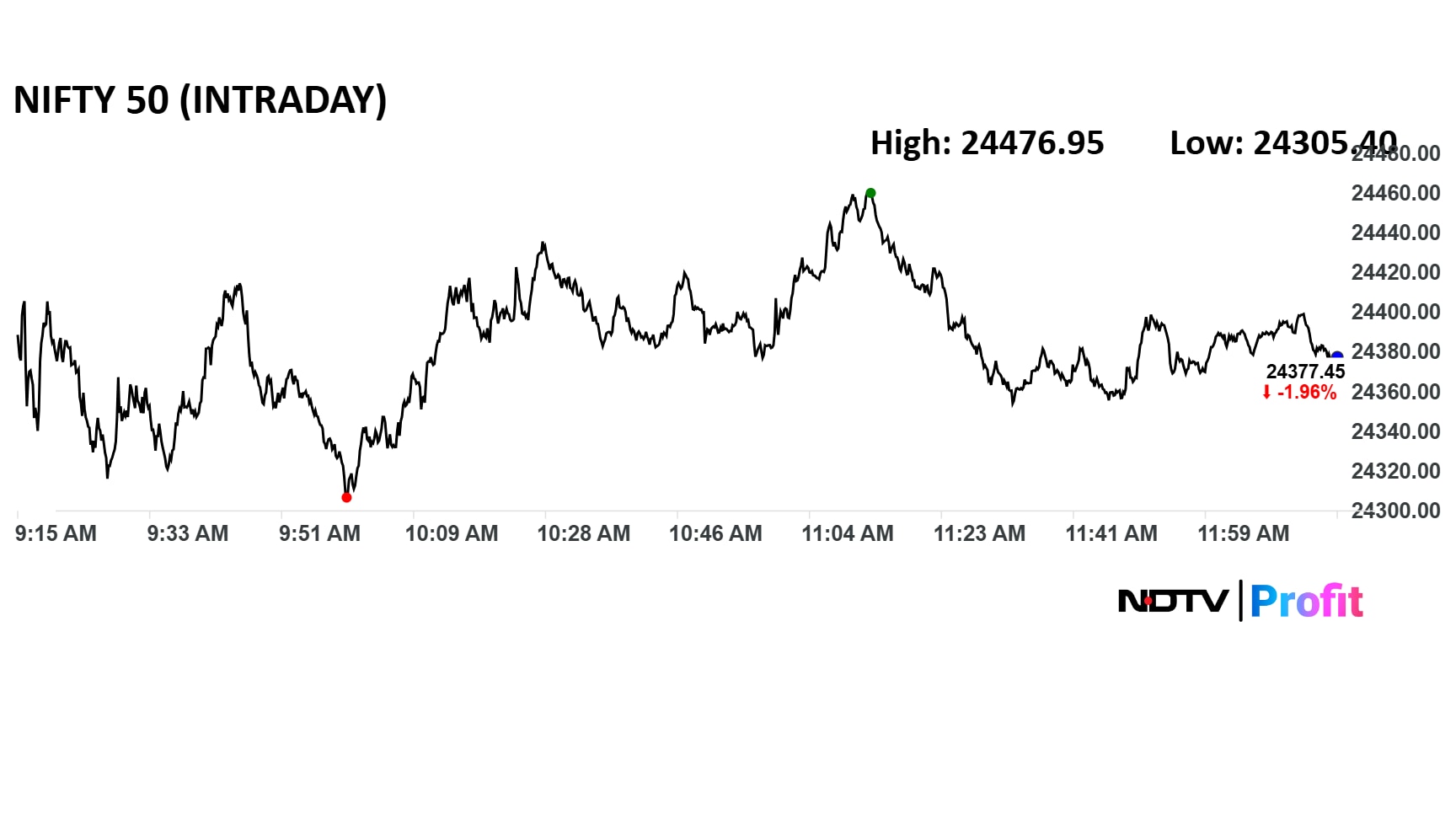
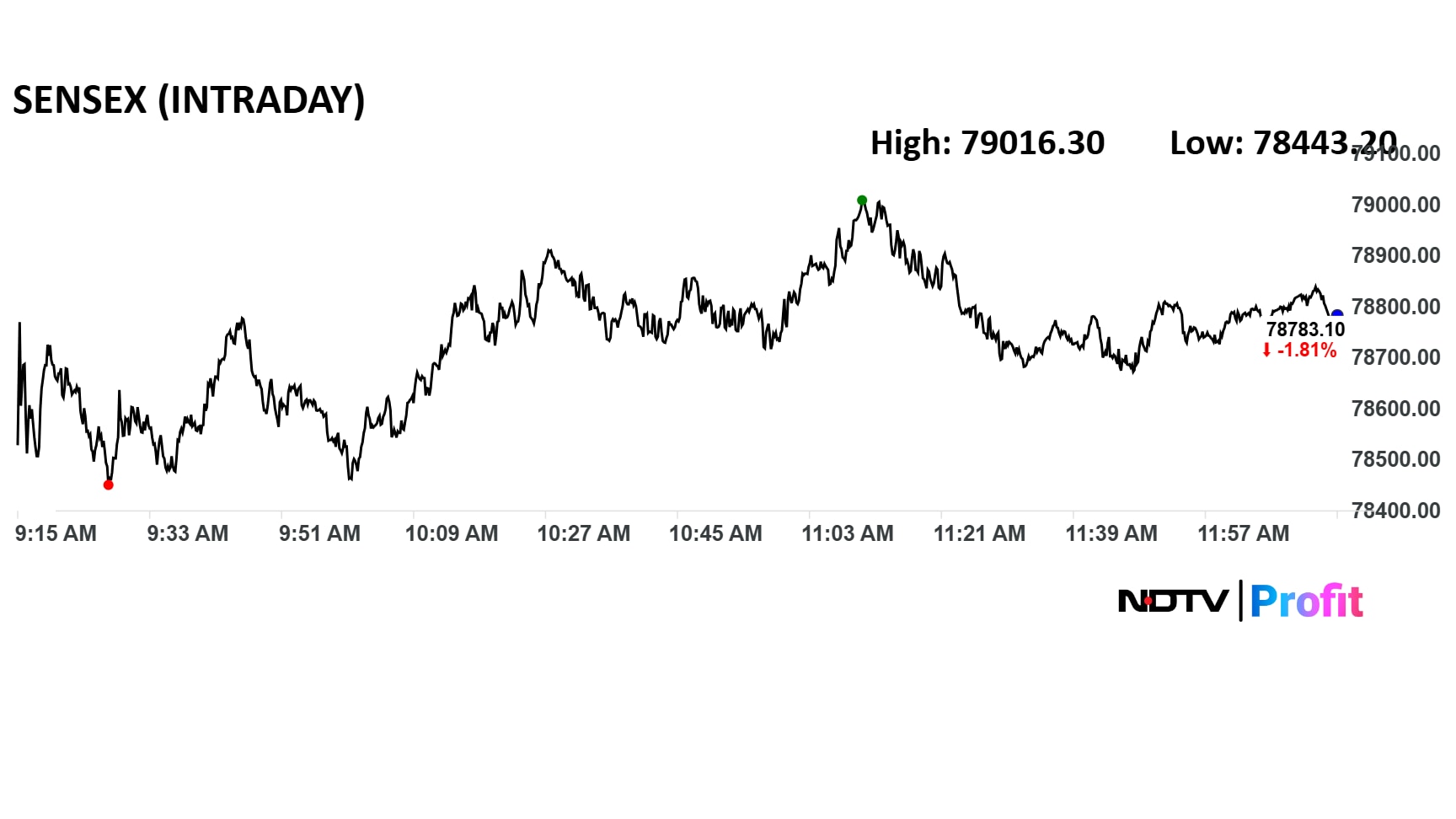
Indian markets are under heavy pressure in Wednesday's session as escalating tensions in the Middle East have triggered a broad risk‑off move. At 12 noon, the Nifty slid more than 490 points (down 2%) to around 24,3,72 while the Sensex dropped over 1,516 points (down 1.89%) to nearly 78,732.
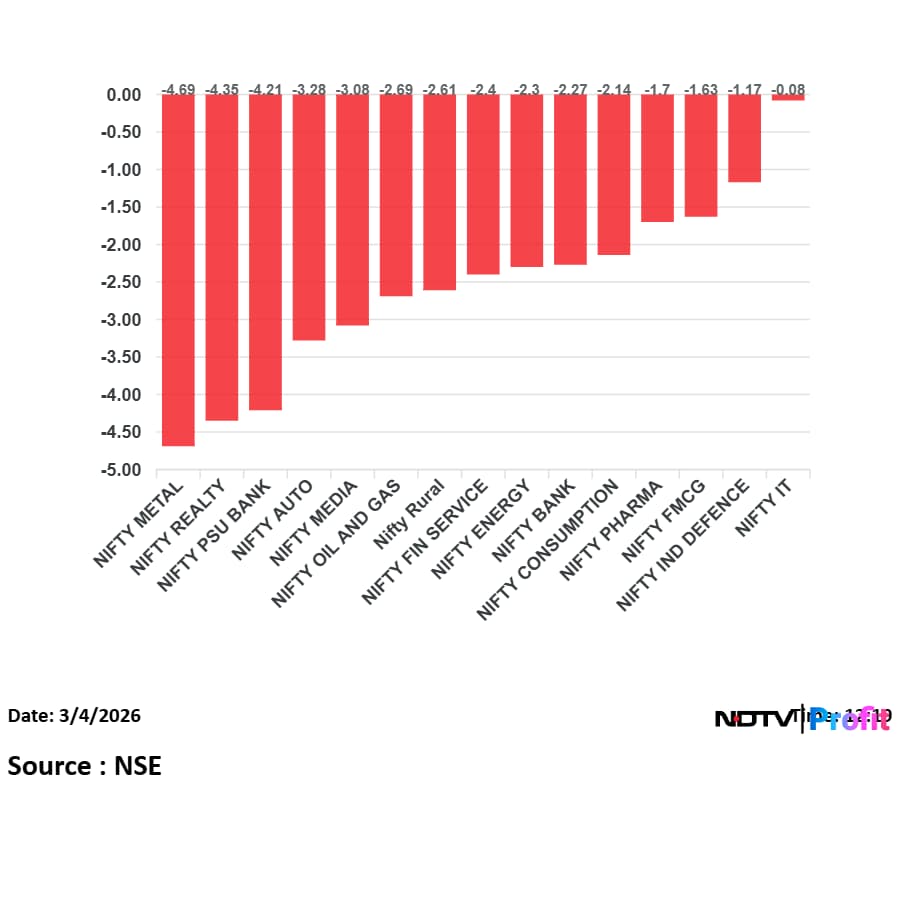
All sectors are trading in the red, with Nifty Metal falling the most by over 4.5%, followed by Realty and PSU Bank plunging by over 4%.
The broader market is facing even more pressure, with the Nifty Smallcap 250 falling almost 2.72%, and the Nifty Midcap 150 dropping about 2.81%.
Also Read | Layoffs Are Rising In Tech, But These Skills Are Helping People Unlock Better Pay
Volatility spiked sharply, with the India VIX — the market's fear gauge — surging 23.61% to 21.20, its highest level since May 2025. The index last touched similar levels during the June Israel–Iran conflict, underscoring heightened investor anxiety as geopolitical risks intensify.
Here are three key reasons dragging the markets on Monday.
Middle East Tensions
The conflict in the Middle East has entered its fifth day. Iranian missiles and drones have continued to hit locations around the Gulf while the United States have kept the pressure on Tehran to end hostilities and return to talks.
Iran's Assembly of Experts has elected former Supreme Leader Ayatollah Ali Khamenei's son Mojtaba to succeed him, NDTV reported on Wednesday citing local media.
The selection has been made under pressure from the powerful paramilitary group Islamic Revolutionary Guards Corps. Mojtaba Khamenei, the 56-year-old second son of the late Supreme Leader, operates as a formidable power broker with deep, behind-the-scenes influence over the IRGC and the Basij paramilitary networks.
Brent crude prices also spiked above $82/bbl.
Sonal Varma of Nomura told NDTV Profit that the escalating geopolitical situation is likely to disrupt supply chains through FY26, adding pressure to India's external balances, with the current account deficit expected to hover around 1% of GDP. She cautioned that Brent crude rising above $85 per barrel would significantly strain oil marketing companies (OMCs) and amplify macro‑vulnerabilities.
Rupee Under Pressure
The rupee also sunk to a new low on Wednesday as the conflict in the Middle East showed no signs of ending, pulling money out of emerging markets like India and into safety of bullion and bonds.
The INR fell 60 paise to hit a record low of 92.08 to the US dollar soon after trading opened. The local currency was the worst performer among Asian peers.
Global Cues
10‑year government bond yield climbing sharply, signaling investor preference for safety over riskier assets. Across Asia, stress was evident as well, with South Korea's Kospi hitting the lower circuit, underscoring the scale of the sell‑off. Foreign institutional investors added to the pressure, with FII short positions rising to 84% from 82%, while they continued to be net sellers in the cash market for the third consecutive day, revealing sustained caution toward Indian equities.
The risk aversion was broad‑based across asset classes: the Dollar Index strengthened for the third straight session, moving above 99, as global investors sought refuge in the greenback. Commodities reflected this flight to safety too, with gold prices jumping on renewed safe‑haven demand, reinforcing the defensive tone gripping global markets.
Essential Business Intelligence, Sharp Market Insights, Practical Personal Finance Advice, Daily Fuel, Gold and Silver Prices and Latest Stories — On NDTV Profit.