- Freight rates could triple due to Middle East tensions disrupting Strait of Hormuz shipping
- INSA reports 37 India-flagged ships stuck near Strait with 120 Indian crew members onboard
- War-risk insurance premiums for ships transiting Hormuz may nearly double, raising costs
Freight rates for global maritime trade could surge up to threefold as escalating tensions in the Middle East disrupt shipping through the Strait of Hormuz, according to the Indian National Shipowners' Association (INSA). Anil Devli, Chief Executive Officer of the industry body, said the worsening security situation around the crucial oil transit route has already begun pushing up shipping costs as insurers raise war-risk premiums and vessels avoid the area.
Devli said 37 India-flagged ships are currently stuck around the Strait of Hormuz, with nearly 120 Indian crew members on board. The immediate concern, he said, is the safety of both vessels and seafarers navigating the volatile region. “There are concerns about the assets and people stuck in the Strait of Hormuz,” Devli said, adding that the situation remains fluid as hostilities continue in the region.
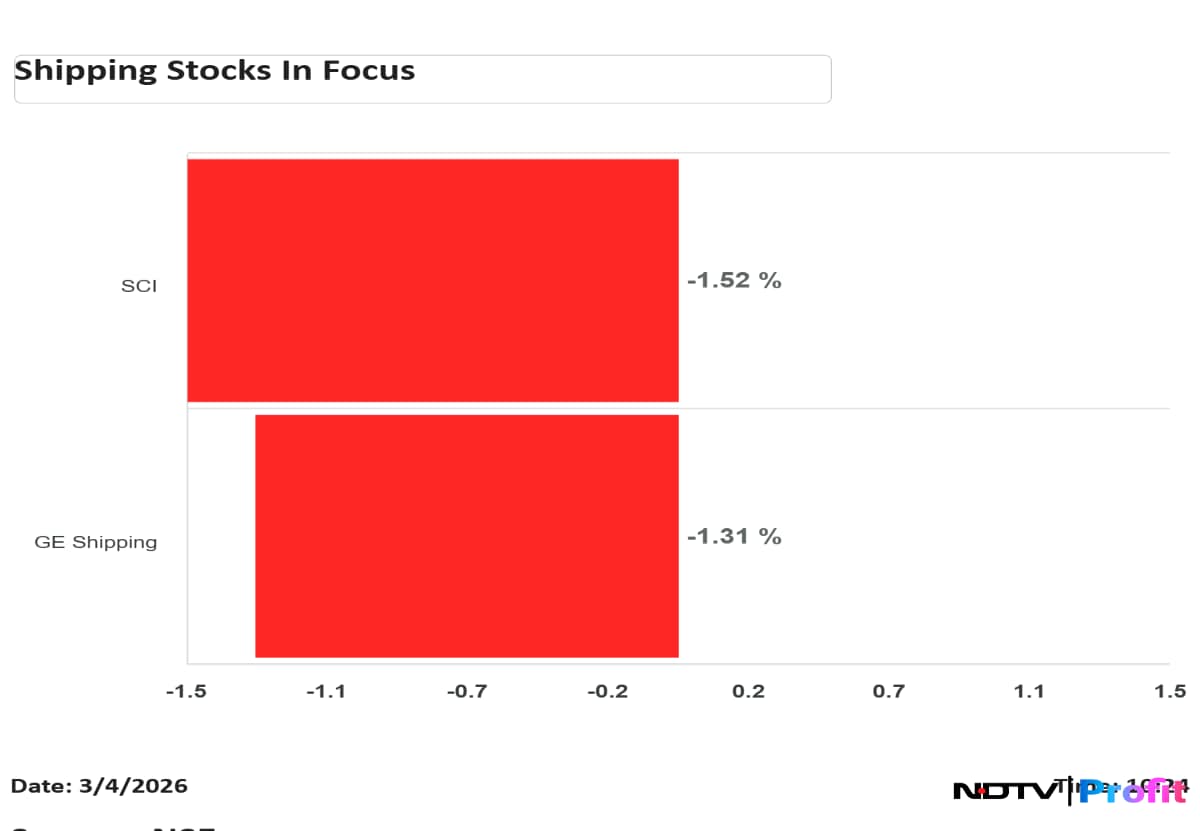
Stocks In Focus
Shares of Shipping Corporation of India Ltd. are trading over 1.5% down today, and have fallen nearly 6.5% in the past five days, to trade around Rs 252 apiece.
Also Read | Layoffs Are Rising In Tech, But These Skills Are Helping People Unlock Better Pay
Similarly, Great Eastern Shipping Company Ltd shares are also trading 1.30% lower at around Rs 1,309 apiece, and have dipped 2.7% in the past five days.
Insurance Costs Jump Amid War Risks
Insurance coverage for ships operating in the region has not been withdrawn, but insurers have sharply increased the war-risk premium applied to vessels transiting the chokepoint. Devli said insurance cover for ships operating in the Strait of Hormuz could rise by nearly two times, significantly increasing the cost of maritime trade.
Ship operators are also facing operational challenges as uncertainty around security conditions discourages new voyages through the region. “Freight rates have already zoomed up and many operators are reluctant to accept new orders,” he said.
Trade Route Under Pressure
The Strait of Hormuz — a narrow passage linking the Persian Gulf to the Indian Ocean — remains one of the world's most critical energy chokepoints, carrying a significant share of global crude oil and liquefied natural gas shipments.
The conflict in the Middle East has entered its fifth day, with Iranian missile and drone attacks continuing across the Gulf while the United States maintains pressure on Tehran to halt hostilities.
Iran has also warned that ships crossing the waterway could face attacks, raising concerns that commercial shipping could be directly targeted.
Any disruption in Hormuz traffic poses a major risk for India, which relies heavily on imports for its energy needs. India imports more than 80% of its crude oil, and government officials estimate that around 40% of those supplies pass through the Strait of Hormuz.
ALSO READ: Nifty, Sensex Crash 2% On Opening — Three Reasons Why Markets Are Falling
Essential Business Intelligence, Sharp Market Insights, Practical Personal Finance Advice, Daily Fuel, Gold and Silver Prices and Latest Stories — On NDTV Profit.