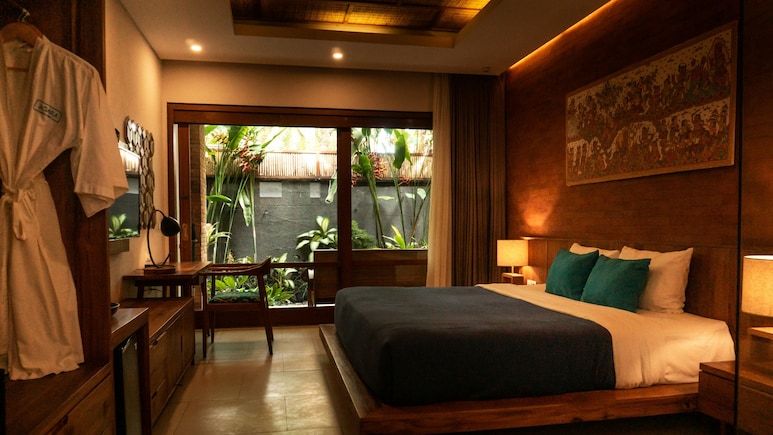
The hotel industry in India is experiencing a demand-supply imbalance. Motilal Oswal points to favourable demand-supply dynamics in branded hotel rooms over FY24-27E, with demand growing at a CAGR of 10.6% vs supply at 8%. This suggests demand is structurally outpacing new room additions in the organised segment, which should keep occupancies firm and pricing power intact.
Beyond this, India has a massive historical supply deficit. As of 2023, India had only 0.27 hotel keys per thousand people, well below the global average of 2.2. This stark gap underlines how under-penetrated the Indian hospitality market remains.
This dynamic of low supply and surging demand has given hotel companies pricing power. As a result, industry revenue growth over the past few years has been driven not just by volumes, but also by stronger realisations. This is the industry backdrop. Now, let's turn to two of the leading brands operating in this favourable cycle.
Also Read | Layoffs Are Rising In Tech, But These Skills Are Helping People Unlock Better Pay
ITC's Asset-Right Model: Balancing Ownership, Management
Let's first talk about ITC Hotels. Today, ITC Hotels is a major player in the Indian luxury and upscale hospitality sector, operating under an "asset-right" model. In simple terms, asset-right means the company balances owned properties with a growing share of managed hotels to optimise capital efficiency.
Asset-light means the company manages more property than it owns. The company currently manages a sprawling footprint of over 150 operating hotels and 14,000+ keys.
The portfolio comprises 40% owned and 60% managed keys across seven different brands, including ITC, Mementos, Epic Collection, WelcomHotel, Story, Fortune, and WelcomHeritage. This diversified brand architecture allows it to cater to both luxury and upper-midscale demand pools. It achieved its highest-ever Q3 revenue and profits, driven by strong operational metrics.
Financial Outperformance: Record Occupancy, Premium Pricing
In Q3FY26, ITC Hotels achieved an impressive 75% room occupancy rate, while RevPAR (Revenue Per Available Room) grew by 11% year-on-year to ₹11,400. Impressively, ITC Hotels maintains a 48% RevPAR premium over the industry average across key Indian cities, highlighting the strength of its brand positioning.
International Success: Sri Lankan Scale-up
The newly launched ITC Ratnadipa in Colombo (Sri Lanka) is growing rapidly. The hotel has already achieved a RevPAR leadership position in the city and turned EBITDA positive in Q3 FY26. As a result, ITC Hotels' revenue increased 21% year-on-year, driven by robust RevPAR growth.
Room revenue is the primary driver of the business, accounting for 52% of operating revenue in Q3FY26, followed by food & beverage at 40%, reflecting a balanced revenue mix. EBITDA increased 23% to ₹467 crore, and margins expanded 47 bps to 38%. Consequently, net profit grew by around 9% to ₹235 crore in Q3FY26.
Roadmap to 2030: Targeting 20,000 Keys
ITC Hotels aims to expand to over 220 hotels and 20,000+ keys by 2030. The roadmap to achieve this ambitious goal includes aggressive pipeline and openings. The company has a robust pipeline of 61 hotels with over 6,100 keys. To this end, ITC plans to open more than 1 hotel per month over the next 24 months, accelerating scale without proportionate capital intensity.
Capital Efficiency: Driving Growth via Management Fees
Momentum is already strong, evidenced by the highest-ever number of keys signed in calendar year 2025 (2,790 keys across 28 hotels). Additionally, ITC aims to shift its portfolio mix to 33% owned (down from 40% currently) and 67% managed keys (up from 60%) by 2030. With this, the company is targeting a 2.5x increase in management fees to ₹90.5 crore by FY30, up from ₹36.2 crore in FY25, which should structurally lift return ratios over time.
Rising management fees should support margins and the bottom line, given their negligible incremental fixed costs. In effect, every additional managed key enhances profitability without stretching the balance sheet. While focusing on managed growth, ITC is still strategically investing in high-yield owned properties. To this end, it successfully bid for land at the Yashobhoomi Complex in New Delhi.
Strategic Land Banking: Yashobhoomi, Greenfield Bets
ITC has paid a one-time lease premium of ₹326.5 crore for 91 years to build a premium hotel by 2030. Other greenfield/brownfield projects are also underway in Puri, Vizag, and Bhubaneswar. Overall, the company expects to spend around 8-10% of its total revenue on renovations, ongoing projects, and land banking, ensuring that existing assets remain competitive while new capacity comes on stream.
With healthy cash of ₹1,500 crore (FY25), ITC looks well-positioned to capture the hotel sector's upcycle.
Leela Palaces: Pure-Play Luxury Contender
Beyond ITC Hotels, recently listed Leela Palaces Hotels is uniquely positioned to capitalise on India's growing luxury consumption. The company is India's only pure-play luxury hospitality company. Leela also follows a dual strategy of direct asset ownership and hotel management agreements.
It invests directly in hotel properties when the deal meets its strict economic benchmarks. Leela also partners with fully-funded owners to manage properties. However, currently, the vast majority of the company's top line (95%) is generated directly from asset-heavy assets/leases, which gives it deeper control over the guest experience but also keeps capital intensity elevated.
Outperforming Market: Pricing Power Advantage
Because of its iconic assets, the brand is somewhat inelastic to market shocks and commands a pricing premium. Leela charges ₹5,000 more in RevPAR than its luxury competitors. The company currently operates 14 hotels with 4,090 keys and holds a pipeline of 9 additional hotels with 1,046 keys, indicating steady capacity addition.
It commands a Revenue Generation Index of 147, meaning it performs 47% better than the broader luxury market. In Q3FY26, Leela significantly outperformed the Indian luxury segment, posting a 20% year-on-year growth in RevPAR to ₹21,551 and a 17% growth in Average Daily Rate to ₹30,337. Occupancy stood at 71%, up 200 basis points, demonstrating both rate and occupancy-led growth.
Beyond Rooms: F&B as High-Growth Engine
As a result, operating revenue surged by 21% year-on-year to ₹457 crore in Q3FY26. Revenue growth was supported by the F&B segments. The segment revenue surged 29% YoY to ₹166.2 crore. This acceleration was fueled by a 17% increase in non-resident footfall across its restaurants and the successful launch of new dining venues, which strengthened ancillary revenue streams.
The operating margin of 52% was a quarterly best, with over 60% of incremental revenue converting to EBITDA of ₹238 crore, highlighting strong operating leverage. Net profit jumped by 162% to ₹148 crore, up from ₹56 crore in Q3 FY25. This jump was driven by higher EBITDA and reduced finance costs, marking Leela's 5th consecutive profitable quarter. The company has reduced the interest rate on term loans from 9.1% to 8.25%, further reducing borrowing costs and increasing net profit.
Leela expects mid-to-high teens growth in EBITDA in FY26, with this growth continuing for the next 2-3 years. To sustain margin expansion and revenue growth, Leela is relying on several strategic operational levers. This includes stabilising newly opened F&B outlets (such as Amber Terrace and Jamavar in Jaipur) and the rollout of new venues, such as the conservatory in New Delhi, which should further deepen guest engagement and wallet share.
Management anticipates double-digit growth in both average daily rate and RevPAR in Q4, and expects this to continue through Q1 of FY27. Over the longer run, Leela aims to achieve an EBITDA of ₹2,000 crore by FY30 through a combination of same-store growth and aggressive expansion. Management targets steady year-on-year ADR growth of 9-10% going forward.
Multi-Decadal Opportunity: India's Expanding Luxury Class
According to the management, India's luxury segment is entering a multi-decadal growth phase. It estimates that the households capable of luxury consumption will grow from 7 crore in 2019 to over 20 crore by FY30. Luxury demand is expected to grow by 11-14%, but supply is only increasing in the low-to-mid single digits. This structural imbalance between demand and supply provides visibility for sustained pricing growth.
Strategic Expansion into High-Yield Leisure Destinations
To capitalise on this growth potential, Leela is also planning to expand. Leela is constructing five of its upcoming ground-up/brownfield-owned assets in Srinagar (170 keys), Ayodhya (100 keys), Agra (99 keys), Ranthambore (76 keys), and Bandhavgarh (30 keys). All five of these owned properties are expected to be operational in FY28. These additions meaningfully strengthen its presence across high-end leisure destinations.
Global, Domestic Pipeline: BKC, Dubai, Ayodhya
In addition, it added three luxury hotels in Mumbai, BKC, Dubai, and Jaisalmer since its listing. Of this, Leela Jaisalmer, with 80 keys, is expected to be operational by mid-FY27, and The Leela Dubai, with 546 keys, by 2027. The Dubai asset is expected to generate ₹180 crore in stabilised earnings. Mumbai BKC (250 keys) has the longest development timeline and is expected to open in FY30, providing long-term earnings visibility.
Valuation Snapshot
From a valuation perspective, Leela is trading at an EV/EBITDA of 19 times, while ITC Hotels is trading at 23 times, both at a discount to Indian Hotels (30). That said, Indian Hotels commands premium pricing due to its market leadership, which investors appear willing to pay for given its scale and brand dominance.
Disclaimer: The views expressed in this article are solely those of the author and do not necessarily reflect the opinion of NDTV Profit or its affiliates. Readers are advised to conduct their own research or consult a qualified professional before making any investment or business decisions. NDTV Profit does not guarantee the accuracy, completeness, or reliability of the information presented in this article.
ALSO READ: SEBI Cautions Investors Against Fake Notices Demanding STT Payments
Essential Business Intelligence, Sharp Market Insights, Practical Personal Finance Advice, Daily Fuel, Gold and Silver Prices and Latest Stories — On NDTV Profit.