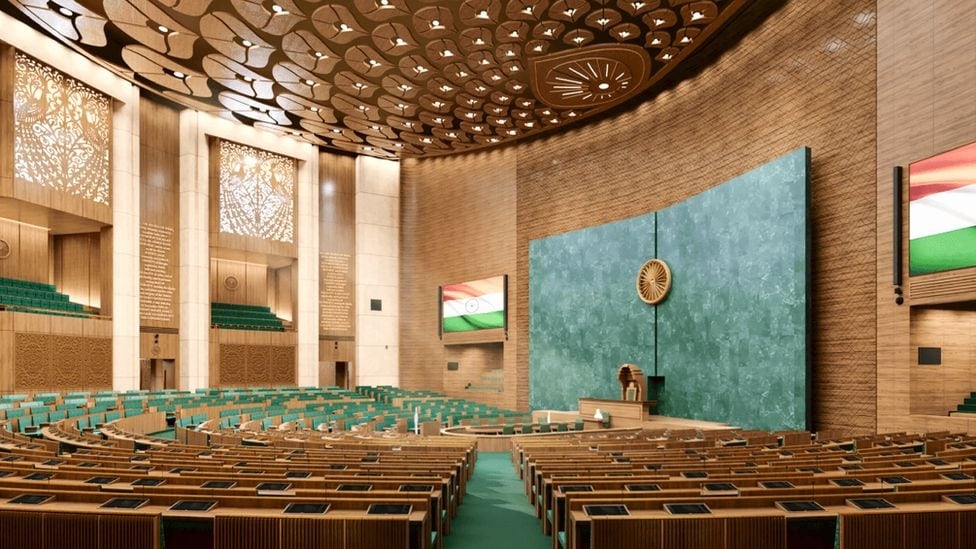
A private member's bill aimed at allowing employees to ignore work-related calls and emails outside office hours was introduced in the Lok Sabha on Friday.
Members of both the Lok Sabha and Rajya Sabha are permitted to introduce bills on issues they believe require legislative action, although most private member bills are typically withdrawn after the government responds to them.
NCP MP Supriya Sule introduced the Right to Disconnect Bill, 2025, which proposes the creation of an Employees' Welfare Authority. The bill seeks to give every employee the right to disconnect from work-related communication such as calls and emails beyond official working hours and on holidays.
The bill also includes provisions allowing employees to decline responding to such communication and addresses other related issues.
Introduced three forward-looking Private Member Bills in the Parliament:
December 5, 2025
The Paternity and Paternal Benefits Bill, 2025, introduces paid paternal leave to ensure fathers have the legal right to take part in their child's early development. It breaks the traditional model,… pic.twitter.com/YjrWw4LFwfAnother private member bill, the Menstrual Benefits Bill, 2024, introduced by Congress MP Kadiyam Kavya, aims to provide workplace facilities and support for women during menstruation. It seeks to establish a legal framework guaranteeing specific benefits for female employees during their menstrual period.
LJP MP Shambhavi Choudhary introduced additional legislation to ensure paid menstrual leave for working women and female students, as well as access to menstrual hygiene facilities and other health-related benefits during menstruation.
Congress MP Manickam Tagore tabled a bill seeking to exempt Tamil Nadu from the National Eligibility cum Entrance Test (NEET) for undergraduate medical admissions. Last month, the Tamil Nadu government approached the Supreme Court after the President declined assent to a state law seeking exemption from NEET-based admissions.
DMK MP Kanimozhi Karunanidhi introduced a bill calling for the abolition of the death penalty in India. Although demands for its abolition have emerged repeatedly, successive central governments have argued that capital punishment remains necessary as a deterrent in certain cases.
Nearly ten years ago, the Law Commission recommended gradually removing the death penalty except in terrorism-related cases, noting it does not offer stronger deterrence than life imprisonment.
Finally, Independent MP Vishaldada Prakashbapu Patil introduced the Journalist (Prevention of Violence and Protection) Bill, 2024, which aims to prevent violence against journalists and protect both journalists and their property, along with other related measures.
Essential Business Intelligence, Continuous LIVE TV, Sharp Market Insights, Practical Personal Finance Advice and Latest Stories — On NDTV Profit.