Patanjali Misleading Ads Case: Don't Degrade Allopathy, Supreme Court To Ramdev
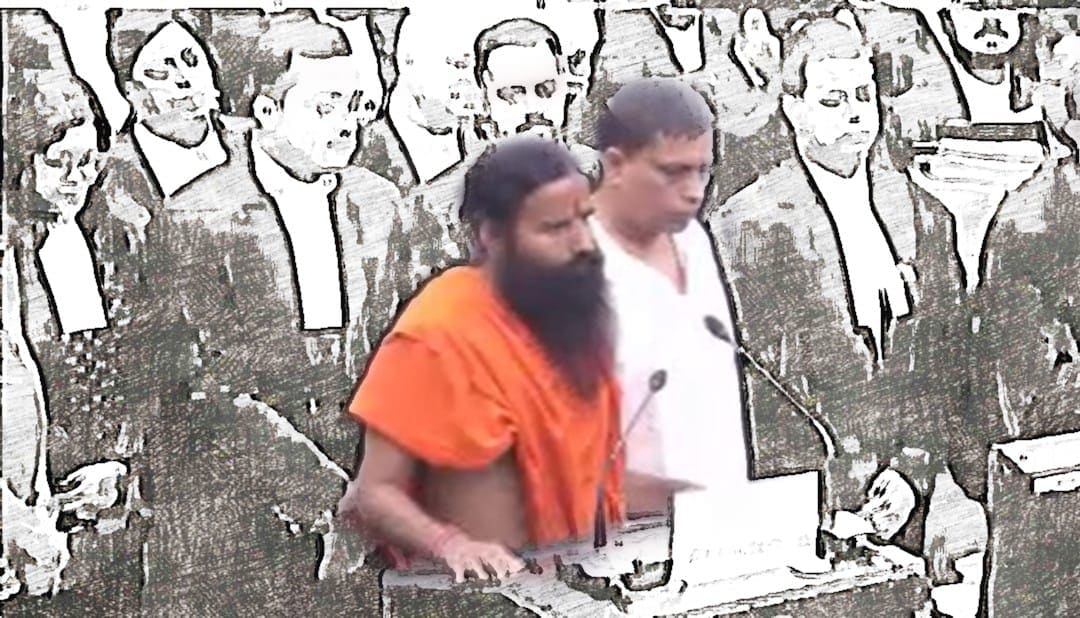
The Supreme Court cautioned Patanjali Ayurved's Baba Ramdev and Managing Director Acharya Balkrishna on Tuesday for disrespecting allopathic treatment, stressing on the need to honour all medical practices. The apex court also mentioned that the acceptance of their apology is still pending. The next hearing for the misleading advertisements case has been scheduled for April 23.
Patanjali has been doing good work but it cannot criticise another system of medical treatment and should rather pay attention to their own work, Justice Ahsanuddin Amanullah said.
In addition, the court said that it is impermissible under law to put out advertisements for incurable diseases, as has been done by Patanjali.
As a result, Ramdev & Balkrishna assured the court that they accept that they have committed a mistake and moving forward, they will make sure that such actions will not be repeated.
Justice Hima Kohli, presiding over the case, acknowledged Balkrishna and Ramdev's commitment to correcting their behaviour and gave them a week to show improvement.
The court was hearing a lawsuit filed by the Indian Medical Association, which argued that Ramdev was running an adversarial campaign against the COVID-19 vaccines and contemporary medical practices.
The case began in November last year, when the apex court issued a stern warning to Ramdev and his multinational conglomerate for downplaying the effects of modern medicine.
Some of Patanjali's commercials tout how its medicines can cure a number of illnesses, while simultaneously disparaging allopathic and modern medicine.
The court had earlier said that it would issue a hefty penalty for all those misleading advertisements that promise to cure diseases such as asthma, obesity, and the like.
At the time, Patanjali told the court that it would make sure that going forward, no casual statements claiming medicinal efficacy against any system of medicine would be released to the media in any form.
However, a day after the court's stern remarks, Patanjali came out with a media statement saying that it was not making any "false advertisements or propaganda" regarding its products and that it would not object if the top court were to impose a fine or "even give us a death sentence" if found making misleading claims.
This prompted the apex court to serve a contempt notice to Balkrishna for publicly disobeying its orders, as the company had continued to run its false ads even after giving an undertaking.
When the firm failed to respond to the court's notice, the court issued a contempt notice to Ramdev as well and ordered his personal presence in court.
After facing severe criticism from the court for failing to obey the court's directives, Patanjali filed an apology last month, stating that its intention was only to exhort the citizens of this country to lead a healthier life by using its products.
However, during the hearing which took place on April 2, the court said that it was unhappy with its apology, highlighting that all of Patanjali's advertisements were directly confronting the court.
Since then, another unconditional apology has been tendered by Ramdev and Balkrishna and they have assured the court that, moving forward, no offending advertisements will be aired.

-
High US Salaries, No Green Card Certainty: The Financial Calculation Facing Indian H-1B Families

The suspension of PERM processing at eight technology employers does not cancel existing H-1B visas. What it does is force a question many Indian families have been avoiding: is the US salary worth tying your career and family plans to one employer?
-
Swiggy vs Eternal: Food Delivery's Two Rivals Are No Longer In The Same Race
Eternal is building a private AI assistant, dark.ai. Swiggy is still working out how to make Instamart pay, with an operating loss of Rs 895 crore in the July-September quarter while Blinkit stayed profitable.
-
Where You Live Shapes How You Get To Work | The Reason Why
Two-wheelers are the most popular way to get to work in India, accounting for nearly 43% of workplace commutes.
-
Unhedged Position: Can India See An Indonesia-Style Time Correction?
The Nifty is trading below levels it first clocked in 2024. Is there, then, as I have suggested in the headline, potential that the current time correction drags on painfully for the next three-five, even ten years?
-
Navigating Friction And Energy Realities: An Analysis Of Marco Rubio's October Visit To India
Occurring at a critical juncture marked by stalled trade negotiations and escalating geopolitical pressures over global energy supplies, the visit offers a profound window into modern US-India relations.
-
India Exports Capital. Why Not Export Trusteeship?
The big question, then, is whether India can build an institution that global borrowers, investors, banks, and lawyers can trust, even without an Indian connection.
-
France's Economy & Politics Are In Crisis | The Reason Why
Let's look at how the French economy and politics evolved under Nicolas Sarkozy, Franois Hollande and Emmanuel Macron.
-
You May Inherit The Business. You Must Earn Its Credibility.
Succession tests the founder's ability to share authority as much as it tests the next generation's readiness to assume it.
-
Signing Deals Is One Thing; Making Them Work Is Another | The Week In Whys
Sometimes, things don't turn out as planned. Indian companies have lost some bids to rivals, some projects won't produce until 2030.
-
FOMC Wall, PERM Suspension, Hospital Stocks | Talking Points This Week
A PERM suspension would directly affect green-card sponsorship rather than H-1B visas, so the near-term earnings impact could remain relatively limited. The key question is whether this marks a new phase in US scrutiny of Indian IT.









