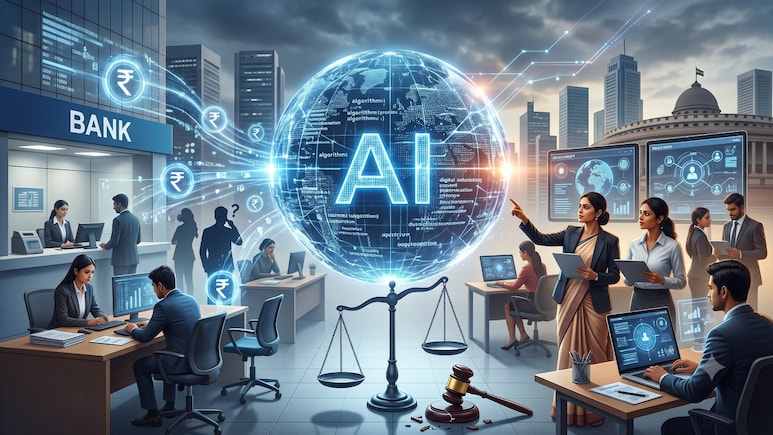
India is increasingly feeling the real-world impact of Artificial Intelligence—from deepfakes and algorithmic hallucinations to emerging copyright disputes. Yet, as the government weighs whether to introduce a dedicated AI Act, top legal minds argue that rushing into an all-encompassing, European Union-style statute would do more harm than good.
Instead, legal experts are advocating for a nimble, sector-specific "regulatory matrix" that enforces strict accountability without choking innovation.
The Argument Against An Omnibus Law
Speaking on Closing Argument, Sajan Poovayya, Senior Advocate at the Supreme Court of India, noted that a single, broad statute cannot effectively govern AI across drastically different domains like financial services, healthcare, and retail.
Also Read | Layoffs Are Rising In Tech, But These Skills Are Helping People Unlock Better Pay
"One legislation cannot really cure or provide you a regulatory matrix for artificial intelligence being implemented in multiple folds," Poovayya said. Pointing out that AI deployment in India is expanding at three times the global pace despite modest domestic investments, he warned against an "iron-fisted" approach. "What you need is a regulatory matrix which is kind of a light touch, which permits and provides the ecosystem for innovation and rapid course correction."
ALSO READ: Corporate AI Trap: India's 3X Adoption Rate Masks Massive Legal Risks For Domestic Deployers
Niharika Karanjawala, Principal Associate at Karanjawala & Co., agreed that while a regulatory vacuum exists, a rigid statute could quickly become obsolete. "The challenge with AI is it is growing at such a rapid rate... my apprehension is that we could draft a standalone law, but will it actually be effective in doing practical regulation? Rather than simply drafting one standalone act, we need a regulatory framework across departments with clear enforcement standards."
Nikhil Narendran, Partner at Trilegal, emphasized that India is predominantly a nation of AI deployers and service providers, rather than core model developers. A heavily prescriptive, compliance-first law could penalize domestic enterprise. "If you have a centralized legislation, the unfortunate consequence is that it will stifle innovation. Instead, we should look at sectoral regulations and strengthening consumer protection laws," Narendran observed.
Fragmented Rules and The Liability Gap
In the absence of a central parliamentary law, sector regulators are already writing rules on an ad-hoc basis:
MeitY: Amended IT rules to define synthetic content, requiring platforms to label and verify deepfakes.
SEBI: Formulating norms for human oversight and algorithm kill switches, previously proposing that deployers—rather than software developers—bear strict liability if an AI tool hallucinates and gives flawed market outputs.
The Judiciary: The Delhi High Court recently issued an interim order holding OpenAI's use of ANI's news archive as fair dealing, establishing an early precedent for domestic copyright.
Emerging Harms and Child Safety
The lack of a unified liability standard becomes most critical when addressing vulnerable users and algorithmic harms. Narendran pointed out that existing criminal and IT laws do not adequately address "new-age harms," such as artificial intimacy, where chatbots manipulate human emotions into financial fraud or real-world harm, noting that enforcement authorities urgently need more resources.
Karanjawala highlighted an ongoing lawsuit in the U.S. against OpenAI involving a teenager, Adam Raine, who tragically took his own life after extensive conversations with ChatGPT about suicide—raising questions about why platforms allow such interactions despite stated internal safety guidelines. She noted that while India's Digital Personal Data Protection (DPDP) Act recognizes greater protections for children, tech providers must be legally bound to enforce those limits themselves.
Essential Business Intelligence, Sharp Market Insights, Practical Personal Finance Advice, Daily Fuel, Gold and Silver Prices and Latest Stories — On NDTV Profit.