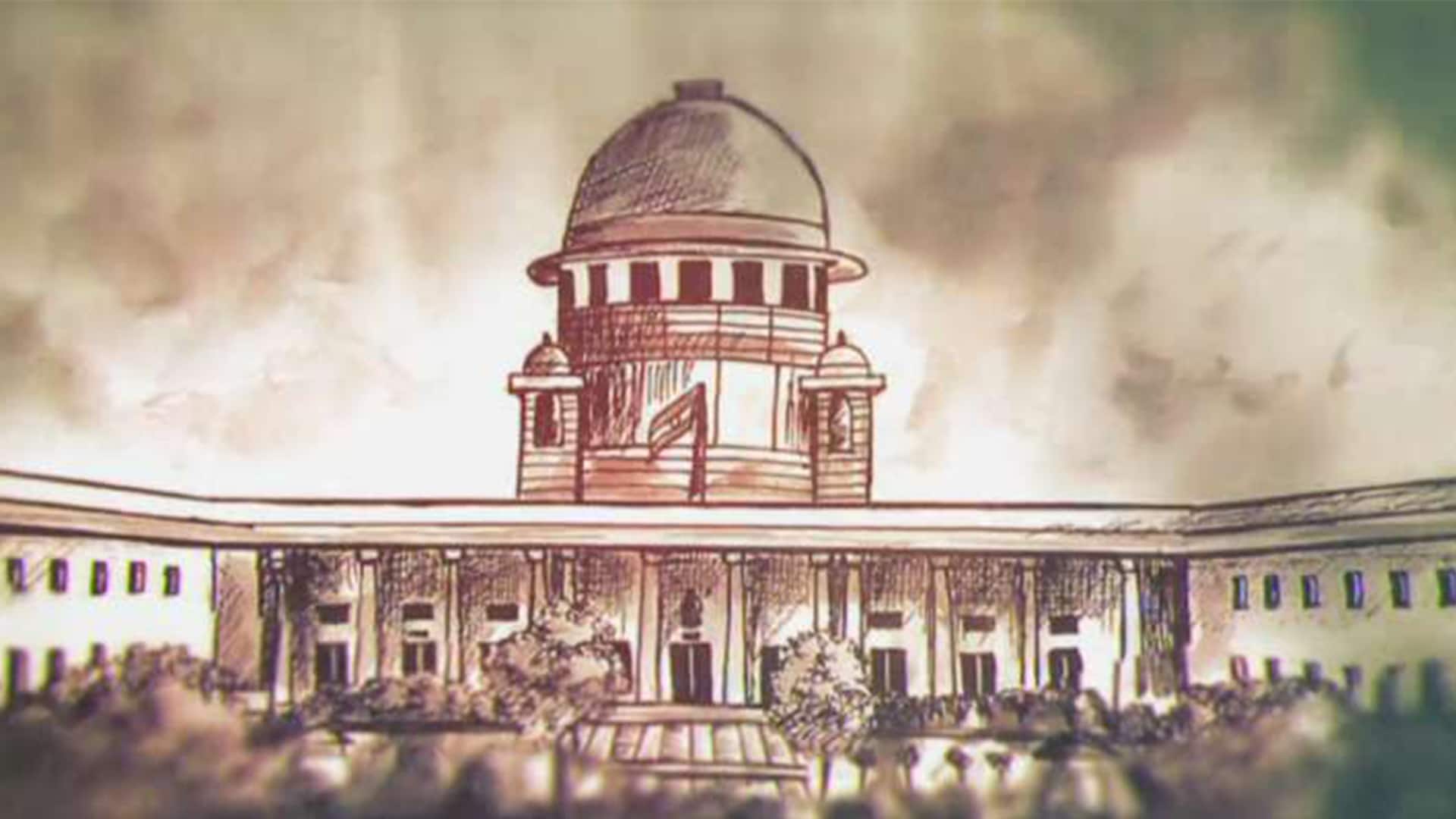
In a unanimous decision, a five-judge bench of the Supreme Court ruled in favour of the Hindu parties in the Ayodhya Land Dispute. The disputed land will be handed over to a trust which will also have representation from the Nirmohi Akhara, the apex court said. It directed allotment of alternate land to the Muslims for construction of the mosque. That land must be at a suitable place in Ayodhya, the Chief Justice of India Ranjan Gogoi said as he read out the salient points of the judgment over 30 minutes.
The central government has been granted 3-4 months to formulate a scheme for setting up of the trust and hand over of disputed site for construction of temple. A suitable alternative plot of land measuring 5 acres at Ayodhya will be given to Sunni Waqf Board, the court further ordered.
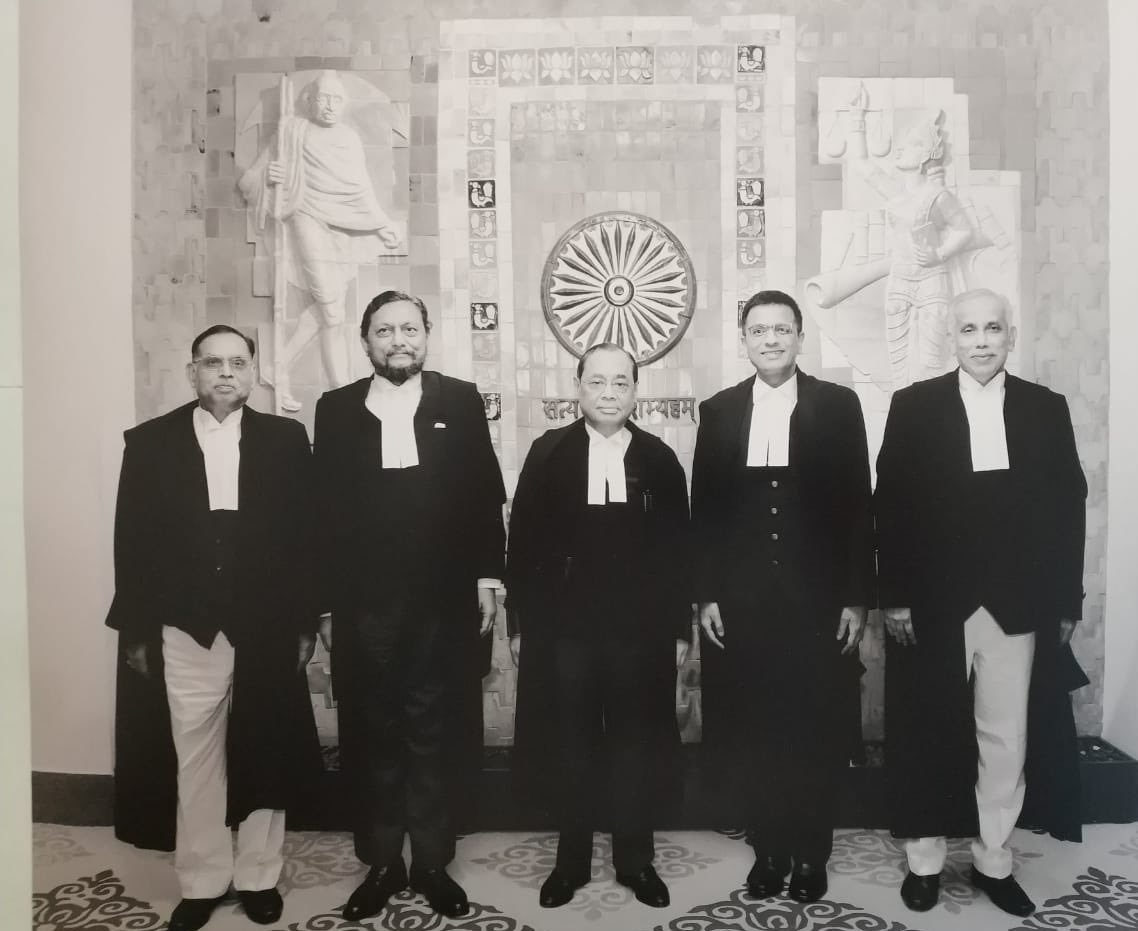
The judgment was delivered by Chief Justice of India Ranjan Gogoi on behalf of the constitution bench comprising Justices Dhananjay Chandrachud, Ashok Bhushan, SA Bobde and SA Nazeer.
Gogoi began by emphasising that secularism is a key feature of India's constitution and the court should preserve balance. Then over 30 minutes he highlighted these key points in the judgment...
The Babri Masjid was built by Mir Baki under the orders of Babur, the bench acknowledged. Referring to the report by the Archaeological Survey of India, it noted that the Babri mosque was not constructed on vacant land The ASI report shows existence of an underlying structure. The underlying structure was not of an Islamic origin. But ASI has not opined whether a temple was demolished for construction of a mosque.
The suit by Nirmohi Akhara, one of the three petitioners in this long-standing dispute, was barred by limitation. The Supreme Court ruled the Nirmohi Akhara is not a shebait (the management rights of the idol do not vest with it) as the acts of the Nirmohi Akhara did not satisfy the legal test of exclusive rights of management.
The court ruled that the suit by Ram Lalla, the other Hindu petitioner, is within limitation. While Ramjanmabhoomi (the birth place of Hindu deity Ram) is not a juristic person or a legal entity, but Ram Lalla, the child incarnation of the deity is a juristic person under Indian laws, the chief justice stated.
The suit by the Sunni Waqf Board was also held to be within laws of limitation. The mosque was not abandoned or seceded by the Muslims, the court noted but also stated that the claim by Muslims fails to be established as a composite whole. The disputed site is one composite whole, Gogoi said.
Commenting on the Allahabad High Court order of 2010, in which the three-judge bench ordered a three-way partition of the land, the Supreme Court said the high court adopted a path which was not open to it as it was not seized with a suit of partition.
On the balance of probabilities, there is evidence that worship of Hindus in outer courtyard continued continuously, Gogoi said. The evidence of the Hindus stands on a better footing than the Muslims. “We direct allotment of alternate land for the Muslims for construction of mosque,” he added.
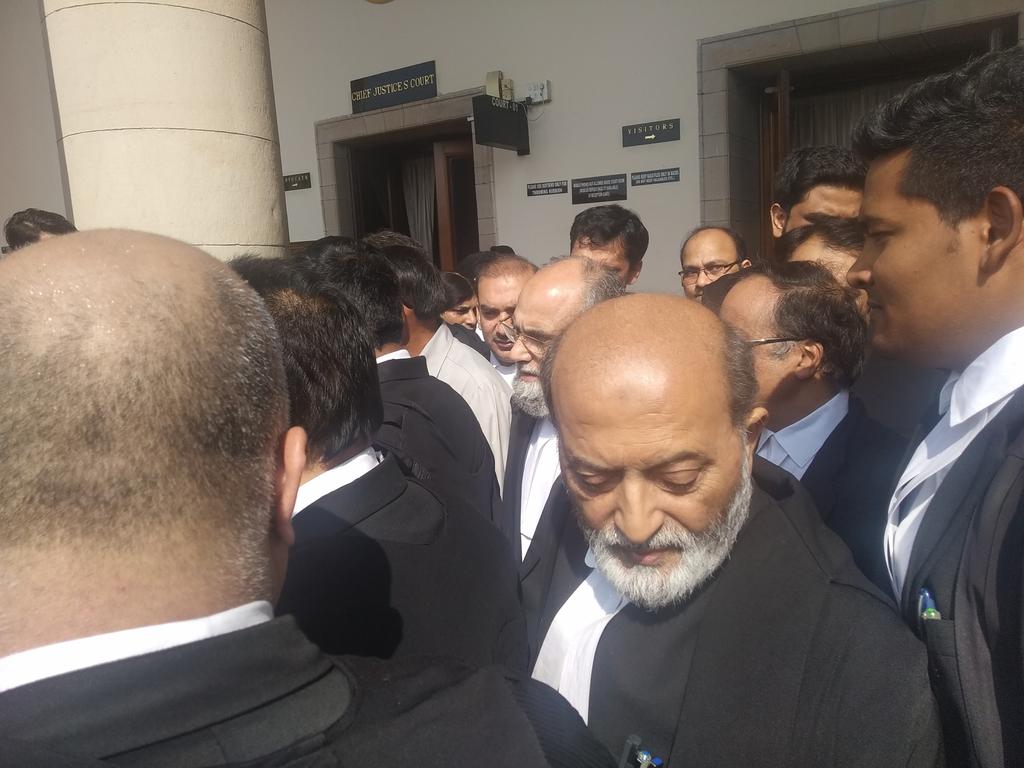
Petitioner Sunni Waqf Board expressed dissatisfaction with the five-judge bench's decision, saying it was not equitable. Speaking to the media, Senior Advocate Zafaryab Jilani said they will deliberate on a future course of action with their counsel Rajeev Dhawan, on whether to seek a review or not.
Varun Kumar Sinha, lawyer for Hindu Mahasabha on Ayodhya Title Verdict.
November 9, 2019
Catch all #AyodhyaVerdict live updates: https://t.co/iAjUicTNOg pic.twitter.com/hPBVsWB8sqThe Supreme Court's verdict marks the end of a 500-year-old religious dispute that has continued to divide the country over a plot of land 2.77 acres in size. To Hindus, it's the revered birthplace of Lord Ram. To Muslims, it's the site of a 16th century mosque that was razed in 1992.
For legal and political reactions on the Supreme Court order follow this live blog.
The Back Story
The legal dispute around the ownership of Ayodhya land started in 1950 when Gopal Singh Visharad filed the first petition in the case at a lower court in Faizabad. Subsequently, over the years, a number of petitions — claiming either ownership of the land or the right to pray at the disputed site — were filed in lower courts in Uttar Pradesh. Following the 1992 destruction of the Babri Mosque, which stood at the disputed site, all the petitions were transferred to the Allahabad High Court.
The Allahabad High Court in 2010 directed equal division of the land between Sunni Waqf Board, the Nirmohi Akhara and Ram Lalla — Lord Ram in child form represented in court through the next friend.
After the high court verdict, the parties reached the apex court, which set up a Constitution bench comprising Chief Justice Ranjan Gogoi and Justices Dhananjay Chandrachud, Ashok Bhushan, SA Bobde and SA Nazeer, to hear the matter. After the Supreme Court-directed mediation talks failed between the parties, the hearings began in August.
Timeline Of The Case
1528: Babri Masjid built by Mir Baqi, commander of Mughal emperor Babur.
1885: Mahant Raghubir Das files plea in Faizabad district court seeking permission to build a canopy outside the disputed Ram Janmabhoomi-Babri Masjid structure. Court rejects plea.
1949: Idols of Ram Lalla placed under a central dome outside the disputed structure.
1950: Gopal Simla Visharad files suit in Faizabad district court for rights to worship the idols of Ram Lalla.
1950: Paramahansa Ramachandra Das files suit for continuation of worship and keeping the idols.
1959: Nirmohi Akhara files suit seeking possession of the site.
1981: UP Sunni Central Waqf Board files suit for possession of the site.
Aug. 14, 1989: Allahabad High Court orders maintenance of status quo in respect of the disputed structure.
Dec. 6, 1992: Babri Masjid structure demolished.
April 2002: High court begins hearings to determine who owns the disputed site.
Sept. 30, 2010: By a 2:1 majority, Allahabad High Court rules three-way division of disputed area between Sunni Waqf Board, the Nirmohi Akhara and Ram Lalla.
March 8, 2019: The Supreme Court refers the dispute for mediation by a panel headed by former apex court judge FMI Kallifulla.
Aug. 6, 2019: Five-judge Constitution bench of the Supreme Court begins final hearing in the case as mediation fails.
Oct. 16, 2019: Supreme Court reserves judgment in the Ayodhya land dispute case.
The Key Arguments
Nirmohi Akhara
The Nirmohi Akhara is one of the three main parties seeking right of possession and management of the disputed land.
During the hearings at the apex court, the Akhara claimed that the land has been in their exclusive possession and Muslim parties had not been allowed to enter the disputed structure since 1934.
It argued it should be given the rights to management of the temple, if the court rules in favour, as it has been the owner of the land.
Ram Lalla
Ram Lalla — Lord Ram in child form — is the next party in the case whose petition has been filed by former high court judge Deoki Nandan Agrawal.
The counsels for Ram Lalla Virajman have argued that even the Allahabad High Court judgment has acknowledged the existence of a temple before the mosque was built on its ruins.
Ram Lalla submitted the inspection report of 1950, a map and an album containing photographs of deities inside the structure adding that for a number of years, the site has held religious sanctity for Hindus.
Sunni Waqf Board
The Muslim parties, through the Sunni Waqf Board, argued that their possession of the land is evident from the fact that they received grants for maintenance of the mosque dating back as far as 1528.
Senior Advocate Rajeev Dhawan, representing the Muslim parties, argued that the Hindu side claimed ownership of the land only in 1989.
Also Read
Ram Lalla Or Babri Masjid – Whose Land Is It Anyway? The Legal Issues At StakeA 500-Year-Old Religious Dispute
WATCH | How the Ayodhya verdict unfolded and key reactions through the day
Essential Business Intelligence, Continuous LIVE TV, Sharp Market Insights, Practical Personal Finance Advice and Latest Stories — On NDTV Profit.