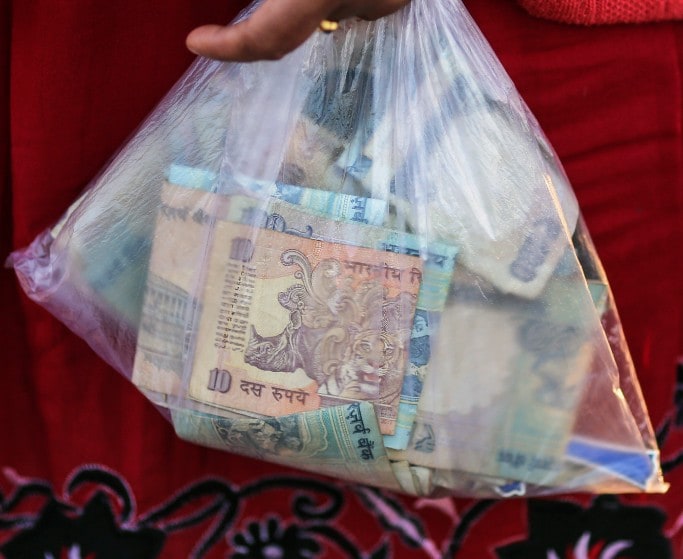
The Indian rupee slipped to a new record low of 72.50 against the U.S. dollar after the country's current-account deficit widened to the most in five years, amid an emerging-market currency rout triggered by the U.S.-China trade war.
However, JPMorgan's Chief India Economist Sajjid Chinoy sees a silver lining. The rupee is going through a “healthy correction”, he said, which will only boost the competitiveness of the Indian economy. More so because India's macroeconomic factors are strong, he added.
There's “no need to panic” about the rupee's fall, he said. “India saw a 20 percent real appreciation over four years. That in my view affected the competitiveness of the underlying economy,” he told BloombergQuint in an interview. The correction, he said, aided by global developments over time will definitely help exports and help narrow the external gap.
Also Read | Layoffs Are Rising In Tech, But These Skills Are Helping People Unlock Better Pay
The rupee has weakened 11.78 percent so far this year, making it Asia's worst performer. That led to a higher import bill and a widening current account deficit.
India has seen the rupee weaken in two phases over this year, Chinoy said. The first, he said, from mid-April to early-August due to strengthening of the U.S. dollar.
The second phase is relatively more worrying, he said. “The dollar index has weakened, or hasn't strengthened as much, but the emerging market current account deficit countries, which rely on foreign funding in this environment, have seen their currencies come under sustained pressure, suggesting that tighter global financials are commanding a risk premium from those countries that need financing.”
Still, that's in line with other emerging markets and not in isolation, he said.
India needs to “weather the storm” and focus on maintaining its fiscal stability, Chinoy said, adding the country has much better macroeconomic fundamentals—a smaller fiscal and current account deficit, higher growth and lower inflation—compared to five years ago.
“Once the initial pressures settle, what you will find is that markets become much more discriminatory and India's stronger macro fundamentals will shine through,” Chinoy said, adding as for the current account deficit, India's foreign exchange reserves are more than enough to provide for a shortfall of capital.
Essential Business Intelligence, Sharp Market Insights, Practical Personal Finance Advice, Daily Fuel, Gold and Silver Prices and Latest Stories — On NDTV Profit.