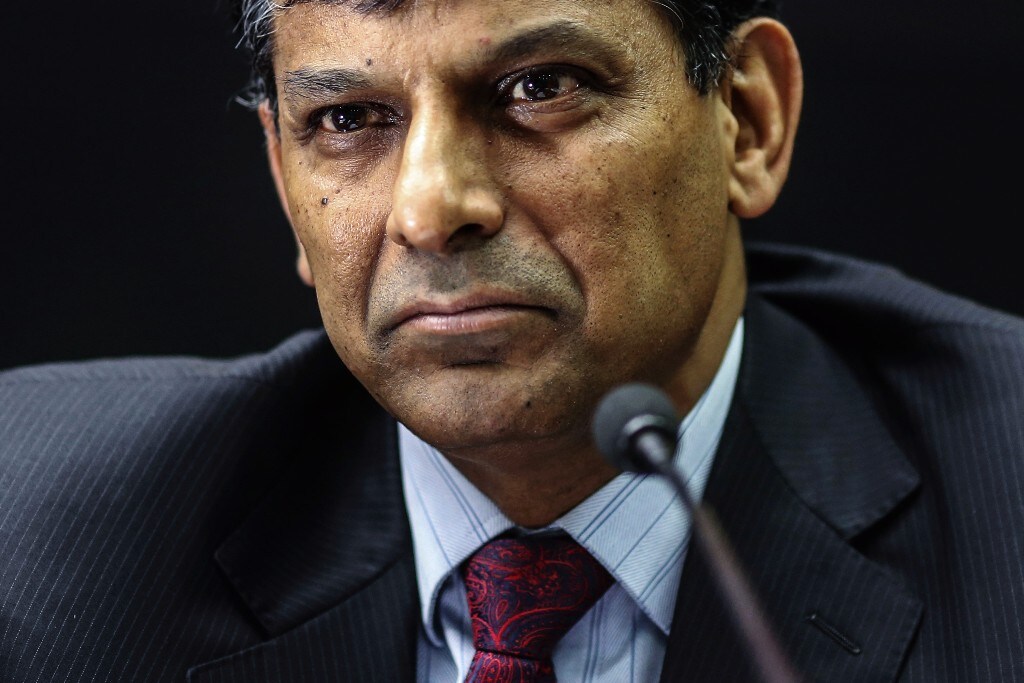
Is the flattening yield curve in the U.S. bond market sending signals of a looming recession? That's still not clear, Former RBI Governor Raghuram Rajan wrote in the Financial Times.
The difference or the spread between the yield on two-year Treasury bills and 10-year benchmark bond is narrowing. It “has compressed to less than 40 basis points, he wrote. In trader parlance, that means ‘the yield curve has been flattening', which has previously been a strong predictor of recessions,” he wrote. “Is that the case today?”
The Fed's conviction to increase rates every quarter till the end of the next year could be one of the reasons pushing the two-year yield higher despite inflation around its 2 percent target, according to Rajan, professor of finance at the University of Chicago's Booth School. While that should push up rates, it hasn't.
One obvious explanation is that the European Central Bank and the Bank of Japan are continuing their quantitative easing. The sheer flow of money still pouring into the long end may be keeping yields down — after all, the five-year German Bund is at -0.3 per cent and 10-year Japanese bonds yield zero.Raghuram Rajan, Former RBI Governor
Rajan, however, thinks that eventually the rates would start moving up. “Perhaps it is just a matter of time before yields start moving up. This certainly is my preferred explanation,” he wrote.
But he also highlighted the conflicting view that Fed is “mistaken” and will “eventually pause, if not cut”. “The term spread is then low because it is pricing in recession,” he wrote.
And what could hurt growth was over-tightening by Fed, he said. Years of low rates had prompted “companies and sovereigns to borrow lots of money”. And rising rates will increase interest costs, he said citing McKinsey estimates that corporate debt worth $10 trillion is due in the next five years.
A fear about tighter debt market and a threat of a flight to safe haven assets would “would help explain low Treasury yields”, Rajan said.
Concerns over a full-blown trade war might have also made investors fear a recession, he wrote. While the impact of first round of tariffs would be small, it's difficult to capture the exact effect on “intertwined” global supply chains, he said. “And a trade war will be costly.”
While negotiations can prevent conflict, Rajan wrote that the U.S. administration is shoring up support for mid-term polls. That, according to him, may make negotiations difficult.
And if China, already cleaning if up its financial system, gets caught in a trade war, “its difficulties could spread abroad.”
Rajan hoped that politicians don't put the economy that has recovered from the previous crisis “in emergency room again”.
Essential Business Intelligence, Continuous LIVE TV, Sharp Market Insights, Practical Personal Finance Advice and Latest Stories — On NDTV Profit.