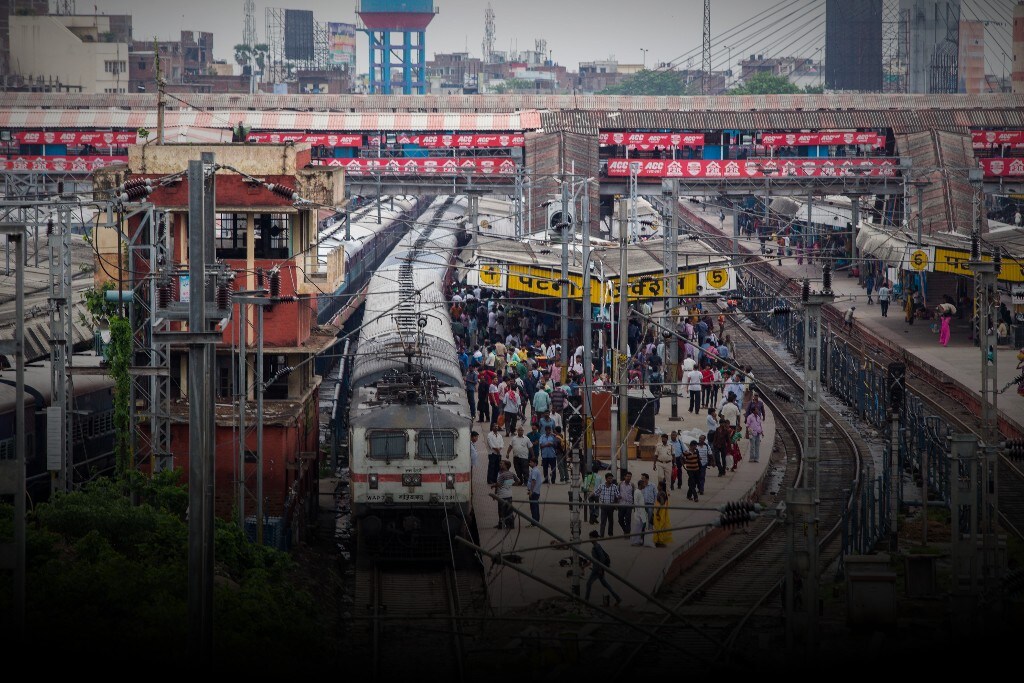
When Railways Minister Suresh Prabhu agreed to a parliamentary panel's recommendation last July to end a practice that began in 1924 and decided not to announce a separate railway budget, it seemed like an act of self-abnegation. Here was a reform-minded minister who was renouncing his annual claim to a few hours of captive national attention. But it seems a smart move in hindsight because the Railways have little to show off. Its finances are dismal, and it has been able to avoid public displeasure by hiding behind the Finance Minster.
In eleven swift paragraphs, the Finance Minister gave a fleeting glimpse of the Railways that did not reveal how dire its situation is. Without disclosing it, he said he would strive to improve the operating ratio. Unlike earlier, this figure is not readily available in this year's budget documents. The operating ratio is the share of expenditure in revenue.
This year the operating ratio is 95 percent, which means, a sliver of profit after accounting for expenditure and necessary appropriations, despite the government foregoing Rs 9,700 crore in dividend on preference capital.
- Passenger earnings have increased by just 8 percent from Rs 44,283 crore last year to Rs 48,000 crore.
- The ambition for next year is quite modest: a four percent increase to Rs 50,125 crore.
- The number of passengers is expected to rise by a mere 0.19 percent.
- The freight target of Rs 1,18,150 crore is based on incremental loading of 71.5 million tonnes travelling an average distance of 580 km.
Where Are The Dedicated Freight Corridors?
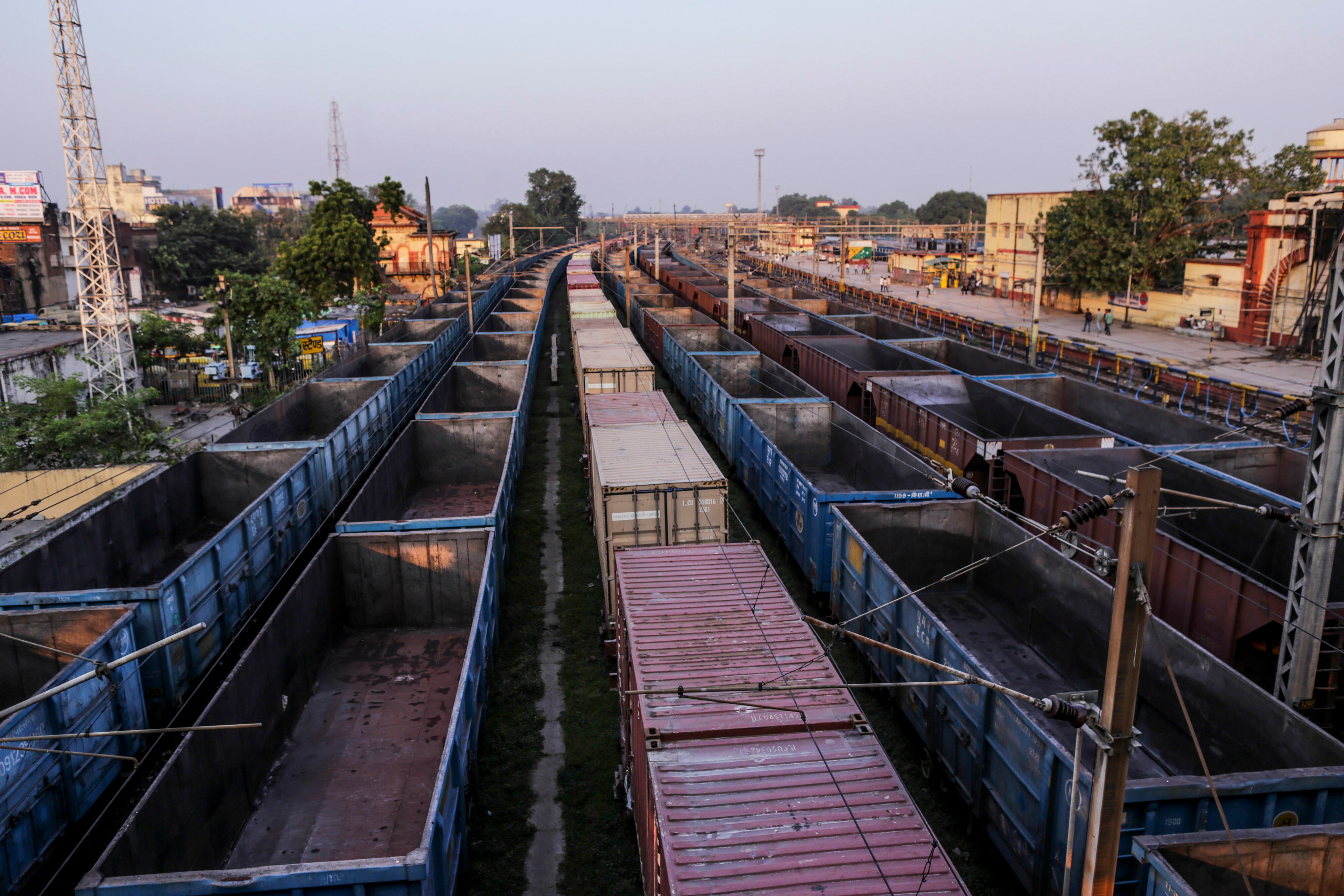
China's railways are the locomotives of its economy. But India's is not because it is not a low-cost carrier, which it should be. Its capacity is constrained and will remain so as long as the dedicated freight corridors (DFCs) to take goods off the busy trunk lines are not completed between Ludhiana (Punjab) and Dankuni (West Bengal) on the eastern side, Dadri (near Delhi) and Mumbai on the western side, and new ones to connect Mumbai, Bengaluru, Chennai and Hyderabad are not set up.
Also Read | Layoffs Are Rising In Tech, But These Skills Are Helping People Unlock Better Pay
The Finance Minister gave deadlines for converting all coach toilets to green ones and for the roll-out of a new accounting format based on the accrual system ─ 2019 ─ but there was no deadline for the dedicated freight corridors.
Mamata Banerjee had announced in her February 2011 speech that the DFCs would be completed by December 2016 “as scheduled.” Since then railways ministers have reported progress in land acquisition and award of contracts without indicating how far the corridors are from completion. Those engaged with the Railways do not expect them to be done before 2019.
Where True Transformation Lies
The Finance Minster acknowledged in the budget the need for “transformative measures” to enable the Railways to take on the competition. Competitive ticket booking facility, accounting reforms and “end-to-end solutions” for certain commodities in partnership with private players will not help overhaul the railways. They need to be reorganized along business lines and enabled to compete with roadways and airlines.
This means, bringing in the private sector to do what the government is not good at: operations, maintenance, and marketing.
Spend The Money Quickly And Efficiently
The safety fund of Rs 1 lakh crore to be spent over five years is a welcome announcement. The last time such a fund was announced was in February 2002 when Nitish Kumar was the Railways Minister. On the intervention of Prime Minister Atal Bihari Vajpayee, Rs 15,000 crore was given from the general budget for safety works. But the Railways should have the capacity to spend the money quickly and efficiently. The chief executive officer of a multinational corporation, which executes rail projects, says decentralised procurement – an otherwise laudable objective of the Railways Minister – could come in the way.
Hybrid Annuity Model For Metro Rail
The amendment of the Metro Railway Act 2002 is welcome, but risks will have to be properly apportioned between the government and private operators. A hybrid annuity model where losses of the private player are capped and profits beyond a certain traffic level are shared with the government would be ideal, says the CEO referred to earlier.
Otherwise, public-private metro projects may go the way of Delhi's airport express line, where the private operator cut loose when traffic turned out to be far less than projected.
The merger of the railway budget has its benefits. It has taken off the pressure on the Railways Minister to announce new trains and projects to please various Members of Parliament. So far neither public attention nor scrutiny by Parliament's Standing Committee has forced the Railways to change its behaviour. The Prime Minister will have to be less cautious and force change. Otherwise, the Railways will continue to muddle along.
Vivian Fernandes is the editor of www.smartindianagriculture.in and often contributes to BloombergQuint.
The views expressed here are those of the author's and do not necessarily represent the views of BloombergQuint or its editorial team.
Essential Business Intelligence, Sharp Market Insights, Practical Personal Finance Advice, Daily Fuel, Gold and Silver Prices and Latest Stories — On NDTV Profit.