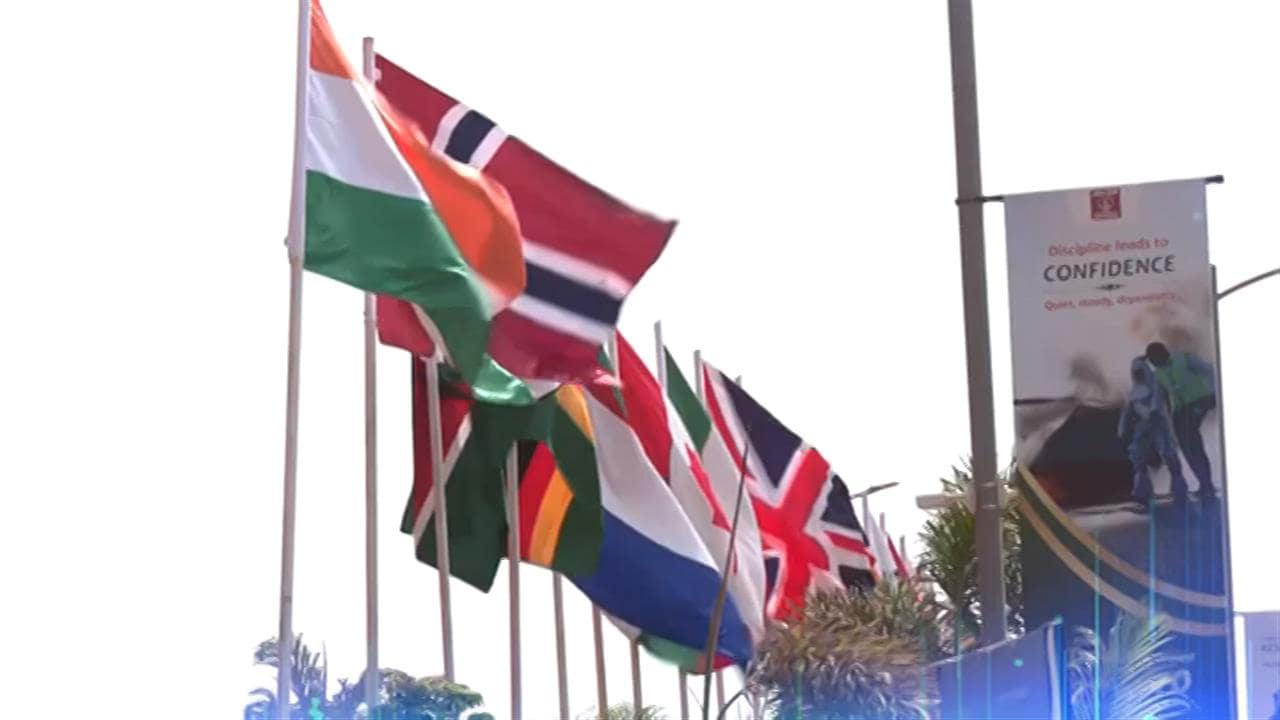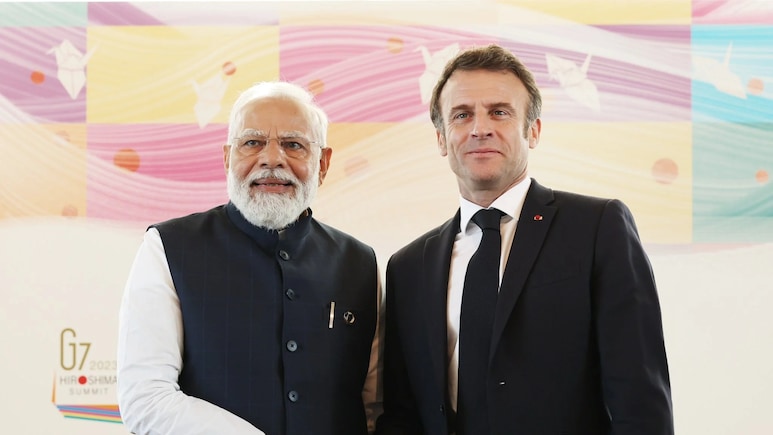
French President Emmanuel Macron's official visit to India on 17–19 February 2026 was a pivotal moment for elevating the India–France Strategic Partnership to a new status of “Special Global Strategic Partnership”. His fourth official visit to India was focused on high-tech cooperation, including the joint inauguration of the India–France Year of Innovation 2026 in Mumbai and his participation in the AI Impact Summit in New Delhi.
The Indo-French relationship has evolved into one of India's most reliable and consistent partnerships. Since the establishment of their Strategic Partnership in 1998, the two nations have built a robust alliance centred on strategic autonomy, a shared vision for a multipolar world, and deep cooperation in high-stakes sectors.
During President Emmanuel Macron's state visit to India in February 2026, the relationship was formally elevated to a “Special Global Strategic Partnership”. The visit highlighted an expansion beyond traditional defence into high-technology innovation and a broadened geopolitical focus on the Indo-Pacific and the Middle East.
Macron's visit was focused on advancing the Horizon 2047 roadmap, which is a 25-year strategic blueprint between India and France adopted in July 2023. It outlined their bilateral cooperation leading up to the centenary of India's independence and the 100th anniversary of diplomatic ties between the two nations.
The roadmap is built on three core pillars: Partnership for Security and Sovereignty, which focuses on achieving strategic autonomy through deep cooperation in defence and high-tech sectors; Partnership for the Planet, which addresses global environmental challenges and the green transition; and Partnership for the People, which focuses on deepening human connections and cultural exchanges.
The visit resulted in several key outcomes. The Agreement on Defence Cooperation (originally signed in 2006 and renewed in 2016) was further renewed for another ten years. A joint venture was formed for HAMMER missile production, and a final assembly line for H125 helicopters was inaugurated. PM Modi took pride in this joint venture to manufacture “the world's only helicopter capable of flying to the height of Mt Everest”.
ALSO READ: Watch: French President Macron's Late-Night Visit To Mumbai's CST Station Goes Viral
Extensive discussions on Rafale fighter jets were a primary focus during Macron's visit. The centrepiece of the talks is a potential €30–35 billion ($35–40 billion) contract for 114 additional Rafale jets for the Indian Air Force. While 18 jets will be manufactured in France, the remaining 86 are expected to be manufactured domestically in India under the ‘Make in India' programme.
This follows a June 2025 agreement between Tata Advanced Systems and Dassault Aviation to produce fuselage sections in Hyderabad. Just days before the visit, India's Defence Acquisition Council (DAC) reportedly cleared a massive defence package that included the procurement proposal for these 114 jets to strengthen declining squadron numbers. President Macron noted that defence ties are now expanding beyond fighter jets to include other strategic assets such as submarines.
In technology, the India–France Year of Innovation 2026 was launched, and a letter of intent was signed for a joint centre for advanced materials. Healthcare outcomes included the launch of an Indo-French Centre for AI in Health and planned cooperation on R&D for infectious diseases. This year-long programme aims to deepen collaboration in start-ups, research, and emerging industries such as clean energy and cyberspace.
Economic outcomes included an amendment to the Double Tax Avoidance Agreement. This revision modernises the 1992 treaty to align with global tax transparency standards, providing greater tax certainty and intended to boost the flow of investment, technology, and personnel. A new initiative was announced for visa-free transit of Indian nationals through French airports. This will be implemented as a six-month pilot period and subsequently reviewed to enhance people-to-people ties and travel efficiency.
The two sides made a Joint Declaration of Intent for Cooperation in Critical Minerals and Metals. This partnership focuses on the exploration, extraction, processing, and recycling of critical minerals and rare earths to build resilient and sustainable supply chains for green and digital economies.
Beyond bilateral issues, the visit underscored a “partnership for an uncertain world”, focusing on regional security in the Indo-Pacific and the Middle East and joint stances on global conflicts such as the war in Ukraine. Both nations reaffirmed their commitment to a rules-based order, leveraging France's overseas territories (such as Réunion) and India's regional presence to counter growing maritime competition.
The leaders discussed the Red Sea crisis and the targeting of commercial shipping by Houthi forces, emphasising the need for secure trade routes. Thus, the strategic partnership now increasingly focuses on stability in the Indo-Pacific and the Middle East. Discussions specifically addressed the India–Middle East–Europe Economic Corridor (IMEC), with France appointing a special envoy to support this connectivity project. Macron also extended a formal invitation for Prime Minister Modi to attend the 2026 G7 Summit in France.
Summing up, French President Emmanuel Macron's visit to India from 17–19 February 2026 marks a historic escalation of bilateral ties characterised by the elevation of the relationship to a “Special Global Strategic Partnership”. PM Modi said that the partnership “knows no boundaries” and can reach from the “deep oceans to the tallest mountains”, symbolising its vast scope from maritime security to aerospace.
President Macron emphasised that France and India are two major nations choosing to stand together across land, sea, and air based on “conviction rather than convenience”. The visit has solidified France's role as India's premier strategic partner in Europe through massive industrial and military commitments. In the broader context of Horizon 2047, this visit represents a shift from purely buyer–seller defence relations to a co-development model that positions the Indo-French partnership as a “force for global good”.
Disclaimer: The views expressed in this article are solely those of the author and do not necessarily reflect the opinion of NDTV Profit or its affiliates. Readers are advised to conduct their own research or consult a qualified professional before making any investment or business decisions. NDTV Profit does not guarantee the accuracy, completeness, or reliability of the information presented in this article.
ALSO READ: India To Pay 10% Tariffs After US Supreme Court Ruling
Essential Business Intelligence, Continuous LIVE TV, Sharp Market Insights, Practical Personal Finance Advice and Latest Stories — On NDTV Profit.