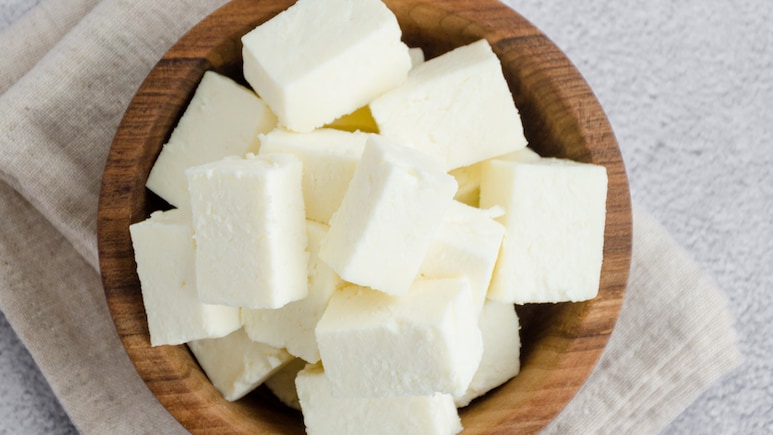
Fake paneer, adulterated honey, mislabelled 'organic' and hardly any action against producers - that's how India's food safety looks like. Most of the time, the regulator, the Food Safety and Standards Authority of India (FSSAI), is absent. When it does act, the response is often reactive and short-lived. After a few months, the same concerns resurface. Over the years, this cycle has created outdated standards, weak prevention, inconsistent enforcement, and declining public trust.
Why Food Standards Don't Evolve Like Emission Norms?
India moved from BS-II to BS-VI in a little over a decade, largely aligned with global benchmarks. Neither automakers nor the government was accused of following "Western" or "unsuitable for Indian roads" standards. The assumption was clear: if it makes our drive safe, we must adopt newer standards.
Why doesn't the same thinking apply to food?
Every day in India, over 320 people die from contaminated food. Still, food safety standards don't get enough attention.
What Adulterated Paneer Case Tells Us?
A nationwide testing showed that over 80% of paneer samples failed safety standards in the last couple of years. The scale of adulteration was shocking. Authorities seized samples and issued warnings, but this response does little to ensure such incidents won't recur. Here's what this episode highlights:
1. Lack of Traceability
India's food supply chains lack clear records, making it hard for regulators to trace the source. In contrast, China tracks high-risk foods through QR codes on packets, allowing regulators to trace the source and take action within a couple of days.
2. Post-Market Action
In India, enforcement typically occurs after products reach consumers, while countries like Indonesia and China require safety checks for some food items before registration or sale. India could adopt pre-market testing, starting with high-risk items like dairy and meat.
3. Inadequate Labs
India has around 66 lakh active food businesses. Even if every laboratory is counted, that works out to just one lab for roughly 10,800 businesses. In practice, enforcement depends on only 224 notified testing laboratories - or one enforcement lab for nearly 30,000 food businesses. Thus, universal post-market testing at this scale is unfeasible, let alone pre-market testing.
4. Weak Enforcement and Action
FSSAI's enforcement has a limited impact. From 2015-16 to 2018-19, only 8,000 convictions occurred out of nearly 60,000 food safety violation cases. Even in many cases, fines are very low, which has little deterrent, especially for big companies. In contrast, European laws levy heavy penalties linked to the damage and profits.
ALSO READ: India's Food Future: Navigating Global Comparisons And Local Realities
Information Asymmetry and Unwanted Trust Premium
Repeated adulteration scandals force consumers to pay a "trust premium," as they turn to branded or supposedly "better" products instead of loose packets of paneer, for instance.
This is a classic case of information asymmetry: since consumers can't tell which foods are truly safe, they pay extra for brands or packaging that seem trustworthy. People are paying to feel better, and not necessarily for the quality.
Consumers lose twice: prices rise as brands charge for trust, even though safety isn't guaranteed, while small, honest producers are pushed out-leaving fewer, costlier choices.
In short, poor food safety regulation doesn't just impact health - it also distorts markets, raises prices, penalises smaller businesses, and forces consumers to spend more to feel safe.
Outside Meals And Safety
Even restaurants, cloud kitchens, and street vendors run with limited oversight.
Restaurants display ratings from review platforms such as Just Dial, but rarely FSSAI's assessment. FSSAI's current hygiene rating system is voluntary.
We need mandatory display of food safety ratings backed by regular inspections, just like NAAC accreditation for colleges.
ALSO READ: FSSAI Warns E-Commerce Platforms Of Serious Penalty On Failure To Comply With Food Safety Rules
Economic Costs And Benefits
All this is necessary beyond simple health benefits. According to a WHO report, unsafe food costs India around $15 billion annually through healthcare spending, lost productivity, and premature deaths. Unfortunately, low-income households are hit the hardest.
Even small food safety improvements can reduce diseases and help every family. Zoom out, and we can also see higher exports since countries that enforce quality at home earn global trust. No one questions Swiss cheese, right?
Thus, better food safety also helps us lower export rejections, boost foreign exchange earnings, and build long-term goodwill for Indian goods.
The Bottom Line
India's economic growth and urbanisation demand that rising incomes are not lost to higher healthcare costs. Thus, stricter standards, better labelling, scientific testing, regular inspections, and effective deterrents are needed to build lasting health and trust - both within India and globally.
Disclaimer: The views expressed in this article are solely those of the author and do not necessarily reflect the opinion of NDTV Profit or its affiliates. Readers are advised to conduct their own research or consult a qualified professional before making any investment or business decisions. NDTV Profit does not guarantee the accuracy, completeness, or reliability of the information presented in this article.
Essential Business Intelligence, Sharp Market Insights, Practical Personal Finance Advice, Daily Fuel, Gold and Silver Prices and Latest Stories — On NDTV Profit.