Soybean At The Heart Of India-US Trade Logjam? — Open Interest
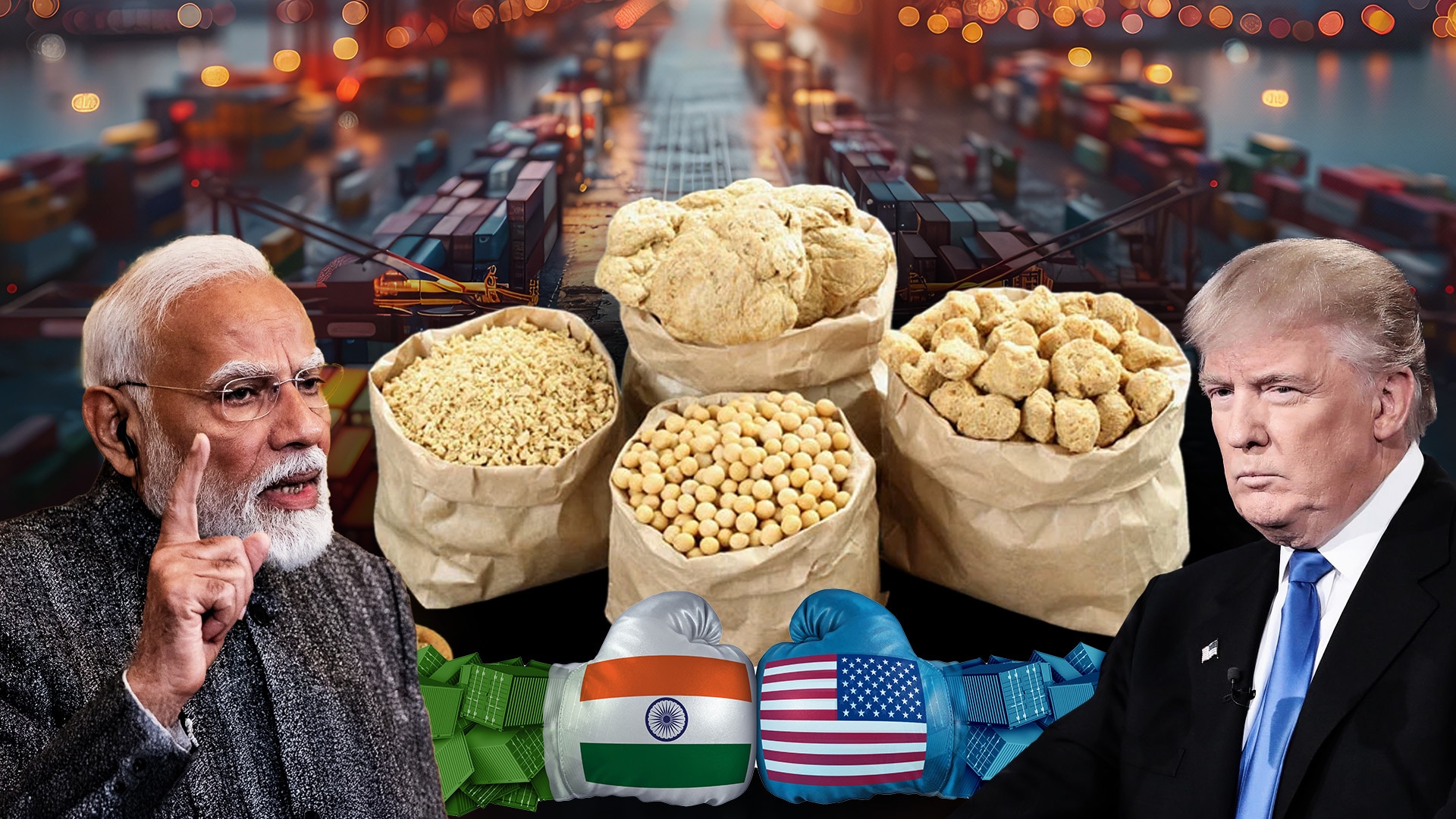
The current India-US trade logjam was unfathomable a few months back. After all, India was one of the first countries to start trade negotiations with the United States after Donald Trump came back to White House for a second term. However, from the time the framework was established during US Vice President JD Vance's India visit in April to Trump imposing an additional 25% tariff on India for buying Russian crude, things seem to have slipped downhill.
The India-US trade framework was aimed as a three-phase rollout. The first phase was goods trade, to be announced in July-August. The second phase was strategic trade to be announced around the QUAD Summit in India, around October-November, and third phase was more to do with digital and services. Currently, the first phase has fallen through.
The main issue at hand is the import of genetically modified crops. A closer look shows that one particular crop, soybean is at the heart of this.
India-US Trade: Quick Recap
India was hoping for a 15% baseline tariff announcement but was shocked when US imposed 25% baseline tariff and subsequently slapped an additional 25% tariff on the pretext of New Delhi being a 'tariff king' and crude oil deals with Russia. India responded with a factcheck and showed that its tariffs are lower than or comparable to peers in the region.
Meanwhile, Prime Minister Modi has said that India will not compromise on agriculture and dairy and will back its farmers even at the cost of personal relationship he enjoys with the US President.
Soybean Trade: US, China, Brazil & India
A closer look at the agriculture trade issues between the US and India shows that the crux of the matter is the soybean crop, specifically genetically modified soybean.
US is the second largest exporter of soybeans after Brazil. India, on the other hand, was a large importer. However, India's cumulative soybean imports from October 2024 to January 2025, fell sharply.
US' soybean trade with China has also been hit. China, traditionally, had been one of the largest importers of the crop from the US but the recent tariff war between the two superpowers has hit US farmers, especially from Republican states, who were selling to Chinese markets.
Take this into account — US' export of soyabean in 2024 stood at $24.47 billion. Half of this went to China, which imported soybeans worth $12.64 billion. China has now started moving its soybean imports to Brazil, world's leading soybean exporter, and founding member of BRICS. Result? Trump has also levied a 50% tariff on Brazil.
In 2024, Brazil exported $42.9 billion worth of soybeans, making it the second most exported product for the country. The main export destinations for these were China at $31.5 billion, according to data by The Observatory of Economic Complexity. This is even though soybean harvest in 2024 was lower as the crop was impacted. Brazil is expected to export around 105.5 million tonnes of soybeans in this season, putting pressure on the US farmers who could struggle to export their harvest.
Where does India stand? India is the next largest market for US soybeans but is becoming less reliant. India imported $591 million in FY24, which fell to $89.15 million in FY25. Imports were largely from Brazil and Sudan.
Domestically, the soybean season is from September to October. India's cumulative soyabean imports from October to January in the 2024-25 period dropped sharply to just 1,528 MT, compared to 117,357 MT during the same months in 2023-24. This was led by ample domestic production and supply, subdued domestic demand, and changes in trade policies and domestic pricing that have influenced import decisions.
According to the second advance estimate for 2024-25, soybean production in India was projected at 151.32 lakh tonnes, marking an increase from 130.62 lakh tonnes in 2023–24. Maharashtra led the country in soybean production with an estimated output of 72.75 lakh tonnes.
India ranks fourth globally for area under soybean cultivation with Madhya Pradesh, Maharashtra, Karnataka, Gujarat, and Telangana key states involved in soybean production — all key farmer states.
India-US Agri Trade: Where Things Stand
While India seems to have given some agri concession on import of apples and berries etc., coming mostly from Democratic states, it is reluctant to provide any concession on genetically modified soybean, corn and dairy products which come from MAGA-supported states in the US. India was willing to provide quota on dairy and a gradual scale-up but that did not hold water with Trump who wanted more.
The issue: US soybean is genetically modified and will never be accepted in India and will not hold the legal test in the Supreme Court. India has had a long fight with GM seeds and that is the genesis for the current standoff. In other words, the soy, dairy lobby in the US is holding off the India-US trade deal.
Currently, only GM cotton is permissible in India and higher yield has prompted research on food crops such as rice, brinjal, mustard and wheat. Mustard is still pending approval, and the heart of the GM seeds controversy stands at the sovereignty of the seeds and impact of the farming practices in India, which continues to be traditional in nature.
The India-US trade deal is set for long drawn negotiation, and US will relent only if China and Russia play ball and that is where RIC: Russia – India – China trilateral comes into play. The trilateral has been inactive since 2012 and the Prime Minister's visit to China at the end of August and a trilateral meeting between the three leaders, Putin, Modi and Jinping, is closely watched and could pose a challenge for the US.

-
Talking Points This Week: Tech Nerves, FII Buying, And A Faraway Banking Shock

The global markets are not shining this Diwali. The exception in the large markets is, India.
-
Midterm Rally Lasted A Day. The Hard Reality Of A Divided US May Last Two Years | Opinion
Between a contested AI boom, a debt ceiling that arrives in 2027 and a president with every incentive to act alone, the next two years may prove more volatile than the first day's rally suggests.
-
Blue Wave Will Derail the AI Trade but Won't Dismantle the AI Era | Unhedged Position
The Democrats' sweep of the US Congress will see politics collide with economic forces both over the long and short term.
-
It's Time To Take The GST Council's Bet On Trust Global
Payment records can prove India's services exports, and clear, proportionate rules can bring foreign digital sellers into the tax net.
-
Opinion | India at 38: From Innovation Overperformer to Innovation Powerhouse
India now has 453 VC-backed deep science startups, 18 of them late-stage, after 117 percent growth since 2020. Laurus Labs, at USD 9.3 billion, is the most valuable deep science company in any middle-income economy outside China.
-
Navigating Energy Crossroads: S Jaishankar's Call For Diversified Supply Chains At G20 Ministerial Meeting
As geopolitical fault lines continue to test maritime trade routes and commodity flows, Jaishankar's message remains pertinent: true economic resilience requires open markets, protected transit lines, and a genuine commitment to multilateral cooperation rather than coercion.
-
Indians Are Travelling, But Not Every Journey Is A Holiday | The Week In Whys
Pilgrims, patients and working women are the real travellers, and the system hasn't quite caught up with them.
-
Getting To Work Costs Women More | The Reason Why
It is not just about women paying more than men. It is about women paying much more in cities than in villages.
-
AI Bias In Investing Cannot Be Eliminated, But It Can Be Governed
Framing is a particularly important example as identical financial information presented in terms of gains rather than losses can lead an LLM to reach a different assessment.









