Despite heightened global uncertainty, the finance minister will present the 2026 annual budget in a backdrop marked by resilient growth, controlled inflation and stable fiscal indicators. The budget is widely expected to announce a series of pro-growth, business-friendly tax and trade measures aimed at reinforcing investor confidence.
Key policy initiatives under discussion span direct taxes, employee compensation, business restructuring, GST reforms, customs rationalisation and special economic zones.
Direct Tax Measures
1. Ensuring Tax Certainty under the New Income-tax Act, 2025
With the Income-tax Act, 2025, scheduled to come into force from 1 April 2026, Budget 2026 is expected to focus on ensuring a smooth and predictable transition. The government may issue detailed guidelines addressing treatment of ongoing assessments, carry-forward of losses and unabsorbed depreciation, utilisation of tax credits, and compliance obligations that span multiple tax years.
Also Read | Layoffs Are Rising In Tech, But These Skills Are Helping People Unlock Better Pay
2. Reform of ESOP Taxation
a. Deferral of ESOP Perquisite Taxation
Currently, employee stock options are taxed as a perquisite at the time of allotment, based on the difference between the fair market value on the exercise date and the exercise price. While employees of eligible start-ups are granted a deferral of tax payment until a liquidity event, cessation of employment, or a specified time period, this benefit is not available to employees of other companies.
Stakeholders have urged the FM to extend a similar deferral mechanism across all companies. Allowing ESOP taxation to be deferred until actual monetisation would alleviate the immediate cash-flow burden on employees, particularly in high-growth sectors where shares may be illiquid for extended periods
b. Cross-border ESOP Apportionment
Globally, mobile employees face additional challenges, as current law taxes ESOPs in India at exercise without clear statutory rules for apportioning income where services are rendered partly in India and partly overseas during the vesting period.
The absence of a codified allocation mechanism has led to inconsistent practices and disputes. Budget 2026 may address this gap by introducing a standard apportionment formula based on the location of services rendered during the vesting period, aligning Indian law with global best practices.
3. Extension of Concessional Corporate Tax Regime
Industry has also sought the reintroduction and expansion of the concessional 15% corporate tax regime (effective rate of approximately 17.16%). Beyond new manufacturing entities, there is a strong case for extending this benefit to high-growth and strategic sectors, such as global capability centres, data centres and AI-driven businesses. Such a move could attract fresh investments, promote employment generation and reinforce India's position as a global services and technology hub.
4. Tax Neutrality for M&A Transactions
a. Fast-Track Demergers
The definition of "demerger" under the Income-tax Act, 2025, currently recognises only court-approved schemes under Sections 230-232 of the Companies Act, 2013.
However, corporate law has expanded the scope of fast-track demergers under Section 233. Budget 2026 may amend the tax definition to include Section 233 demergers, thereby harmonising tax provisions with corporate law and simplifying restructuring for eligible companies.
b. Tax Treatment of Contingent Consideration on Share Transfers
The taxability of contingent or deferred consideration arising from share sales remains an area of ambiguity. While judicial precedents generally support taxation in the year the contingency crystallises, the statute does not provide explicit guidance, leading to divergent practices. Taxation in the year of transfer poses practical challenges, particularly where contingencies are resolved after the window for revising returns has closed.
The Budget may consider alternative statutory approaches, such as taxing contingent consideration in the year of receipt or permitting taxation based on valuation of the "right to receive" such consideration at the time of transfer, thereby providing certainty and administrative feasibility.
c. Relief for Unrealised Deferred Consideration
A related concern arises where deferred consideration, already subjected to capital gains tax, ultimately becomes unrecoverable. The current law does not provide a clear mechanism for reducing previously taxed gains or recognising a capital loss in such circumstances. Introducing specific relief provisions would prevent unjust taxation of income that never materialises and align tax outcomes with economic reality.
Goods and Services Tax (GST) measures
1. Place of Supply for Intermediary Services
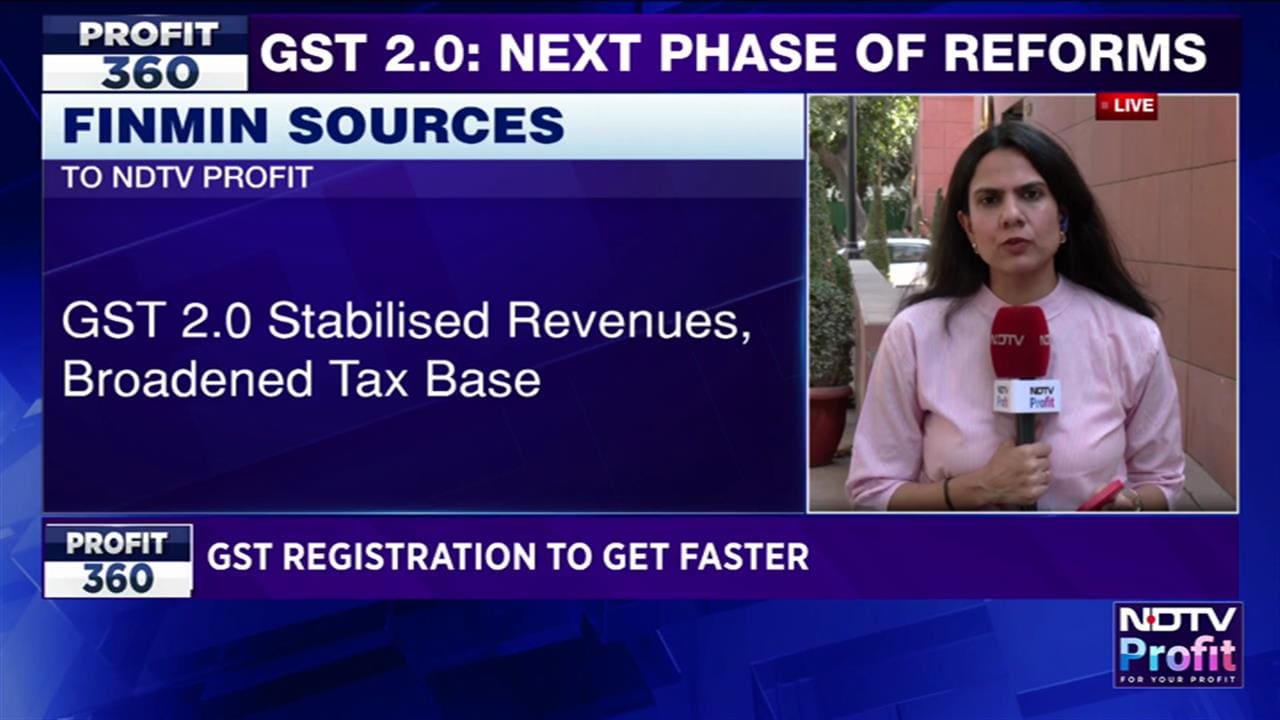
One of the most awaited GST reforms relates to intermediary services. The GST Council has recommended omitting Section 13(8)(b) of the IGST Act, which deems the place of supply for intermediary services to be the supplier's location.
Post-amendment, the general rule under Section 13(2) would apply, making the recipient's location the place of supply. This change would enable Indian intermediary service providers to qualify as exporters, unlocking refund benefits and improving competitiveness.
2. Rationalisation of Post-sale Discounts
Under the current CGST Act, post-sale discounts are excluded from taxable value only if they are pre-agreed and linked to specific invoices. The GST Council has recommended simplifying this requirement by allowing discounts to be granted through credit notes, coupled with appropriate input tax credit reversals. Budget 2026 may implement these recommendations by amending Section 15 and the credit note provisions, easing compliance for businesses.
Customs and Trade Facilitation
3. Comprehensive Customs Overhaul
The FM has publicly emphasised the need for a fundamental overhaul of the customs regime to simplify procedures, enhance transparency, and reduce compliance burdens. Building on steady duty rationalisation over recent years, Budget 2026 may formally announce further simplification measures and targeted duty reductions where rates remain above optimal levels.
4. Customs Amnesty Scheme
With a significant quantum of revenue locked in prolonged customs disputes, the government is reportedly considering an amnesty scheme to resolve legacy litigation. Such a scheme could provide relief to taxpayers while unlocking substantial revenue and reducing the burden on adjudicatory forums.
5. Alignment of Customs and GST
The Govt is also exploring greater alignment between customs and GST frameworks. This may involve further rationalisation of customs duty slabs and procedural harmonisation, enabling businesses to navigate indirect taxes with greater ease.
6. Introduction of a New SEZ Framework
Budget 2026 may pave the way for a revamped Special Economic Zones law. Anticipated changes include permitting DTA units to pay SEZ units in rupees for services, allowing SEZ manufacturers to sell goods into the DTA by paying customs duty only on raw materials, and enabling SEZ units to undertake job work for DTA entities. These reforms could significantly enhance SEZ flexibility and integration with the domestic economy.
The article has been authored by Himanshu Sinha, partner–tax practice; Rohit Kumar, counsel; and Samyak Jain, senior associate at Trilegal.
Disclaimer: The views expressed in this article are solely those of the author and do not necessarily reflect the opinion of NDTV Profit or its affiliates. Readers are advised to conduct their own research or consult a qualified professional before making any investment or business decisions. NDTV Profit does not guarantee the accuracy, completeness, or reliability of the information presented in this article.
ALSO READ: Electronics Industry Seeks Duty Cuts, Manufacturing Push In Union Budget 2026
Essential Business Intelligence, Sharp Market Insights, Practical Personal Finance Advice, Daily Fuel, Gold and Silver Prices and Latest Stories — On NDTV Profit.