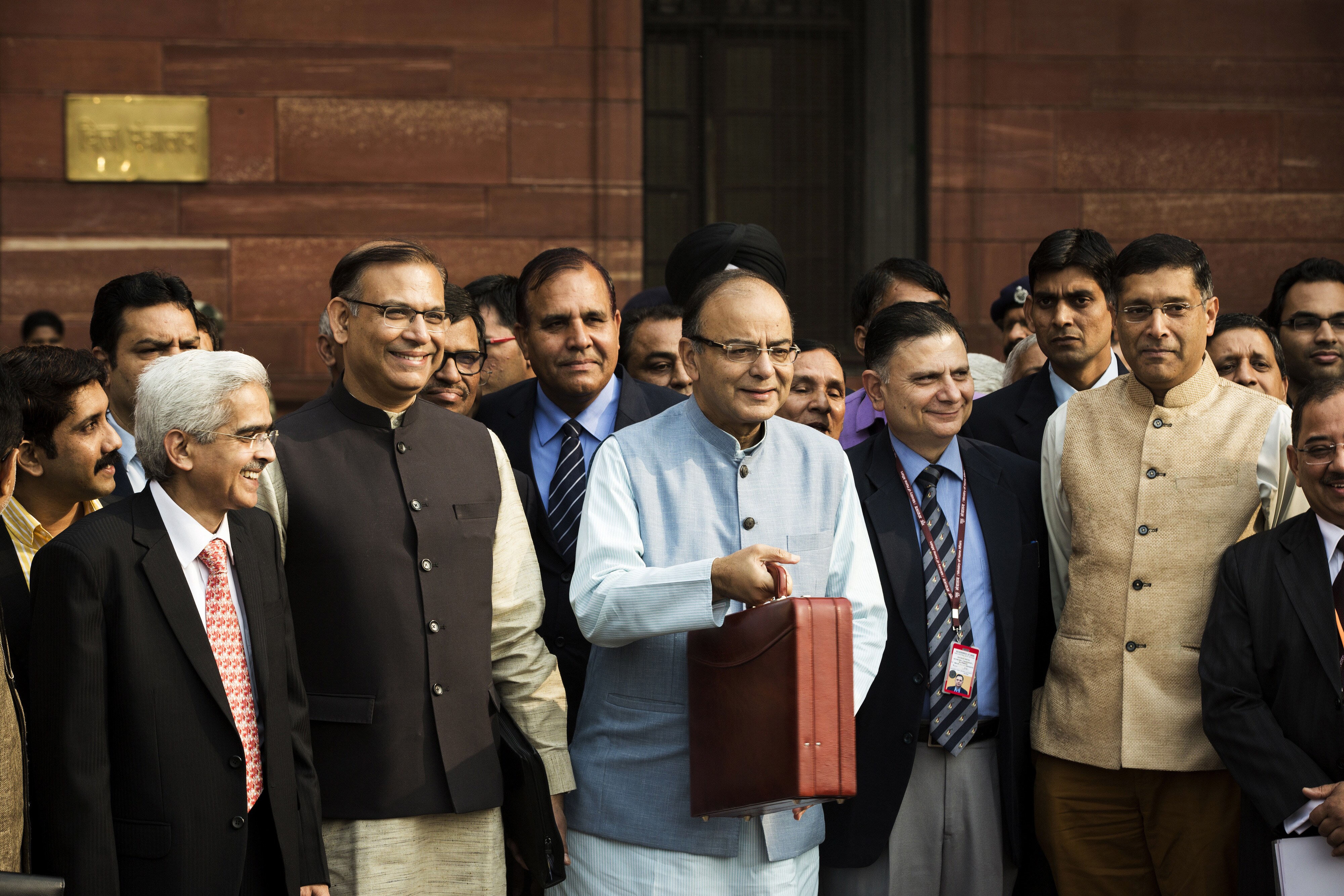
Finance Minister Arun Jaitley may reduce the personal income tax rate, but is unlikely to hike the Rs 2.5 lakh exemption threshold in the upcoming Union Budget for 2017-18, a senior government official told BloombergQuint.
Increasing the threshold will lead to a fall in the number of assesses, the official said on condition of anonymity. Even if the exemption slab is increased by Rs 10,000, a number of assesses will vanish, the official added.
The government wants to grant tax relief, which is due, but this might be in the form of a reduction in rates, the official added.
Also Read | Layoffs Are Rising In Tech, But These Skills Are Helping People Unlock Better Pay
According to statistics for assessment year 2014-15 (financial year 2013-14), released by the Central Board of Direct Taxes in October 2016, income tax returns filed by individuals with a total income less than Rs 2 lakh stood at 51.29 lakh.
The exemption limit for individuals below 60 years of age was Rs 2 lakh for assessment year 2014-15.
The tax collection data for AY2014-15 shows that 3.91 crore returns were filed by Indians, of which 1.85 crore did not pay any tax. The total tax paid by all individual taxpayers stood at Rs 4.46 lakh crore.
The government believes that if the current exemption threshold is increased from Rs 2.5 lakh, the number of income tax filers would come down, as it has in the past.
Also Read: Budget 2017: Arun Jaitley May Lower Corporate And Income Tax Rates But Hike The Service Tax Rate
The number of income-tax returns filed by those earning an annual salary of up to Rs 1.5 lakh had fallen to 15.9 lakh in the assessment year 2013-14 (FY12-13) from 16 lakh in the previous year when the income tax exemption slab was hiked to Rs 1.80 lakh from Rs 1.60 lakh.
Similarly, the number of returns for total income of up to Rs 1.5 lakh had fallen in AY2014-15 to 31.23 lakh from 34 lakh a year ago when the threshold was raised from Rs 1.8 lakh to Rs 2 lakh. For an income of Rs 1.5 lakh to Rs 2 lakh, the number of returns had fallen to 30.40 lakh from 56.58 lakh a year ago.
When the exemption tax slab increases, people fall out from the obligation to pay as well as comply, Jayesh Sanghvi, partner-tax and regulatory services at EY, told BloombergQuint over the phone. The government can give rebates instead of increasing the tax exemption limit, he added.
To incentivise compliance, they (government) can give rebates to those who file returns so that they don't go off the compliance net, and continue to file returns as they will be eligible to get rebates for timely compliance.Jayesh Sanghvi, Partner - Tax and Regulatory Services, EY
Also Read: Budget 2017 Should Cut Individual, Corporate Tax Rates: JSW's Seshagiri Rao
Essential Business Intelligence, Sharp Market Insights, Practical Personal Finance Advice, Daily Fuel, Gold and Silver Prices and Latest Stories — On NDTV Profit.