- RBI raised India's GDP growth forecast to 7.1% amid rate hike and inflation risks
- RBI increased repo rate by 25 basis points due to high crude oil and erratic weather
- Geopolitical oil shocks and food price spikes pose risks to rupee and consumption
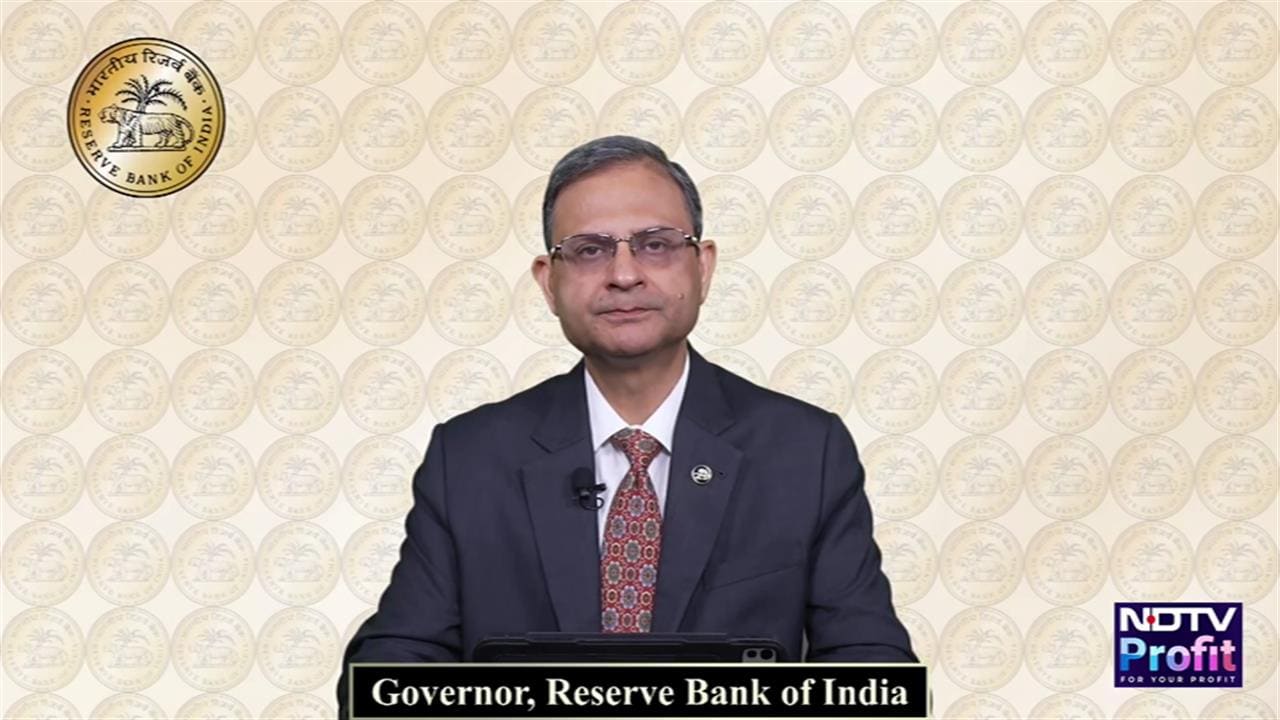
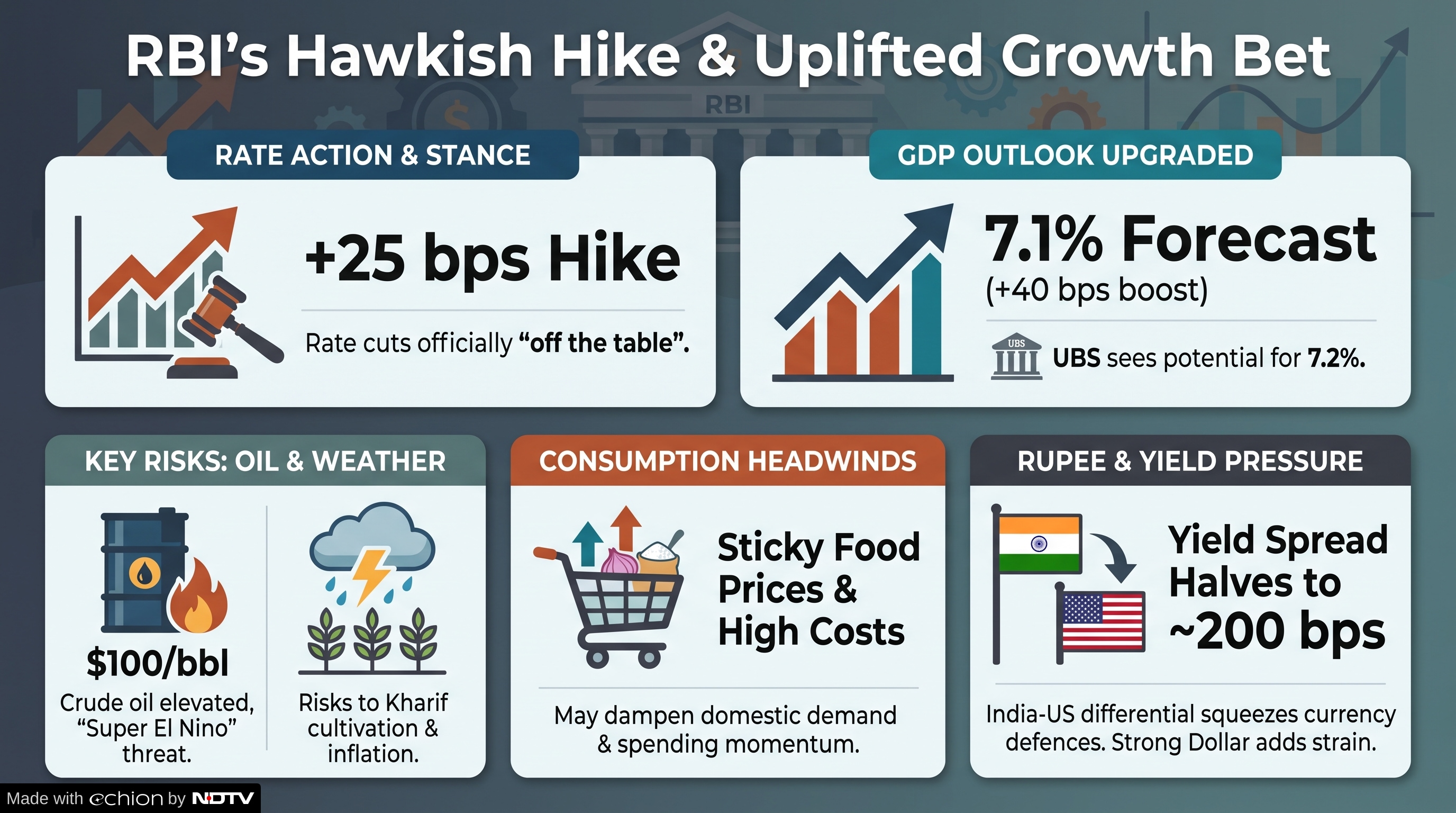
The Reserve Bank of India's hawkish tilt was accompanied with an uplifted economic outlook, as the central bank raised its full-year gross domestic product growth forecast by a remarkable 40 basis points to 7.1%. The upgraded forecast was shared minutes after Governor Sanjay Malhotra announced a 25-basis-point rate hike, citing elevated crude oil and erratic weather conditions that pose upside risks towards inflation.
Faced with oil hovering around $100 a barrel and a 'Super El Nino' phenomenon that threatens to hurt Kharif cultivation, the RBI decided to firmly put rate cuts "off the table" for the near future.
However, the headwinds also raise the question whether the elevated GDP growth forecasts would hold, as a sticky inflation may hurt demand, which could eventually dampen the economic momentum.
Also Read | Layoffs Are Rising In Tech, But These Skills Are Helping People Unlock Better Pay
Market voices and economists tracking the policy announcement agreed that while domestic demand remains sturdy enough to absorb the tightening, a combination of geopolitical oil shocks, sticky food prices, and a shrinking yield buffer leaves the rupee and discretionary consumption vulnerable.
Tanvee Gupta Jain, Chief India Economist at UBS, told NDTV Profit that she remains aligned with the RBI's upgraded projections. According to Jain, the economy demonstrated significant resilience in Q1 despite emerging geopolitical jitters in West Asia, and activity in the first half of the fiscal year is positioned to stay robust.
Jain believes that even if external shocks from elevated crude prices and an uneven monsoon take a slight toll on activity, India's growth engine has enough underlying momentum to clock an overall GDP expansion of around 7.2%.
Rupee Pressures
While domestic output remains on firm ground, the external and currency fronts present immediate challenges. The sudden escalation in West Asia has pushed crude prices higher, while a strengthening US dollar continues to strain emerging market foreign exchange.
Lakshmi Iyer, Group President - Investments and CEO at Bajaj Alternate Investment Management, warned that predicting the next wave of external risks has become increasingly difficult. With crude edging toward $100 and the US Dollar Index scaling fresh highs, Iyer emphasised that the rupee will remain exposed unless global macros incrementally stabilise.
A crucial structural headwind for the currency is the rapid narrowing of the interest rate spread between New Delhi and Washington. In January 2023, the India-US sovereign yield differential stood at around 400 basis points. Today, that spread has halved to roughly 200 basis points. After adjusting for currency volatility, dollar yields remain exceptionally competitive, capping foreign portfolio inflows and testing the domestic currency's defences, she told NDTV Profit.
ALSO READ: RBI Repo Rate Hike: Will Home Loan EMIs Rise? What Borrowers Should Know
Food, Crude Threat
Beyond financial markets, the second-order effects of elevated commodity prices could eventually seep into domestic demand. The RBI highlighted broad-based spikes in food items like sugar and onions, alongside cost pressures stemming from an uneven monsoon.
Ashwini Agarwal, Founder of Demeter Advisors, pointed out that super-high food prices combined with El Nino conditions pose a tangible risk to consumption demand. If crude oil stays elevated due to protracted uncertainty in the Middle East, higher input costs could gradually drag on consumer spending.
Agarwal noted that while underlying demand has held up well so far, the trajectory of geopolitical tensions over the coming month will be critical. A quick de-escalation in West Asia could help soften energy costs and offset the domestic shock from food inflation, but until global macro conditions stabilise, downside risks to consumption will persist.
ALSO READ: RBI Raises FY27 CPI Inflation Forecast To 5.2% From 5%; Hikes Repo Rate To 5.50%
Essential Business Intelligence, Sharp Market Insights, Practical Personal Finance Advice, Daily Fuel, Gold and Silver Prices and Latest Stories — On NDTV Profit.