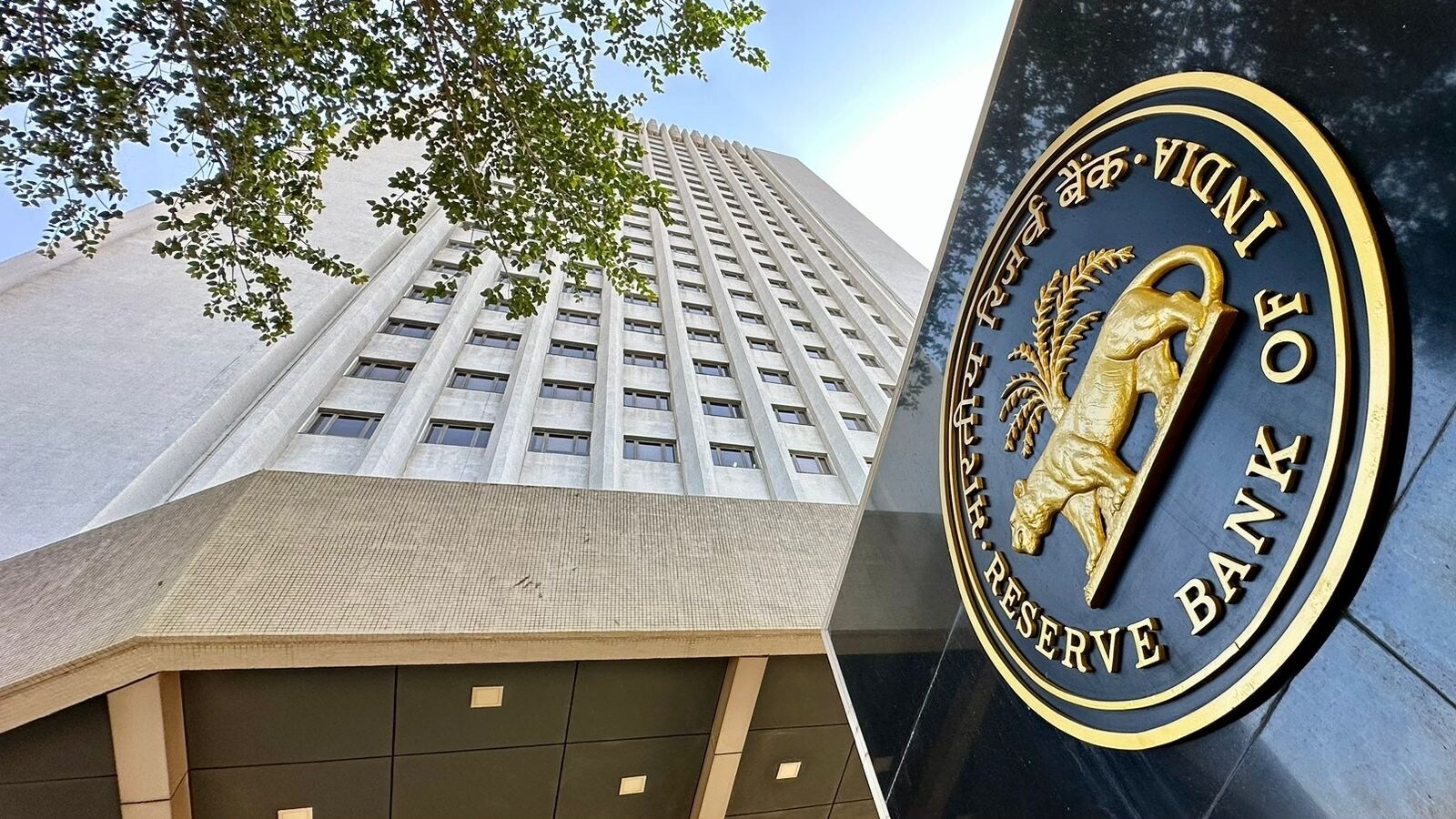
The Reserve Bank of India's Monetary Policy Committee cut the policy repo rate by 25 basis points to 5.25% on Friday, marking its third reduction in FY26. The move extended the 125-basis-point easing delivered this financial year as the central bank continued to steer policy through a period of low inflation and steady growth.
The committee kept its stance neutral. RBI Governor Sanjay Malhotra said in a video address that all six MPC members voted for the cut., while five of them voted for the stance.
Among the 44 economists tracked by Bloomberg, 31 had expected a 25-basis point rate cut, while 12 expected the rates to be unchanged. One economist had expected a 50-basis-point rate cut.
RBI made the decision against a backdrop of easing prices and firm domestic demand. Malhotra said in a video address that inflation had come down faster than expected and described the current environment of low prices and strong growth as “a rare goldilocks period.”
Benign Price Signals
The central bank said that inflation had eased sharply, helped by a broad decline in food prices, according to a separate statement. RBI added that underlying pressures were low, even after accounting for precious metal price movements.
Malhotra said in his address that average inflation in the September quarter had “breached the lower tolerance threshold” for the first time under flexible inflation targeting, and that headline inflation dropped to “a mere 0.3% in October.”
The RBI's statement came at a time when consumer prices had fallen to an all-time low in October. Retail inflation eased sharply as food prices continued to retreat and the effect of recent GST rate reductions filtered through the system. Official data last month showed CPI inflation at 0.25%, down from 1.44% in September. This marked the lowest annual reading since the current index was introduced. Economists surveyed by Bloomberg had expected a print of 0.4%.
The central bank also noted that the fall in inflation had become more generalised across categories and created room for policy support.
RBI expects price pressures to stay contained through the rest of the year. It now projects inflation at 2.0% for FY26, with 0.6% in Q3 and 2.9% in Q4, marking a downward revision from the earlier outlook. Inflation is expected to move towards the 4% target in the first half of FY27, with projections of 3.9% in Q1 and 4.0% in Q2.
Resilient Growth Momentum
RBI said domestic demand remained firm and investment activity continued to improve. He pointed to healthy agricultural prospects, supportive financial conditions and ongoing reforms as drivers that would aid economic activity. RBI also said private investment was gaining traction, though external conditions still posed risks.
Malhotra said real GDP growth accelerated to 8.2% in the September quarter, aided by festive-season spending and GST rationalisation. He said the combination of 2.2% inflation and 8% growth in the first half of FY26 reflected "a rare goldilocks period" for the economy.
India's economy expanded by 8.2% in the July-September quarter of the current financial year, the fastest growth in six quarter, led by strong manufacturing and services output. The Bloomberg estimate was 7.4%. The GDP print in September quarter is far higher than 5.6% during Q2 of FY25 and 7.8% in the June quarter, as per data released Ministry of Statistics last week.
RBI expects growth to moderate slightly while remaining steady. It projects real GDP growth at 7.3% for FY26, including 7.0% in Q3 and 6.5% in Q4. Growth is expected at 6.7% in Q1 FY27 and 6.8% in Q2 as domestic conditions continue to support activity.
Essential Business Intelligence, Continuous LIVE TV, Sharp Market Insights, Practical Personal Finance Advice and Latest Stories — On NDTV Profit.