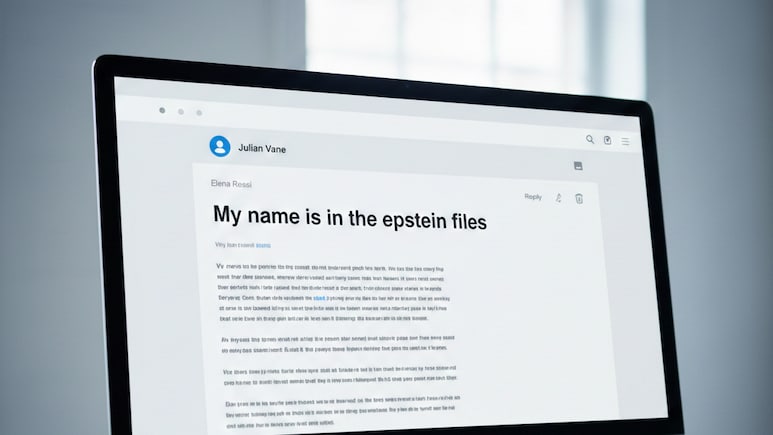
A new, rather edgy, bold, and somewhat questionable trend has emerged in the corporate culture, wherein job-seekers are sub-heading their cold mails with 'my name is in the epstein files' to grab recruiters' attention.
The trend has in fact garnered a lot of clout, raising questions around ethics and sparking a debate on the internet. Vik Gambhir, a professional resume writer and career coach calls the move "insecure".
According to Gambhir, writing "Saw your name in the Epstein Files" is showing the recruiters that a job-seeker cannot win their attention through honest means and has to resort to gimmicks and fear to get their mails opened.
"If your cold email subject line is “Saw your name in the Epstein Files”… You are not in sales. You are in spam," Gambhir stated in a post on LinkedIn.
He admitted that while such stunts would increase the chances of your emails getting opened, having deception as your first touch point will train the market to distrust you.
"Attention is not persuasion. And manipulation is not skill," he remarked, adding that sales has become obsessed with hacking psychology instead of building credibility.
A contrarian stance to this came from Amir H Khan, HR Generalist at Parisima Talent Ltd. who thinks of the trend as effective and advised job-seekers to be bold but also smart. He also suggested that recruiters be open to unconventional approaches.
"Today I saw a job seeker use a shock-value subject line just to stand out in a crowded inbox. Risky? Yes. Creative? Definitely. Effective? It grabbed attention. In a world where HRs receive hundreds of emails daily, the real challenge isn't just qualifications — it's visibility. Creativity can open the door… but professionalism is what keeps it open," Khan said in his LinkedIn post.
Kiara Khanna, personal brand strategist based in the United Arab Emirates, delved deep into the psychology behind using such approaches while cold-mailing and explained how shocking associations cut through the clutter in a "name economy".
"Under information overload, humans rely on heuristics - mental shortcuts. We don't evaluate complexity first. We match new information against pre-existing associations. Edelman's Trust Barometer has shown for years that trust in institutions is declining, while trust in individuals - “people like me” and visible leaders, carries more weight," she stated in her post.
Khanna highlighted how in this economy, reputation now attaches to people faster than to systems.
ALSO READ: Hello Girls!': Epstein Was A Hasty Pudding Donor For Years After Sex Conviction
Essential Business Intelligence, Sharp Market Insights, Practical Personal Finance Advice, Daily Fuel, Gold and Silver Prices and Latest Stories — On NDTV Profit.