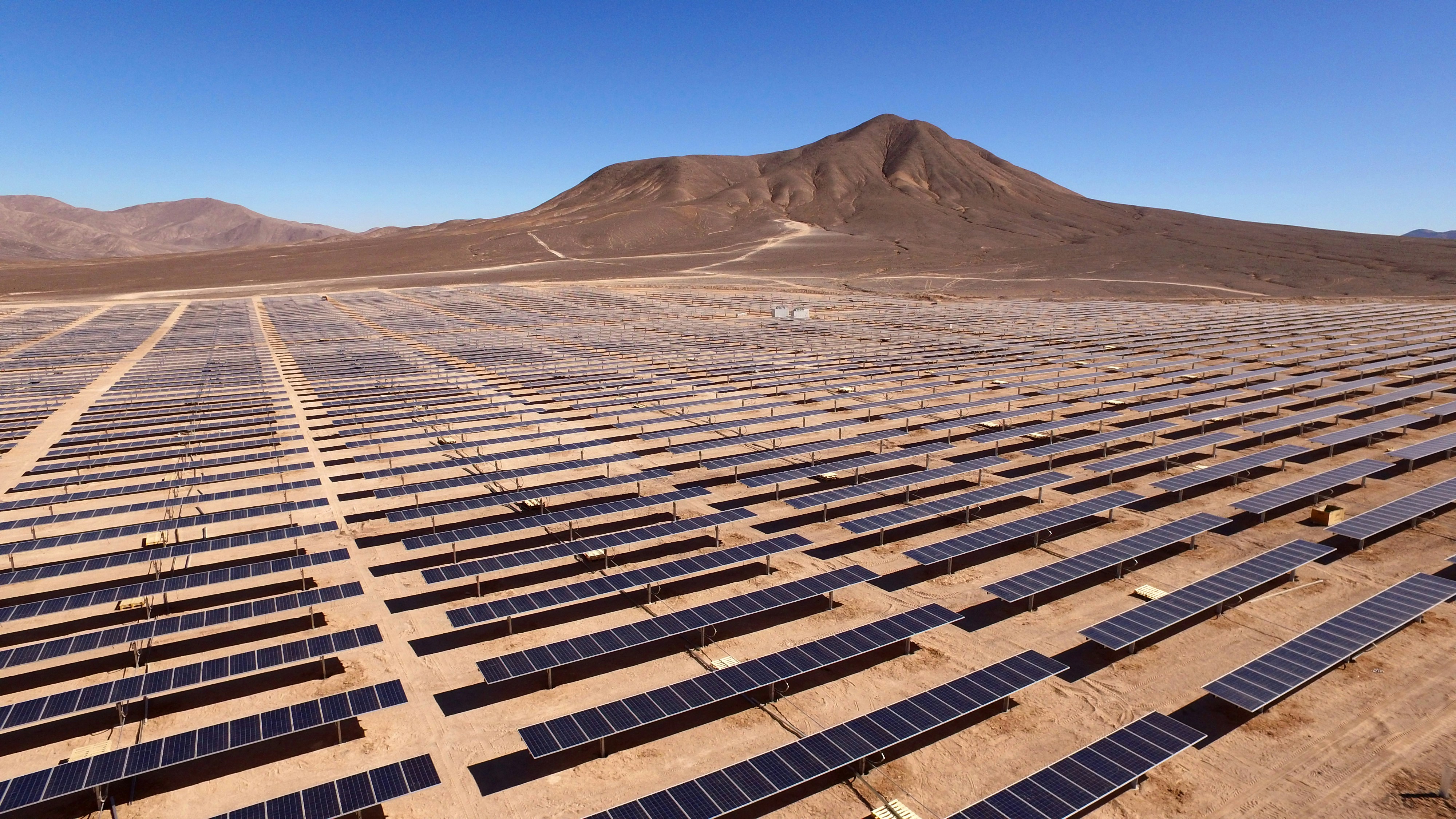
India's solar module and cell capacity has grown at a 42% and 61% compounded annual growth rate over FY17-24. However, these two areas are among the least profitable in the entire solar manufacturing value chain, as per Bernstein.
Hence, it is imperative for Indian players to integrate their production chain if they want to maintain and generate better profits.
Limited Scope In Solar Modules And Cells
According to Bernstein's analysis of top Chinese solar players, solar cell and module manufacturers have underperformed the most in the value chain.
The solar cell and module sectors have low entry barriers, with factors like fast execution, low capex, and minimal scale requirements leading to intense competition and fragmentation. This limits pricing power, as manufacturers can't raise prices without risking customers switching to cheaper options. This makes it difficult for manufacturers to pass on higher input prices easily. For example, in November 2022, prices of polysilicon and wafers rose 238% and 115% from their December 2020 levels, but solar cell and module prices only increased by 32% and 9%.
Another key factor is solar module prices which have dropped significantly from 27-28 cents per watt in 2022 to just 9-10 cents today, as per ICRA Research. This reduces the per-megawatt revenue potential for companies. Further, technological advancements can quickly make existing capacity outdated.
Profitable Part Of Solar Module Value Chain
Profitability in polysilicon and modules is generally inversely related—when one rises, the other falls. As per Bernstein's analysis, from 2011-2019, cell and module manufacturers underperformed the most in the value chain, while polysilicon and ingot-wafer producers fared better. Companies across multiple segments tended to see more stable profits throughout the cycle.
Why Backward Integration Is Important
Integration helps companies absorb price shocks by acting as a natural hedge—when returns in one segment drop, another can compensate. Bernstein highlights that backward integration, at least to the 'wafer' segment, is crucial for stability. The brokerage points out how integrated players like Canadian Solar, Jinko Solar, and Longi Green have expanded across the solar PV value chain, enabling them to achieve more stable returns on equity compared to pure-play cell and module manufacturers. Before 2016, Canadian Solar focused solely on cells and modules, leading to volatile ROEs, which only stabilised after they added wafer production capacity.
In the context of India, Bernstein stated if the government extended the ALMM concept to cell and wafers in future, players with wafer capabilities would have all the pricing power, making it more difficult for players dealing only in cells and modules to survive.
Where Indian Solar Players Currently Stand
No Indian solar manufacturing player is currently backward integrated, but they are working on it. Expansion plans of companies like Adani Solar, Reliance Industries Ltd., Waaree Energies Ltd. and Premier Energies Ltd. not only include increasing cell and module production capacities, but also vertical integration.
Difference In Valuations Between China, India
There also seems to be a big difference between the valuations that Chinese and Indian solar players currently trade at. Indian companies with lower scale and old tech currently trade at much higher valuations than their Chinese counterparts with higher capacity.
Bernstein notes the market expects existing profitability of the solar manufacturing industry to continue, which is highly unlikely. Only large players entering the ingot-wafer segment will be sustainable, according to the brokerage.
Disclaimer: NDTV Profit is a subsidiary of AMG Media Networks Limited, an Adani Group Company.
Essential Business Intelligence, Continuous LIVE TV, Sharp Market Insights, Practical Personal Finance Advice and Latest Stories — On NDTV Profit.