Packaged Food Giants' Slow Growth In Cities Raises A 'Healthy' Question
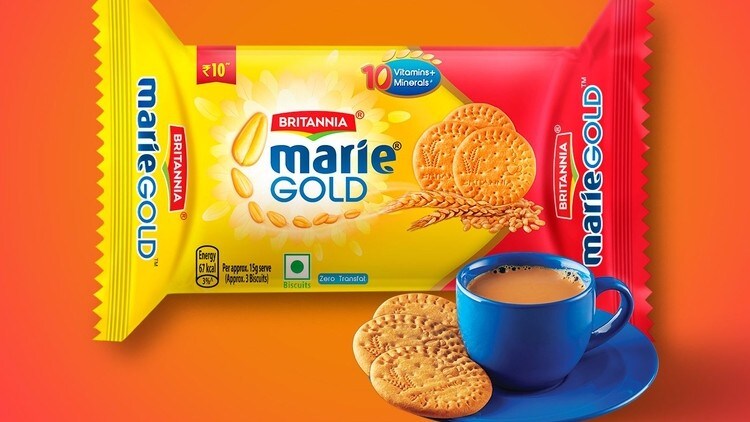
The urban appetite for biscuits and noodles is likely being challenged by a health-conscious revolution as city dwellers swap indulgence for nutrition.
The smart snacking market has grown 1.2 times faster than traditional snacks, according to market researcher NielsenIQ.
The data is in stark contrast to the recent commentaries of packaged food companies like Britannia Industries, Nestle, and Dabur—all of whom citied factors such as higher rental and income squeeze coupled with persistently high food inflation as reasons for sluggish consumption growth in metro cities.
In fact, consumption in the country's hinterlands has outpaced urban areas for at least the last nine months.
Metros, which drive nearly a third of FMCG sales, accounted for 2.4 times the slowdown, Britannia Industries Executive Vice Chairman and Managing Director Varun Berry said during a post-results call.
Nestle India, ITC, Dabur, Tata Consumer Products, and Hindustan Unilever, too concurred. Nestle said the middle class was shrinking, while others are concerned over the erosion of their urban consumer base.
Meanwhile, the consumption rate of 'smart snacks' has grown twice over general snacks as urban consumers increasingly opt for snacks that align with their health goals, according to Sonika Gupta, executive director, customer success, NIQ India.
Consumers in metro cities contribute the most to smart snacking, and they are prioritising snacks that promote heart and bone health, immunity, as well as a strong gut, she said. Snacks containing multigrains, nuts, dried fruits, and antioxidants, as well as those rich in vitamins, minerals, and fibre, are in high demand, Gupta added.
One out of five snacks now has a healthy connotation, she said. Categories such as oats and Greek yoghurt are fuelling growth in the 'smart snacking' segment.
"Smaller, emerging players are challenging established players with competitive offerings, with single-serve packs driving demand and growing 60% faster in smart snacking than traditional small packs due to mainstream pricing strategies," Gupta said.
According to a recent NielsenIQ survey, 63% of consumers seek innovative and healthy snacking options, while 50% read ingredient labels to understand the nutritional value. "This presents opportunities for brands to innovate in health-focussed products and leverage the trend," Gupta said.
The shift to healthier food was echoed by Tata Consumer's Managing Director, Sunil D'Souza, while discussing its newly acquired brand, Organic India. "I wasn't bullish on the organic food range. But now with the increasing demand for organic jaggery, organic ghee, and organic rock salt, we're chasing our tails trying to make sure the supply chains are in place."
The contrasting data set gives credence to the underlying shift in consumer preference towards healthier options, raising doubt on remarks of FMCG CEOs that their slow growth is merely because of macroeconomic woes.
Urban consumers seem to be consciously steering clear of palm oil, hydrogenated fats, and excessive sugar and salt—ingredients that have historically been marketed to them as tasty and healthy.
Notably, while there is a demand slowdown for categories like biscuits, noodles, chocolates, and ice cream in cities, the demand for kitchen essentials including edible oil, besan, basmati rice, atta, and maida remains strong.
"We haven't seen a softening of urban demand," said Adani Wilmar CEO and Managing Director Angshu Mallick. "We're expecting a strong Q3 led by a broader wedding season in November and December."
But not all companies are optimistic about immediate consumption growth.
The current urban demand scenario remains weaker than in previous years, prompting Britannia—India's largest biscuit manufacturer by value—to anticipate some impact on volumes in the short term.
Even the crucial festive season, when consumers usually indulge despite pressure on wallets, fell short of delivering the expected consumption growth, according to a senior executive of a packaged food company.
In contrast, the 'smart snacking' segment is thriving, with companies noting sustained strong demand in this category. The trend has prompted several companies to expand their portfolio into healthy snacks.
Britannia, for instance, launched a protein bar ‘Be You' on a test market basis on e-commerce channels. It is in the process of strengthening its distribution network before committing to large-scale deals. In July, ITC also launched a health and nutrition brand, Right Shift, aimed at consumers aged 40.
Gupta noted that the brands that cater to the health-centric shift while preserving flavour and convenience are positioned for substantial growth.

-
High US Salaries, No Green Card Certainty: The Financial Calculation Facing Indian H-1B Families

The suspension of PERM processing at eight technology employers does not cancel existing H-1B visas. What it does is force a question many Indian families have been avoiding: is the US salary worth tying your career and family plans to one employer?
-
Swiggy vs Eternal: Food Delivery's Two Rivals Are No Longer In The Same Race
Eternal is building a private AI assistant, dark.ai. Swiggy is still working out how to make Instamart pay, with an operating loss of Rs 895 crore in the July-September quarter while Blinkit stayed profitable.
-
Where You Live Shapes How You Get To Work | The Reason Why
Two-wheelers are the most popular way to get to work in India, accounting for nearly 43% of workplace commutes.
-
Unhedged Position: Can India See An Indonesia-Style Time Correction?
The Nifty is trading below levels it first clocked in 2024. Is there, then, as I have suggested in the headline, potential that the current time correction drags on painfully for the next three-five, even ten years?
-
Navigating Friction And Energy Realities: An Analysis Of Marco Rubio's October Visit To India
Occurring at a critical juncture marked by stalled trade negotiations and escalating geopolitical pressures over global energy supplies, the visit offers a profound window into modern US-India relations.
-
India Exports Capital. Why Not Export Trusteeship?
The big question, then, is whether India can build an institution that global borrowers, investors, banks, and lawyers can trust, even without an Indian connection.
-
France's Economy & Politics Are In Crisis | The Reason Why
Let's look at how the French economy and politics evolved under Nicolas Sarkozy, Franois Hollande and Emmanuel Macron.
-
You May Inherit The Business. You Must Earn Its Credibility.
Succession tests the founder's ability to share authority as much as it tests the next generation's readiness to assume it.
-
Signing Deals Is One Thing; Making Them Work Is Another | The Week In Whys
Sometimes, things don't turn out as planned. Indian companies have lost some bids to rivals, some projects won't produce until 2030.
-
FOMC Wall, PERM Suspension, Hospital Stocks | Talking Points This Week
A PERM suspension would directly affect green-card sponsorship rather than H-1B visas, so the near-term earnings impact could remain relatively limited. The key question is whether this marks a new phase in US scrutiny of Indian IT.









