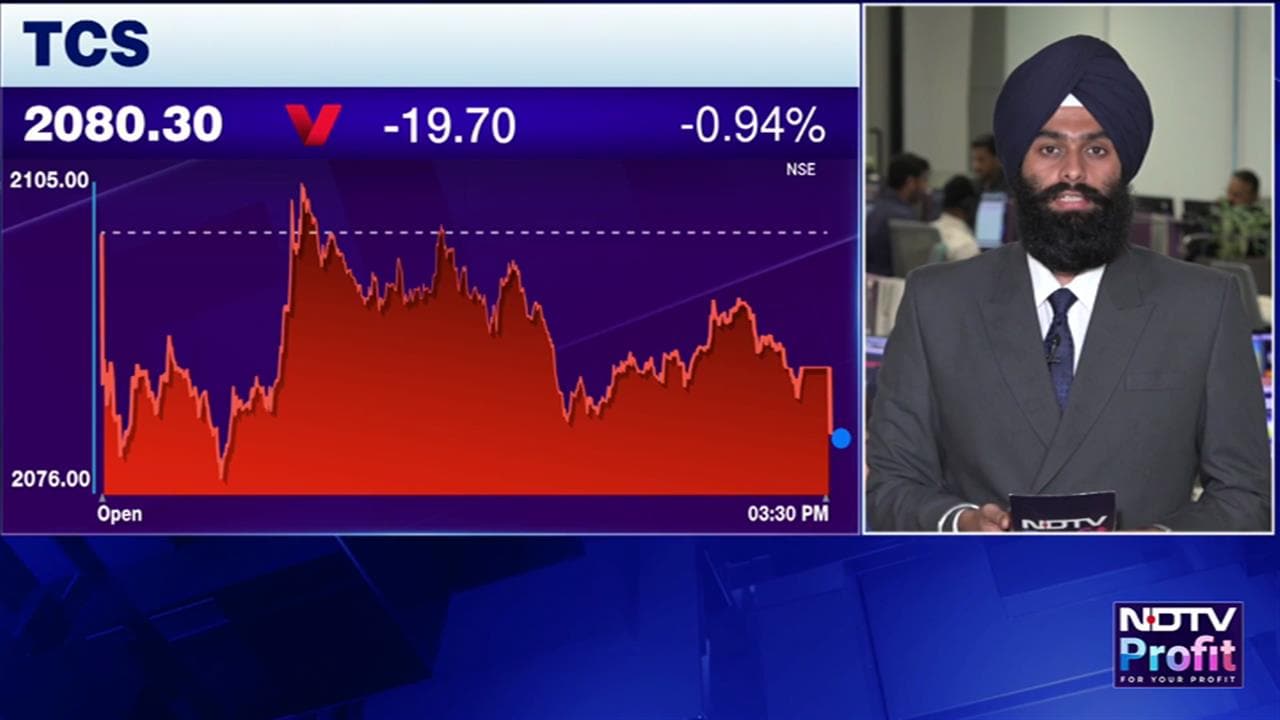
Tata Consultancy Services Ltd. has kicked off the earnings season with a performance that is largely being branded in-line, with the IT major's revenue beating estimates while profitability was in line. The company also witnessed strong order win momentum, whereas annualised AI revenue surged past the $2 billion mark.
However, beneath all this fineprint, it is perhaps fair to consider some key numbers that truly deserve attention, especially on the acquisition front.
Indeed, TCS has been busy buying growth in FY26. The company spent a whopping Rs 6,750 crore for acquisitions during the year, according to its consolidated cash flow statement, with the biggest bets tied to ListEngage and Coastal Cloud.
Also Read | Layoffs Are Rising In Tech, But These Skills Are Helping People Unlock Better Pay
Naturally, the large spending had a considerable impact on the balance sheet, with Goodwill jumping from Rs 1,860 crore a year earlier to Rs 9,108 crore, showcasing a fourfold growth. This is a trend that signals how heavily TCS leaned on acquisitions to deepen its capabilities this year, particularly on the AI side of things.
That leads us to our next point. On paper, these subsidiaries look meaningful in scale. When comparing the consolidated and standalone FY26 results, it appears subsidiaries accounted for about 17.3% of TCS' revenue, but only 0.7% of profit. This, of course, does not necessarily come from the newer acquisitions — such a division is not available.
It is also perhaps unfair to consider the profitability and top line metrics of the newly-acquired subsidiaries in the first place, as no 15% margin yielding US tech company would sell their profitable business to TCS.
It is quite possible that these businesses are still in an investment and integration phase, particularly given management's emphasis on FY26 as a year of intensified investment under its “Build-Partner-Acquire” strategy, including Coastal Cloud, List Engage and HyperVault.
But this is also where analyst caution begins creeping in.
ALSO READ: TCS Q4 Results: Profit Soars 29%; Revenue Beats Estimates
“It will be tough,” said Anshul Jethi, research analyst covering IT services, fintech and technology at LKP Securities. While he acknowledged that TCS has exceeded expectations on the total contract value (TCV) front, potentially even giving TCS a solid cushion heading into FY27, he said the company must provide more clarity on how much of the deal momentum is truly AI-related.
Jethi went on to predict that reaching the golden double-digit growth for TCS might not be a possibility anytime soon, especially amid demand and discretionary spending glut and the Middle East conflict.
On acquisitions, however, Jethi offered a more nuanced view. According to the analyst, TCS has made “pretty neat acquisitions,” and the targets look attractive based on their historical performance. However, the bigger question is integration.
Good companies acquired by large organisations do not always generate the expected synergies if culture, operating models or go-to-market structures do not align, says Jethi.
And that may be the most important takeaway from TCS' FY26 print. It is apparent that the company has clearly bought capability and it has the deal book to support near-term optimism, with FY26 TCV at $40.7 billion and Q4 TCV at $12 billion.
But whether or not those acquisitions can help TCS outperform the market, offset macro headwinds and eventually lift margins - all at the same time - remains a question.
For now, TCS' Q4 earnings looks less like a clean breakout and more like a mixed bag, Jethi noted. The company showed solid deal wins, credible AI momentum and a stronger acquisition-led portfolio, but still not enough evidence to say the hard part is over.
FY27 may be the year when TCS has to prove that buying growth was the easy part, and monetising it is where the real work begins.
ALSO READ: TCS Q4 Results: Profit In Line, Dividend, AI Momentum And More — Five Key Highlights
Essential Business Intelligence, Sharp Market Insights, Practical Personal Finance Advice, Daily Fuel, Gold and Silver Prices and Latest Stories — On NDTV Profit.