- The dispute involves Tata Trusts and Tata Sons over N Chandrasekaran's reappointment and voting rights
- Article 121 of Tata Sons AoA requires majority support from Tata Trusts nominees for key decisions
- Majority ownership usually controls board decisions, but Tata Sons has unique AoA rights for Trust nominees
The escalating dispute between Tata Trusts and Tata Sons over N Chandrasekaran's reappointment has raised larger questions around corporate ownership, the powers of Tata Trusts, succession and the proposed listing of Tata Sons.
At the centre of the controversy is Article 121 of Tata Sons' Articles of Association (AoA), which Tata Trusts says requires affirmative support from a majority of its nominee directors for specified decisions. On September 17, Noel Tata opposed Chandrasekaran's reappointment, while fellow Tata Trusts nominee Venu Srinivasan supported it. The board subsequently approved the reappointment 4-1 after chairman of the meeting Harish Manwani exercised a casting vote. Tata Trusts has challenged the validity of the resolution.
Majority Ownership Is The Basic Principle
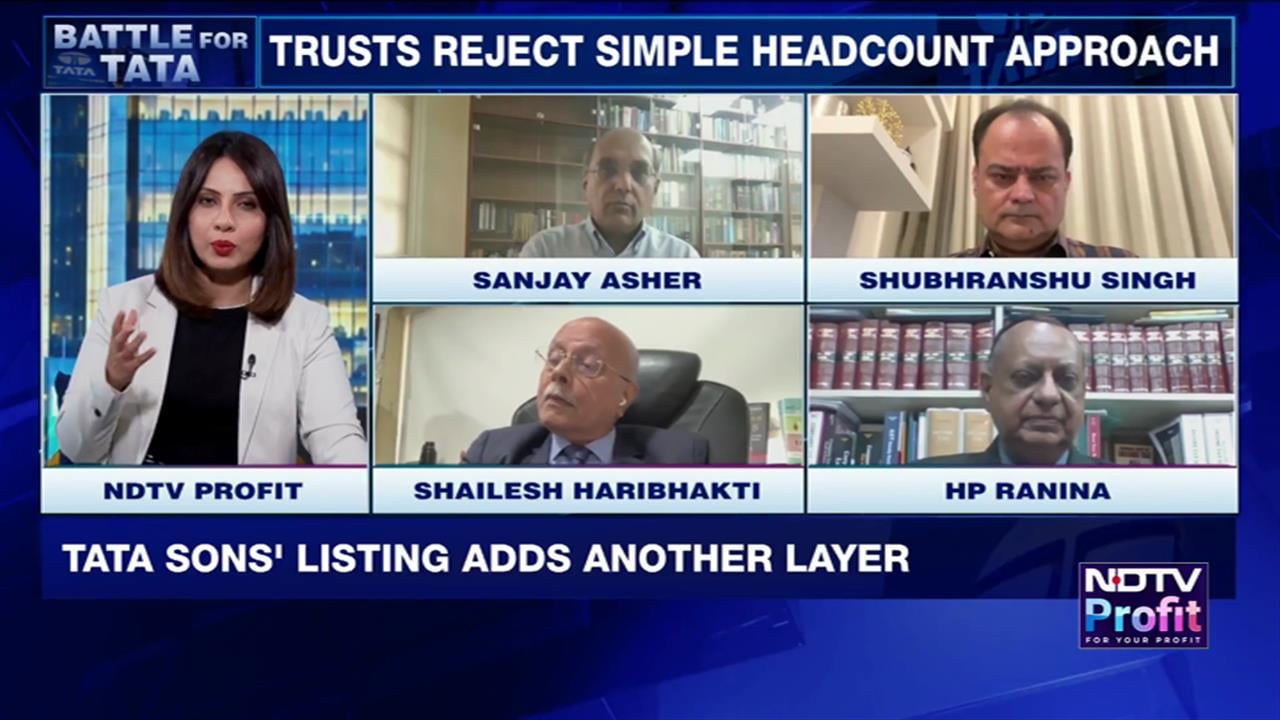
Sanjay Asher, Senior Partner at Crawford Bayley, said the principle of majority rule has been a fundamental feature of Indian corporate law. According to Asher, share ownership determines who has the right to elect or remove directors, with a shareholder holding more than 50% generally having control over the board.
Also Read | Layoffs Are Rising In Tech, But These Skills Are Helping People Unlock Better Pay
However, he acknowledged that Tata Sons is more complicated because of the special rights embedded in its Articles of Association.
ALSO READ: Tata Sons vs Tata Trusts: Situation Definitely Headed For Legal Fight, Says Abhishek Singhvi
Tata's Unique Trust Structure Must Be Considered
Shailesh Haribhakti, Chairman of Shailesh Haribhakti Associates, said the dispute should not simply be viewed as a clash between individuals. He highlighted the unique ownership architecture created by Tata Group founder Jamsetji Tata, where shares are held through philanthropic trusts.
Haribhakti said the focus should be on preserving this structure while ensuring that shareholder and director rights are exercised through the appropriate corporate forums.
On succession versus listing, Haribhakti said the two are separate issues. He argued that succession would have to be addressed irrespective of whether Tata Sons is ultimately listed, while the listing question depends on the regulatory position, including that of the RBI.
Articles Of Association Are Binding
Corporate lawyer H.P. Ranina said directors are bound by the Articles of Association of a company. He argued that if the AoA requires affirmative votes from the relevant Tata Trusts nominees for the appointment or reappointment of the chairman, that requirement cannot simply be overridden.
Ranina also referred to the Supreme Court's 2021 judgment in the Cyrus Investments-Tata Sons case, saying the court had upheld the binding nature of the Articles and the special rights of Tata Trusts nominees. The Supreme Court had upheld those affirmative voting rights in the earlier litigation.
Public Perception Is Another Dimension
Brand and communications expert Subhranshu Singh said the dispute would also be judged through the lens of public perception rather than purely corporate law. Singh pointed to Tata's longstanding association with philanthropy and said the group's reputation has been built around its relationship with stakeholders and its institutional legacy.
He also noted that uncertainty could concern investors because Tata Sons controls several listed Tata Group companies.
The dispute is therefore not limited to Chandrasekaran's continuation. It raises questions over how Tata Sons' Articles should be interpreted when Tata Trusts' two nominees disagree, and whether a board-level casting vote can override a separate requirement relating to Trust nominees.
Essential Business Intelligence, Sharp Market Insights, Practical Personal Finance Advice, Daily Fuel, Gold and Silver Prices and Latest Stories — On NDTV Profit.