Scan to Download
We have been working on a central bank digital currency for the last 18-24 months, RBI Deputy Governor T Rabi Sankar said. "As announced in the budget, we will launch the digital rupee this year and test design features and other aspects of the currency this year," Sankar said.
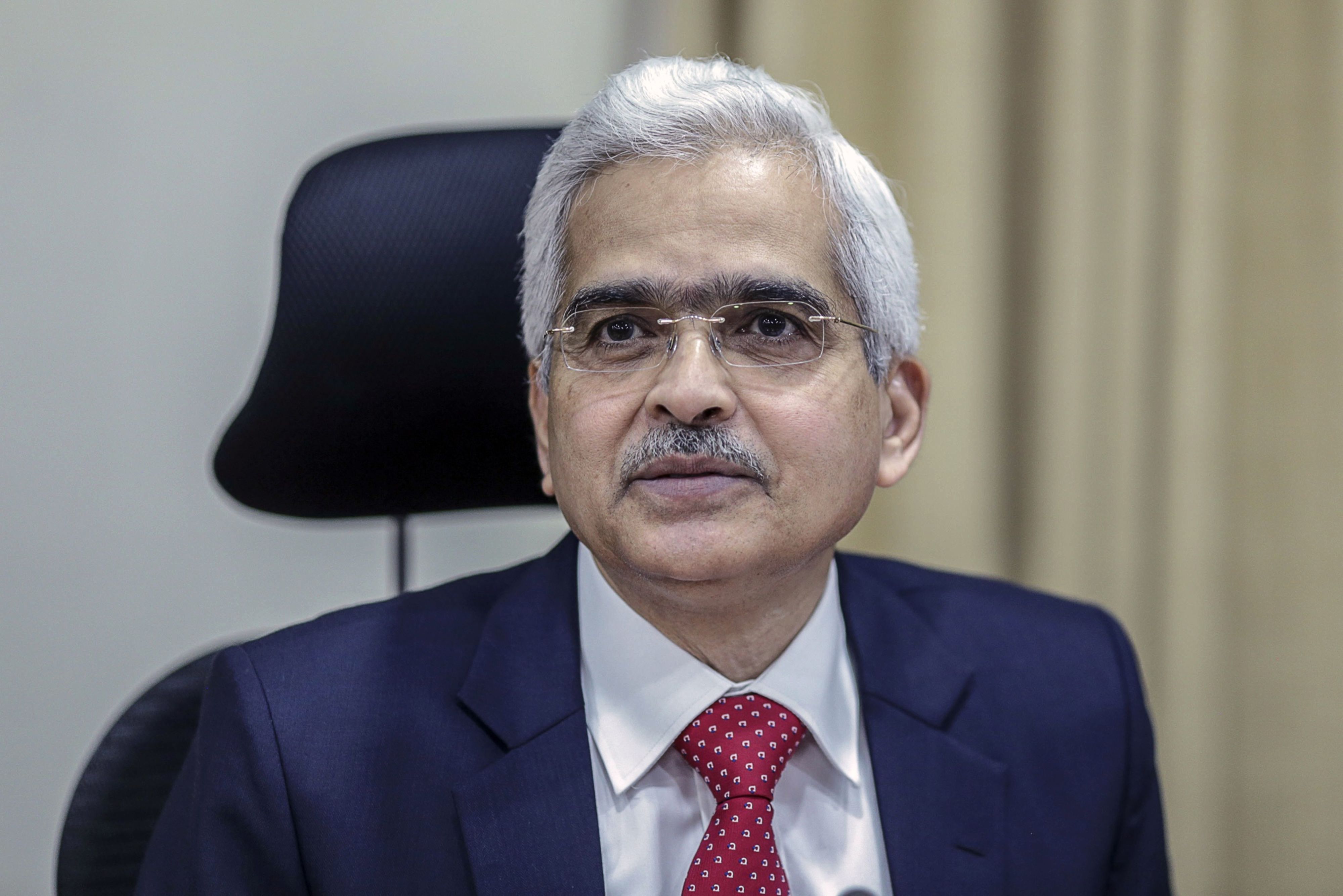
Shaktikanta Das added that the RBI cannot introduce CBDC in haste. "There are plenty of risks, including cyber security risks we have to be mindful of. It is a new product which every central bank is approaching carefully," he said.
RBI Governor Shaktikanta Das warned investors in cryptocurrencies that they are doing so at their own risk.
"Investors must remember that cryptocurrency does not have any underlying, not even a tulip," he said.
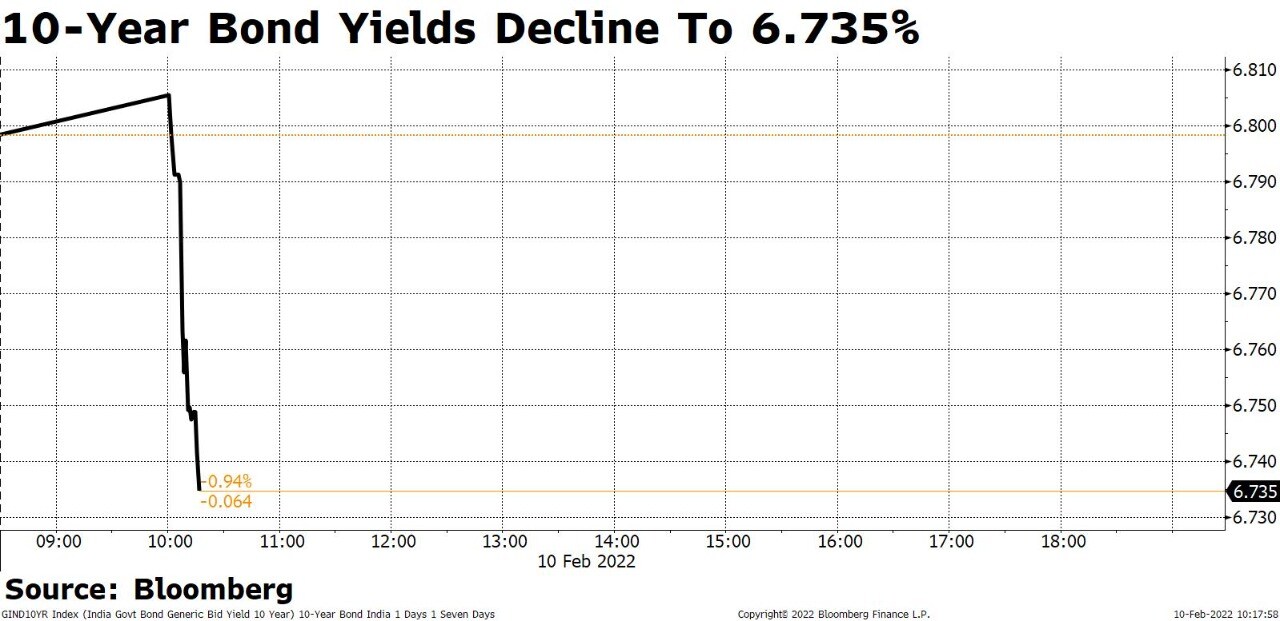
RBI Governor Shaktikanta Das said the central bank's actions will demonstrate what levels of bond yields it is comfortable with.
"When we enter the new year, we will deal with the borrowing calendar. We have said that we will execute smoothly and in a non-disruptive manner," he said.
Das added that a few points have to be kept in mind while assessing government borrowings for the next year.
First, the overall public sector borrowings might be balanced out by the fact that the government will borrow directly from the market and pass on whatever is required for the NHAI. As such, borrowings from other public sector entities may be lower.
Also, the RBI has hiked the limit for foreign debt inflows via the voluntary retention route by Rs 1 lakh crore to Rs 2.5 lakh crore. This could help in supporting borrowings in the market.
Finally, small savings collections could also be higher by Rs 1-1.2 lakh crore next year.
RBI Governor Shaktikanta Das said the central bank holds "constant" interactions with market participants.
"Whether they have inherent reluctance in participating in auctions, is something the participants must answer. If they have concerns, we try to duly address the concerns," he said, adding that no sign of discomfort has been seen among them.
When the stance continues, there's no reason to tamper with rates, RBI Governor Shaktikanta Das said.
"The repo and reverse repo rate represent a particular stance. At the current juncture, when stance continues, there is no reason to make any changes or tamper with rates."
"We will follow a calibrated and well-telegraphed approach. You will know what our action will be, beforehand," he said.
The inherent momentum of growth is positive and it is primarily due to base effects that growth projections are where they are, Das said.
He added that fiscal policy and monetary policy cannot be seen as either-or and it's always a cooordinated action between the fiscal and monetary policies.
"Monetary policy has to be supportive to ensure growth is sustainable," he said.
RBI Deputy Governor Michael Patra said there is material difference in the way our inflation is evolving from the way it is evolving in the U.S. and Europe.
"We have to respond to an entirely different inflation evolution than other economies," he said.
RBI Governor Shaktikanta Das said the central bank has done its homework on inflation and all uncomfortable risks have been duly assessed before arriving at 4.5% projection for CPI in FY23.
"Character of inflation in other major economies is somewhat different from India," he said.
Closing his speech, Governor Das cited late Lata Mangeshkar saying her song 'Aaj phir jeene ki tamanna hai' encapsulates what the RBI has been trying to do.
We, in the RBI, have remained steadfast in ensuring trust in domestic financial system, Das said. This has been an anchor in ocean of uncertainty, he added.
Closing with words of Mahatma Gandhi, Das said that "satisfaction lies in the effort. Full effort is full victory."
The RBI has enhanced the cap on e-Rupi vouchers from Rs 10,000 to Rs 1 lakh. These vouchers can now be used more than once, until the balance is fully used.
The e-Rupi had been launched last year by the NPCI.
Alongside, Das said draft directions will be issued on IT outsourcing and IT governance by banks. "Extensive outsourcing of critical IT services, increased use of digital channels by customers exposes regulated entity to significant financial, operational, reputational risk," he said.
The RBI has hiked the limit for inflows under the Voluntary Retention Scheme to Rs 2.5 lakh crore from Rs 1.5 lakh crore. This will provide additional sources of capital for domestic debt markets, including government securities, the RBI said.
This route allows foreign portfolio investors easier terms and conditions should they be willing to park their funds for a specified period of time. The facility has mostly been used in the corporate bond category.
While the RBI did not announce any direct support for government bonds amid a record borrowing program, it signaled that it would continue to support the orderly evolution of the yield curve. "It is expected that market participants will engage responsibly," Das said.
On the liquidity front the following announcements were made:
Variable rate repo operations of varying tenors will henceforth be conducted as warranted by liquidity conditions.
Variable rate repo and variable rate reverse repo auctions of 14-day tenors will operate as the main liquidity management tool.
These will be supported by fine-tuning operations. Auctions of longer tenors will be conducted as needed.
From March 1, fixed rate reverse repo and marginal standing facility windows will be available only between 5.30 p.m. to 11:59 p.m. on all days.
The RBI has also extended the deadline for on-tap liquidity facilities for emergency health services and contact intensive service sectors will be extended June 30, from March 31 earlier.
The MPC is projecting FY23 GDP growth at 7.8%.
This includes:
Q1 growth at 17.2%
Q2 growth at 7%
Q3 growth at 4.3%
Q4 growth at 4.5%
Inflation is projected at 4.5% for FY23.
This includes:
Q1 inflation at 4.9%
Q2 inflation at 5%
Q3 inflation at 4%
Q4 inflation at 4.2%
RBI Governor Shaktikanta Das said the committee was of the view that continued policy support was warranted for a durable and broad-based recovery.
Das pointed out that private consumption continues to trail pre-pandemic levels.
While CPI has edged higher since the last meeting, it is still largely on anticipated lines.
RBI Governor Shaktikanta Das said the monetary policy committee has decided to keep the benchmark repo rate unchanged at 4%.
The reverse repo rate has also been left unchanged at 3.35% and the central bank has decided to stay the course on its accommodative stance "as long as necessary".
Record Debt to Keep India Hikes in Slow Lane: Decision Guide
Essential Business Intelligence, Continuous LIVE TV, Sharp Market Insights, Practical Personal Finance Advice and Latest Stories — On NDTV Profit.