- Navi Mumbai International Airport targets 20 million passengers in its first year of operation
- The airport aims to scale up to 90 million passengers annually over time
- Plans include 240 acres for mixed-use development with hotels, retail, and offices
As the Navi Mumbai International Airport (NMIA) prepares to open its doors, its ambitions stretch well beyond easing congestion at Mumbai's existing airport. The new airport is positioning itself as both a high-capacity aviation hub and the epicentre of a large economic zone for the Mumbai Metropolitan Region.
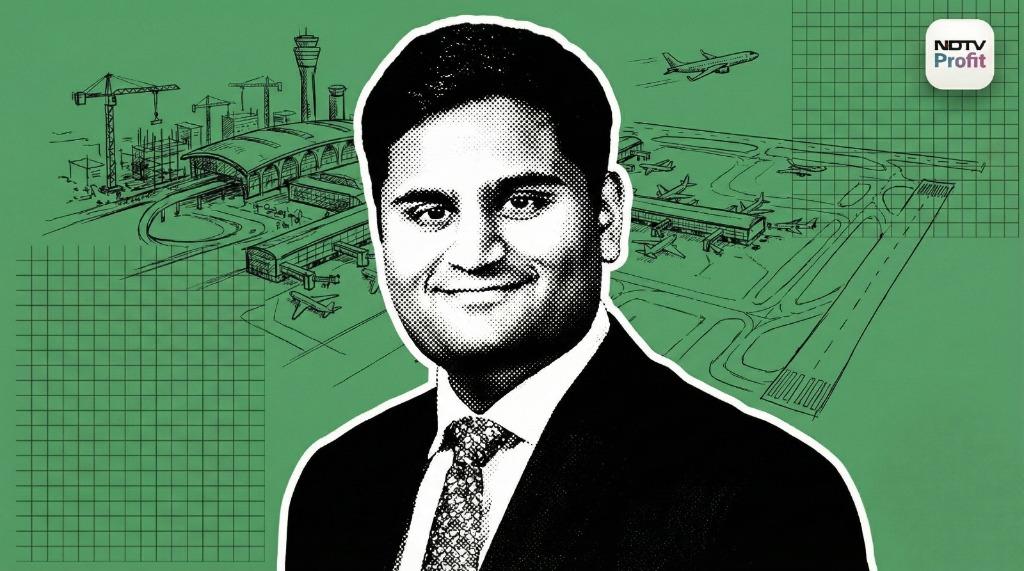
"Mumbai's latent demand, which is anyway very high, has been unserved since 2016 when it hit its peak", Jeet Adani, Director of Adani Airports, said in an exclusive interview with NDTV Profit.
Expansion Plans
In its first year of operations, NMIA is targeting 20 million passengers, a figure that is expected to ramp up steadily as airlines shift capacity and new routes are added. Over time, the airport aims to scale up to 90 million passengers annually.
Mumbai's primary airport has been operating at peak capacity for several years, with limited scope for further expansion. According to Adani, that pent-up demand should allow Navi Mumbai to fill seats quickly once operations stabilise. Traffic growth across the region has consistently tracked in the mid-teens, supported by rising incomes, stronger leisure travel and the expansion of the services economy, he said.
Fly To These 10+ Destinations From Navi Mumbai Airport Starting Dec 25: Check Routes and PricesFocus Beyond The Airport
But the airport's vision extends beyond passenger footfall. Adani says that NMIA is being designed as a city-side economic ecosystem, with large-scale commercial development planned alongside the airport infrastructure. Around 240 acres have been earmarked for a mixed-use development that will come up in phases over the coming years.
Adani told NDTV Profit that plans include 15–20 hotels, multiple retail formats — including what is being positioned as India's first outlet mall — along with office spaces and global capability centres (GCCs). A 25,000-seat entertainment arena is also part of the blueprint, aimed at tapping into the growing live events and concerts market.
The logic, according to Adani, is to leverage the airport's connectivity to create a self-sustaining ecosystem. With road, rail, metro and water transport links planned to converge at NMIA, the surrounding zone is expected to emerge as one of the most connected commercial districts in the region. Over time, the city-side development is expected to generate thousands of direct and indirect jobs, adding to the airport's economic footprint.
At Par With Global Peers
The combination of aviation scale and real estate development, Adani says, mirrors global airport-city models seen in hubs such as Dubai, Schiphol and Changi.
If traffic grows as projected, Adani Airports believes the region could eventually need even more capacity beyond Navi Mumbai. For now, NMIA's immediate challenge is execution — translating ambitious passenger targets and real estate plans into a functioning, high-throughput airport-city that can absorb Mumbai's next phase of growth.
Navi Mumbai Airport: Jeet Adani Promises Affordable, Passenger‑First ExperienceEssential Business Intelligence, Continuous LIVE TV, Sharp Market Insights, Practical Personal Finance Advice and Latest Stories — On NDTV Profit.