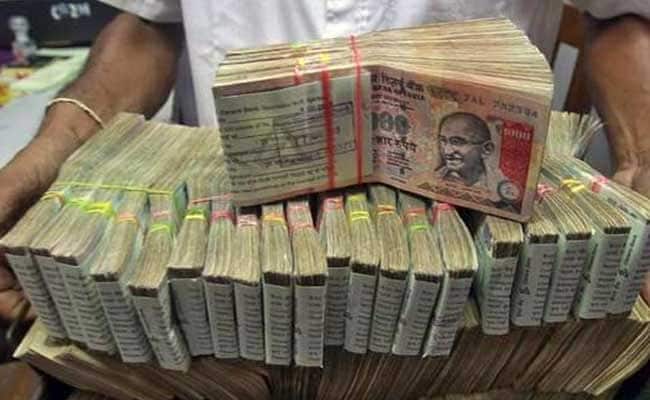
New Delhi: Prime Minister Narendra Modi on Tuesday announced that bank notes of Rs 500 and 1,000 denomination would be withdrawn from circulation at midnight to crack down on rampant corruption and counterfeit currency.
The surprise move was designed to bring billions of dollars worth of cash in unaccounted wealth into the mainstream economy, as well as hit the finances of militants who target India and are suspected of using fake Rs 500 notes to fund operations.
"Black money and corruption are the biggest obstacles in eradicating poverty," PM Modi said in a hastily convened address to the nation after a cabinet meeting.
Nearly 40 per cent of India's economy is driven by small- and medium-sized enterprises that largely run on cash transactions. Economists said the move could impact these businesses, and in turn have a knock-on effect on economic growth.
There was concern among members of the public about changing larger denomination banknotes for new ones once they expired.
Around a dozen people lined up to use an ICICI cash deposit machine in suburban Mumbai soon after the announcement, trying to deposit bundles of Rs 500 and 1,000 notes.
The machine stopped working after 10 minutes. Only two customers managed to deposit their money, and a security guard informed the rest that the cash dispenser has reached its limit and would not accept any more.
Delhi taxi driver Anu Choudhury said his boss called to say he should not accept Rs 500 or Rs 1,000 notes from customers.
"This is not a good step for business. The prime minister did not think about people like us."
Big money outflows
PM Modi's government came into power in 2014 promising to bring black market money into the regular financial system, but critics said it had failed, with government data showing the cash economy outpacing the formal economy.
A report by Washington-based think-tank Global Financial Integrity estimated that India lost $344 billion in illicit fund outflows between 2002 and 2011.
The Finance Ministry said India would introduce new banknotes of Rs 500 and Rs 2,000 from November 10. The old notes can be deposited in banks and post offices from November 10 to December 30. All cash machines will be closed on Wednesday.
Reserve Bank of India Governor Urjit Patel said he saw no impact on liquidity in the wholesale market and that the bank had ramped up production of the new series of notes over the last few months.
PM Modi said militants operating against India were using fake versions of the Rs 500 note, worth about $7.50 at current exchange rates.
Caught by surprise
Some officials and experts said Tuesday's move was the biggest in decades aimed at fighting graft.
"It is like a surgical strike on black money," said Revenue Secretary Hasmukh Adhia.
But the head of a state-run bank said it was not fully prepared for the change.
"This is news for us also. I'm not aware how much stock we have in our chest. The Reserve Bank will have to provide us with required cash to meet the demand. The demand will be very high no doubt," said the bank chief, who did not want to be named as he was still awaiting details.
Government data show circulation of current notes has outpaced the expansion in India's economy.
In the past five years, circulation of all currency notes grew 40 per cent, compared with 30 per cent growth in Asia's third-largest economy.
The growth in Rs 500 and Rs 1,000 bank notes was even steeper; Rs 500 notes grew 76 per cent between 2011 and 2016, while in the same period, Rs 1,000 notes rose by 109 per cent.
The head of the country's largest government-owned lender, State Bank of India, said she had just been advised about the government's decision.
"We have handled demonetisation earlier and will do so again. Tomorrow banks will remain closed in order to withdraw these notes from counters and ATMs. We will strive to restock ATMs at the earliest and make them operational," said SBI chairperson Arundhati Bhattacharya.
Essential Business Intelligence, Continuous LIVE TV, Sharp Market Insights, Practical Personal Finance Advice and Latest Stories — On NDTV Profit.