Scan to Download
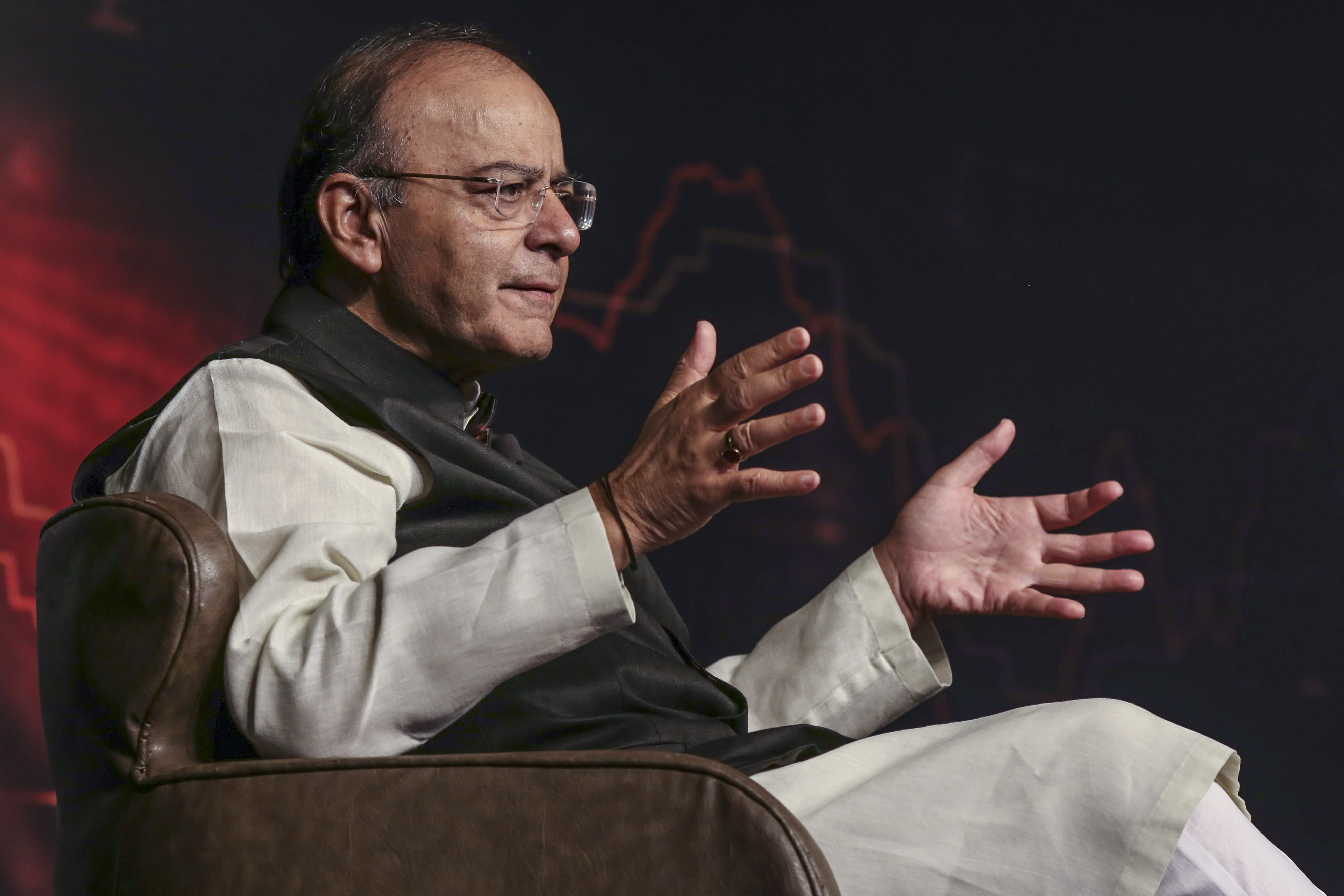
Finance Minister Arun Jaitley on Tuesday announced two substantial reforms after a Cabinet meeting as the government attempts to revive the economy from its worst slowdown in three years.
The first announcement was in the infrastructure space as the Cabinet approved building 34,800 kilometers of highways under its Bharatmala plan. The Centre will invest Rs 5.35 lakh crore towards the plan that is aimed to connect economic corridors across the country. Overall, the government will build 83,667 kilometers of roads over the next five years through an investment of Rs 6.92 lakh crore, including the Bharatmala plan.
The other, and bigger announcement was that it allocated Rs 2.11 lakh crore over two years for the recapitalisation of public sector banks. The plan is intended to help banks make adequate provisions against bad loans and revive lending, which in turn, may help bolster a recovery in economic growth and private investment.
Here are the highlights from the Cabinet briefing.
The plan does not have any immediate implications this year, or the next year, Saugata Bhattacharya, chief economist at Axis Bank told BloombergQuint. He said that since part of the funds are being raised by issuing bonds, it will not add to the Centre’s fiscal deficit, except for the interest paid on those bonds.
Finance Minister Arun Jaitley said the bank recapitalisation plan will be implemented along side a host of banking reforms to cut down indiscriminate lending. He did not offer any further details on the reforms.
Jaitley said that banks lended "indiscriminately" between 2008 and 2014, when gross advances increased Rs 34 lakh crore. A "large part" of this indiscriminate lending has now turned as non-performing assets, he added.
In three and a half years, the government has already infused Rs 58,848 crore in PSBs under the Indradhanush plan. This is compared to Rs 62,734 crore infused in the six years to 2014, Garg said.
The government's recapitalisation plan is "why banks have mostly remained Basel-III compliant," he added.
GST will very soon contribute to India’s growth storySubash Garg, Secretary, DEA, Ministry of Finance
The Indian economy's macro-economic fundamentals continue to be strong, according to Subhash Garg, secretary of the department of economic affairs.
The government has been able to "consistently" bring down inflation from 2014 and it expects it to be around 3.5 percent this year, Garg said
India is faced with its worst slowdown in three years as economic growth fell to 5.7 percent in the June-ended quarter. Private sector investement remains stagnant, and the government's attempt to kickstart the spending cycle has left its budget constrained. It had already exhausted 96.2 percent of its fiscal deficit target in August. Prime Minister has set up an economic advisory panel to make "specific implementable recommendations" on how to spur economic growth and job creation.
Essential Business Intelligence, Continuous LIVE TV, Sharp Market Insights, Practical Personal Finance Advice and Latest Stories — On NDTV Profit.









.png)