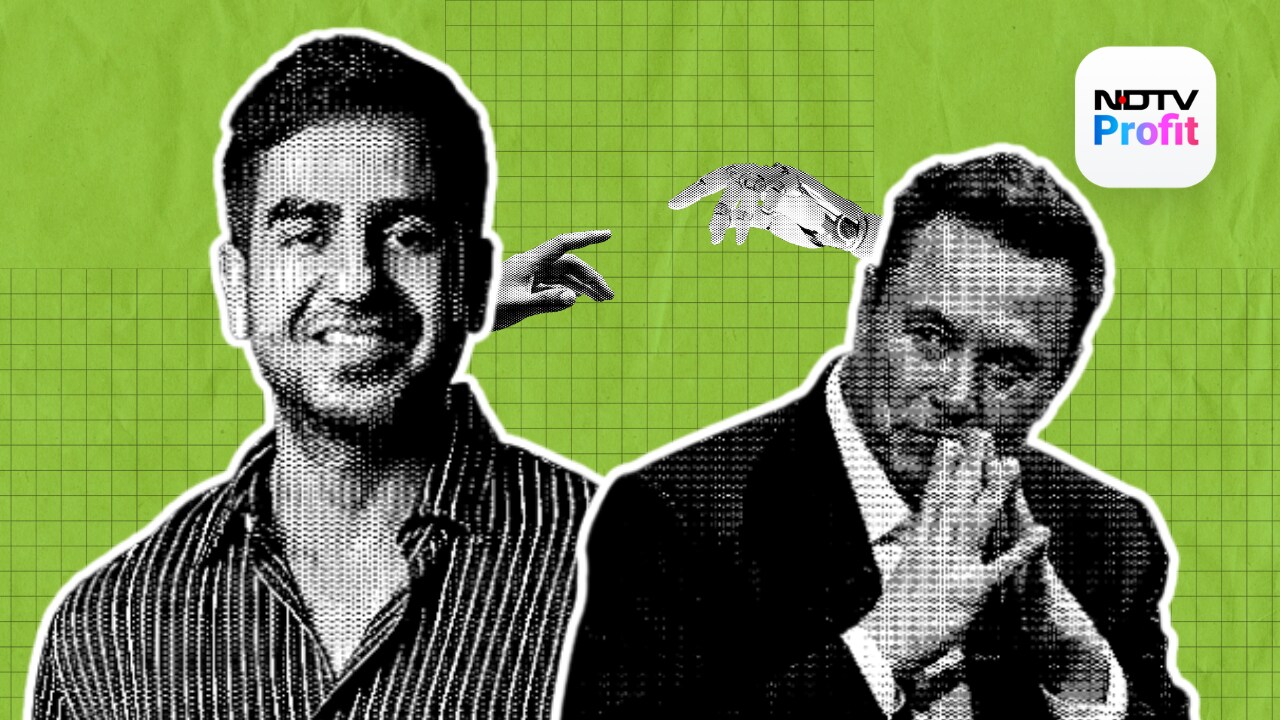
Tech moghul Elon Musk's freewheeling conversation with Zerodha co-founder Nikhil Kamath delivered a stream of big, bold ideas ranging from the future of X and AI to the meaning of life and the fate of humanity. Across nearly two hours, Musk repeatedly returned to a theme: expanding the scope and scale of human consciousness.
Here are the top five key takeaways from the interview:
Musk On X In Its Present Avatar
X remains the global town square for “readers, writers and thinkers,” even as most of the internet migrates to video, the tech entrepreneur told Kamath in the latest episode of the Zerodha co-founder's WTF podcast. Text, he argued, is small in quantity but “higher value,” while future interactions will be dominated by real-time video comprehension and generation by AI.
He defended his overhaul of Twitter into X, saying the platform had been amplifying “pretty far left” ideology because of its San Francisco roots. His intent, he said, is to restore balance by adhering strictly to the laws of each country without adding a “thumb on the scale.”
The platform's evolution, he insisted, is toward a “collective consciousness,” powered by features such as automatic translation designed to merge conversations across languages. The purpose: to help humanity ask better questions about the universe — because, as he said, the hardest part of the “meaning of life” problem is not the answer but framing the question itself, echoing The Hitchhiker's Guide to the Galaxy.
Starlink: Built For Underserved Areas
Musk, who owns satellite internet service giant SpaceX, explained its limitations and promise. He said that thousands of satellites orbiting at 550 kilometres provide low-latency internet globally, especially in rural or disaster-hit regions. However, physics, he said, makes it impossible for Starlink to replace dense urban networks as no satellite can beat a 1 km-away cell tower.
Going To Work Now Optional
On the future of work, Musk predicted that within 10 to 20 years, “working will be optional,” driven by a productivity explosion from AI and robotics. In such a world, goods and services grow faster than money supply, leading to inevitable deflation. Beyond that horizon, he suggested, money itself may disappear, with energy becoming the fundamental unit of value as civilisation advances on the Kardashev scale.
Fertility Crisis On The Cards?
Musk expressed his concern about falling global fertility. With birth rates dropping below replacement even in India, Musk warned that continued decline could lead to humanity's disappearance, shrinking the collective consciousness that he believes is essential for understanding the universe.
On AI, Musk said the technology must value truth, beauty and curiosity above all else. Forcing an AI to believe falsehoods, he warned, can push it toward destructive behaviour — citing HAL from 2001: A Space Odyssey.
Across SpaceX, Tesla and xAI, Musk sees growing convergence. Solar-powered AI satellites, autonomous driving, humanoid robots like Optimus, and global communication networks all tie back to his broader purpose: building technologies that scale consciousness.
Musk's India Connection
During the interview, Musk said his partner Shivon Zilis is “half-Indian” and one of their children's middle name is ‘Sekhar' after the Nobel laureate Subrahmanyan Chandrasekhar.
S Chandrasekhar was a renowned Indian-American astrophysicist who was awarded the Nobel Prize in Physics in 1983 “for his theoretical studies of the physical processes of importance to the structure and evolution of the stars”.
Essential Business Intelligence, Continuous LIVE TV, Sharp Market Insights, Practical Personal Finance Advice and Latest Stories — On NDTV Profit.