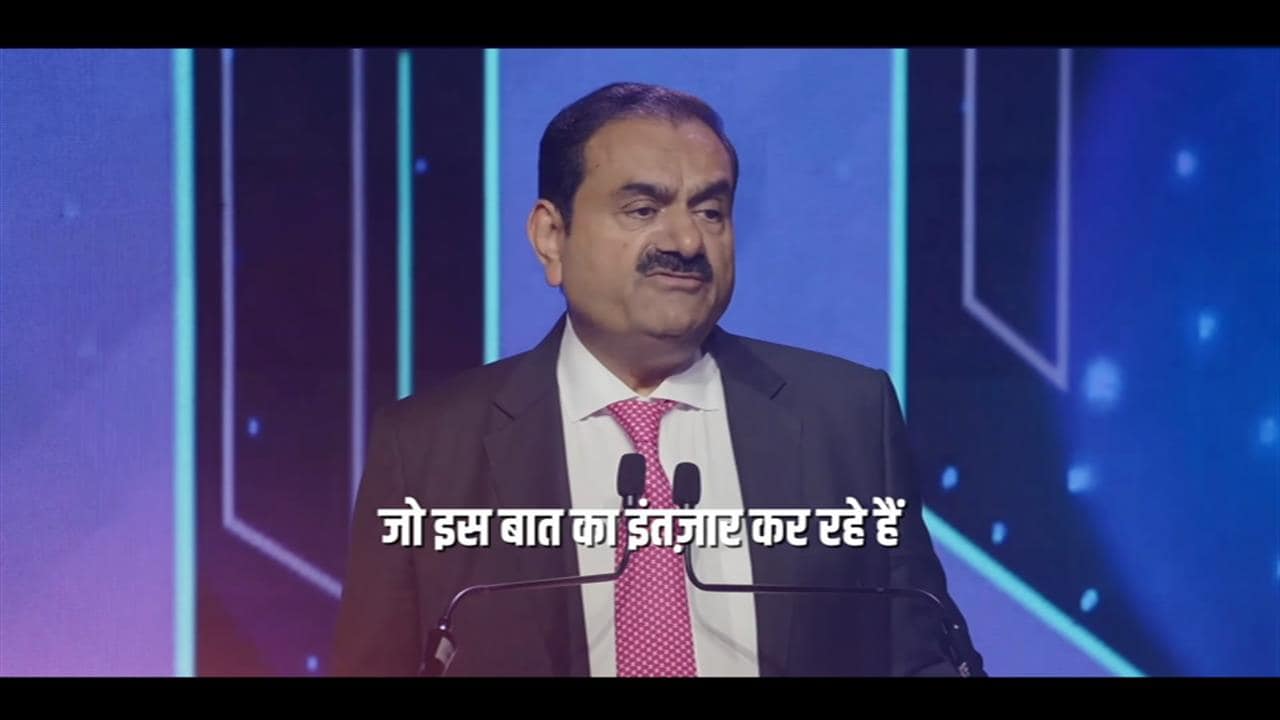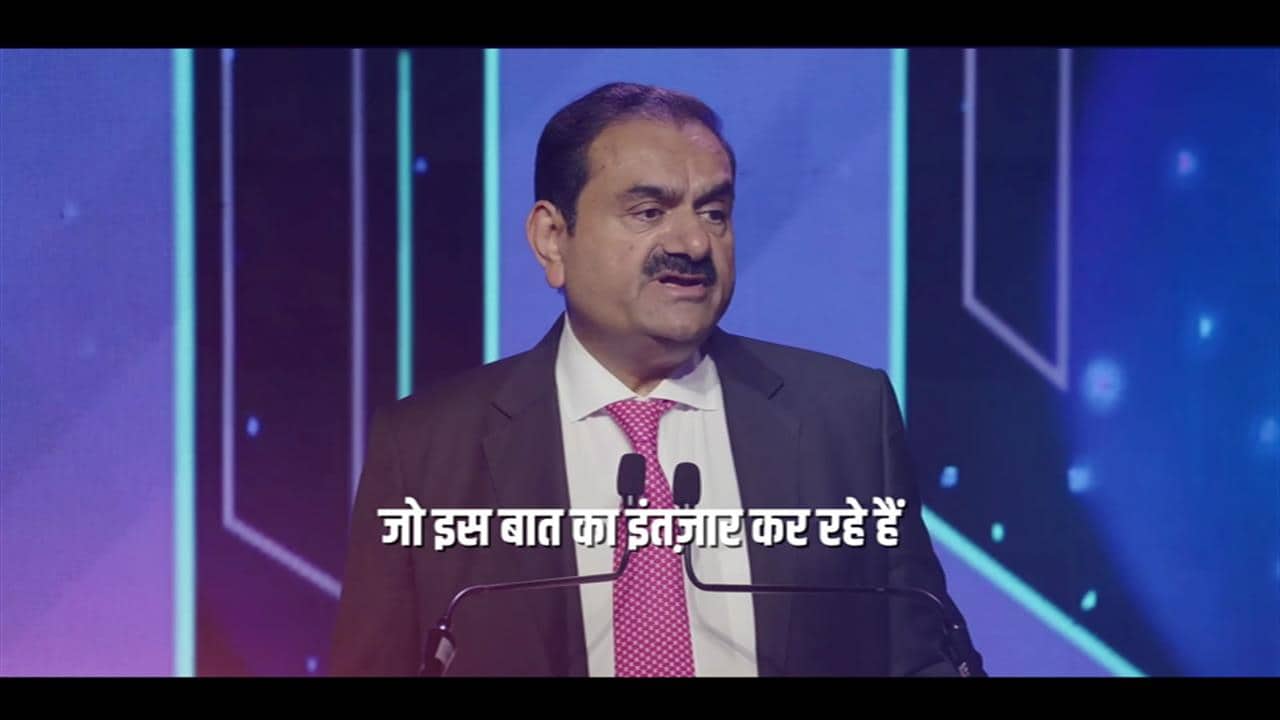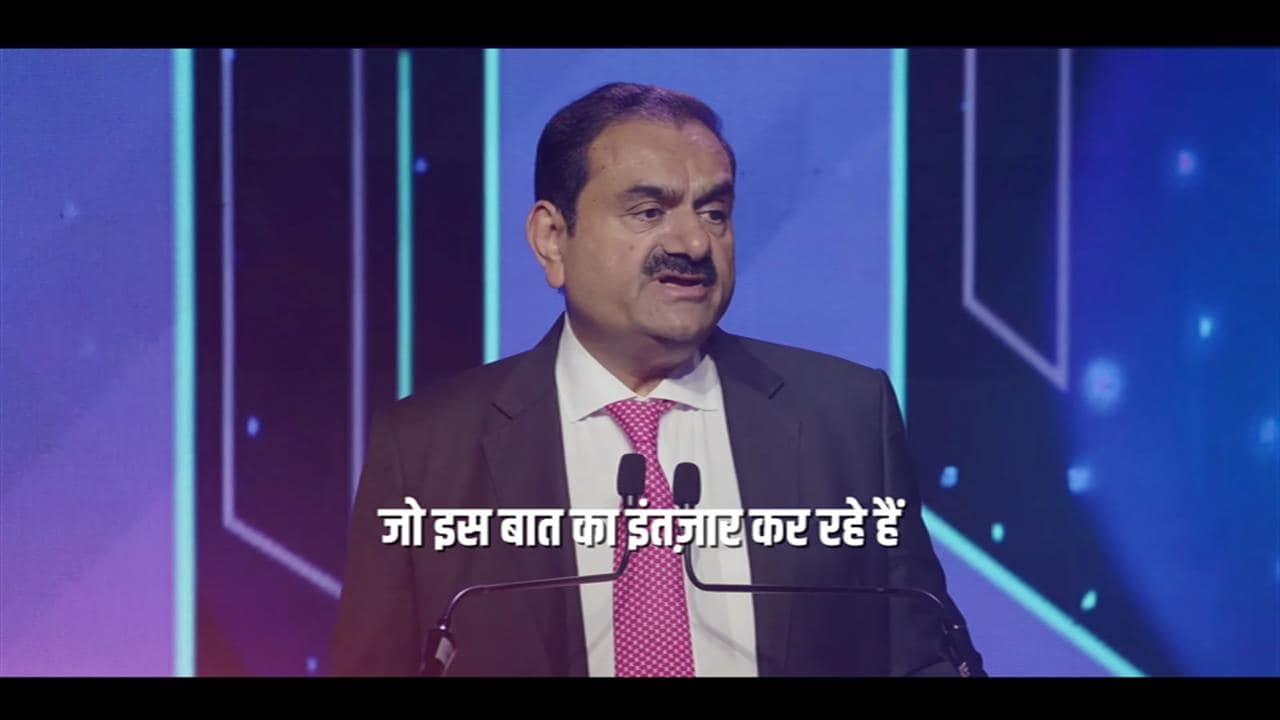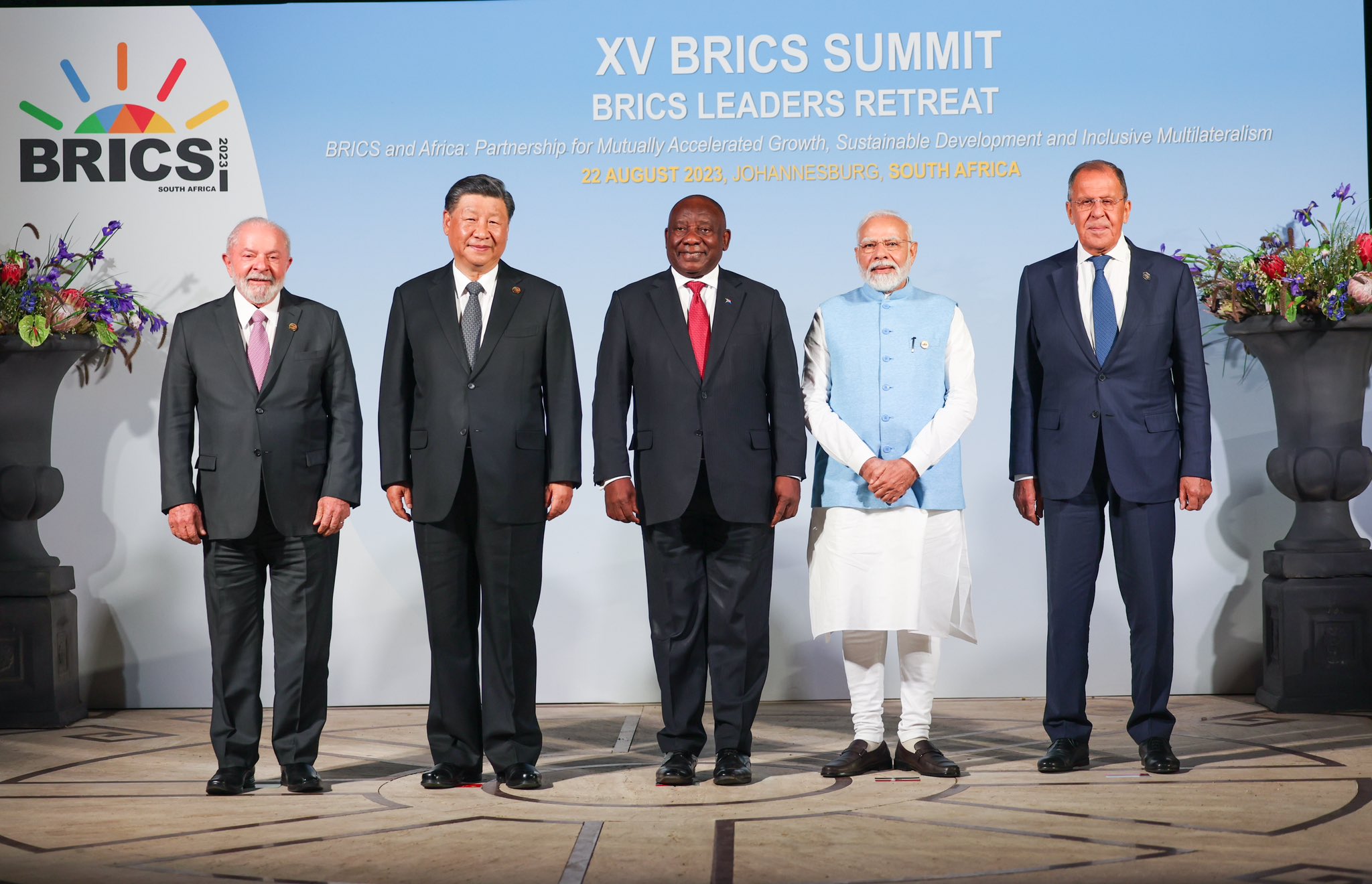
The Johannesburg Summit of BRICS leaders had the attention of the world. It was billed as the event which could reshuffle world order. It represented 40% of the global population and $27 trillion of global output. To add ballast, the group auditioned 23 countries and admitted six new members. Chinese President Xi Jinping described the expansion of BRICS into BRICS Plus as “historic”, representing “unity and cooperation with the broader developing countries”.
A month is by no means a long time in the arc of geopolitics. Even so, the events of the past weeks symbolise an ebbing tide that has left questions about the potency of BRICS in its wake. Exhibit A is the induction of the African Union into the G20. This erodes the presentation of BRICS as a force for the global south. Exhibit B is the launch of the India Middle East Europe Economic Corridor. This counters the Belt and Road Initiative of China and follows the open construct of the US-led Indo Pacific Economic Framework for Prosperity framed in response to Chinese expansionism.

There is an emerging consensus across oceans on the need for a bulwark against the march of autocracy. The US has underlined “Out-Competing China and Constraining Russia” as key objectives in its 2022 National Security Strategy. The emerging schism holds the potential to widen the fault lines within BRICS. It is true that the five letter acronym continues to appear in commentary and conferences as a potential catalyst of a “reshuffled world order”. Equally, the subtle shift in allegiances does beg the question about the relevance of BRICS and legitimacy of its proclamations.
Also Read | Layoffs Are Rising In Tech, But These Skills Are Helping People Unlock Better Pay
The Arithmetic Of Geopolitics
In 1993, Gareth Evans, then the Australian foreign minister, defined APEC as an adjective in search of a noun. Drifting listlessly in the evolving grammar of geopolitics, BRICS is essentially a noun in search of a verb. The group has strategically raised the decibel level on asymmetries, leveraged anger against systemic biases only to tactically reconcile with realities and recede into status quo.
Coined by Jim O'Neill of Goldman Sachs in 2001, BRICS illustrated the arithmetic of economics. In its original avatar, it was a smartly sequenced acronym designed to evoke the rising economic heft of Brazil, Russia, India, and China. It morphed into a noun in June 2009 in Yekaterinburg in Russia, where its leaders recast it as an economic bloc to petition for a greater say in global affairs. The induction of South Africa in December 2010 granted it a plural countenance. BRICS has since then promoted itself as the architect of a new multi-polar world order. It is testing the arithmetic of geopolitics.
The positioning of BRICS is familiar. It is not surprising that the Johannesburg Summit of BRICS is reminiscent of the Bandung Conference of 1955, which laid the foundation for the Non Alignment Movement. Some even chorused BRICS as the new NAM. For all the warts and faults, the group of non-aligned nations forged a common cause on neutrality. BRICS may aspire to be that voice of the seventies, but is essentially a platform with competing compulsions and ambitions. Indeed, Jim O'Neill in August 2023 questioned the organisation's purpose and argued that the influence of BRICS rests on its effectiveness and not on its composition or size.
China's Conduct Deepens Fault Lines
The fault lines within BRICS are deepening with China's conduct. It has been argued that BRICS could be a force for good if only China and India could reconcile differences. That train left the station when China's PLA forced a face-off on the borders a day before Chinese President Xi Jinping was hosted by Prime Minister Narendra Modi in September 2014. Little has changed. Days after the Johannesburg summit, China published a map that included the sovereign territory of India, Russia, and neighbours in Southeast Asia.
Last March, China's foreign minister Wang Yi observed, “If China and India spoke with one voice, the whole world will listen.” Irony died instantly on this utterance. The fact that the resolution of border issues between India and China are stalled even after 19 rounds of talks proves that pious sentiments do not translate into conduct.
The BRICS group has raged about domination by advanced economies and the lack of representation in multilateral bodies. One of the institutions needing urgent reforms is the United Nations and finds mention in declarations of Brasilia in 2010, Goa in 2016, and in Johannesburg in 2023. The urge though has not travelled beyond the bloc. Critically, there is an emerging consensus for expansion of the Security Council and the inclusion of India. China is the only P5 member opposed to India's inclusion in the Security Council.
Statistics Of Economics
The BRICS bloc began its journey as a platform of economic interests but has scarcely lived up to the perceived economic heft. In the past decade, the group has embarked on ambitious ideas—from doing better than the World Bank via the New Development Bank to launching a global BRICS currency The NDB has made a difference, on the margins at best. As per NDB records, its funding of approved projects since inception is $32.8 billion. The World Bank Group, in comparison, has committed $104 billion just in the year 2022.
There is much lather about a BRICS currency. Without doubt, the de-dollarization of the world economy is an objective for Russia and China. In world trade, the US dollar sustains its dominance as indeed in store of reserves—China holds a third of its $3.2 trillion reserves in US Treasuries. The shifts in transactions are defined by sanctions and bilateral considerations. The denomination of trade is still in dollars. The ambition of a BRICS currency is an idea at war with itself as the group wrestles with conflicting aims and claims. It has struggled to raise dollar resources to fund projects and two-thirds of funding is denominated in dollars.
On the face of it, the bloc commands heft in terms of global output and human footprint. Consider the scope for influence. In 2000, the population of BRIC countries was 2.5 billion; their combined GDP amounted to roughly $2.5 trillion and accounted for 7.95% of the global GDP. In 2023, with the six new entrants, BRICS Plus represents 46% of the world population and around $30.8 trillion, and around 29% of the global output. The bloc boasts of cumulative forex reserves of around $4 trillion.
The perceived clout of the bloc though has failed to show up. There is a paradigm shift in the context and configuration of growth potential. India is a rising power and China is arguably in decline. Brazil's GDP has slid since its peak of 2013; Russia has suffered a series of international sanctions. Among the new entrants, Iran is under US sanctions and restrictive measures imposed by the EU, Argentina and Egypt are extended bailouts and programmes of the IMF.
The hypothesis was that trade within the bloc would enhance growth. Indeed, as early as 2012, BRICS set a target of $500 billion trade within the bloc—and the phrases “cooperation” and “partnership” figures prominently in almost all summit declarations. Declarations haven't translated into trade or investment outcomes. Consider the record of trade within the BRICS bloc. Data shows that within the group, trade with China accounts for over 90% and trade between the other nations is barely 10% of the intra-BRICS trade map.
To assess BRICS, it is important to consider the global picture. In 2022, global trade in goods and services was estimated by UNCTAD at $32 trillion. The sum total of all trade within the BRICS, which represents nearly 30% of global output, hovers around $416 billion. Data is also signalling trends. In 2023, Mexico has overtaken China as the largest trading partner of the United States. India's largest trading partner is the United States and over two-thirds of its software exports are to the US and European destinations.
What about investment flows? An April 2023 report by UNCTAD shows that intra-BRICS FDI flows have gone up from $27 billion in 2010 to $166 billion in 2020. However, the investment map is dominated by China's investment into Russia and Brazil, mostly in infrastructure projects.
What is significant is that the United States and United Kingdom continue to be the top two investors into BRICS economies in the past 10 years—followed by China, Japan, Germany, Netherlands, France, Switzerland and Spain.
Bricks Of Common Grievances
The fact that BRICS continues to occupy global mind space even as it flails in the fog of geopolitics and inadequacies merits attention. The survival of BRICS illuminates the obduracy of the developed world to recognise the tectonic shift in modern political geographies and accept the need for updating the operating system of the world order.
The litany of lament is long. The United Nations has repeatedly failed to prevent war and in promoting peace. Political convenience defines what constitutes terrorism and territorial sovereignty. The failure of the WHO in establishing the Covid-19 virus is well known. The World Trade Organisation has been emasculated by the absence of mechanisms for appeals. The idea of a rule-based world order demands rules apply uniformly to all.
The idea of the BRICS bloc is scaffolded by the commonality of grievances. It will keep surfacing like submarines do in a face-off in international waters till the inequities are addressed. BRICS may present itself as a challenger to the global status quo. To get there though the noun must discover the verb.
Shankkar Aiyar, political-economy analyst, is the author of ‘Accidental India - A History of the Nation's Passage through Crisis and Change , ‘Aadhaar: A Biometric History of India's 12-Digit Revolution' and The Gated Republic: India's Public Policy Failures and Private Solutions. He posts on X (formerly Twitter) @ShankkarAiyar
The views expressed here are those of the author and do not necessarily represent the views of BQ Prime or its editorial team.
Essential Business Intelligence, Sharp Market Insights, Practical Personal Finance Advice, Daily Fuel, Gold and Silver Prices and Latest Stories — On NDTV Profit.