The Ministry of Civil Aviation has granted no objection certificates to three new proposed airlines to encourage more competition in the sector.
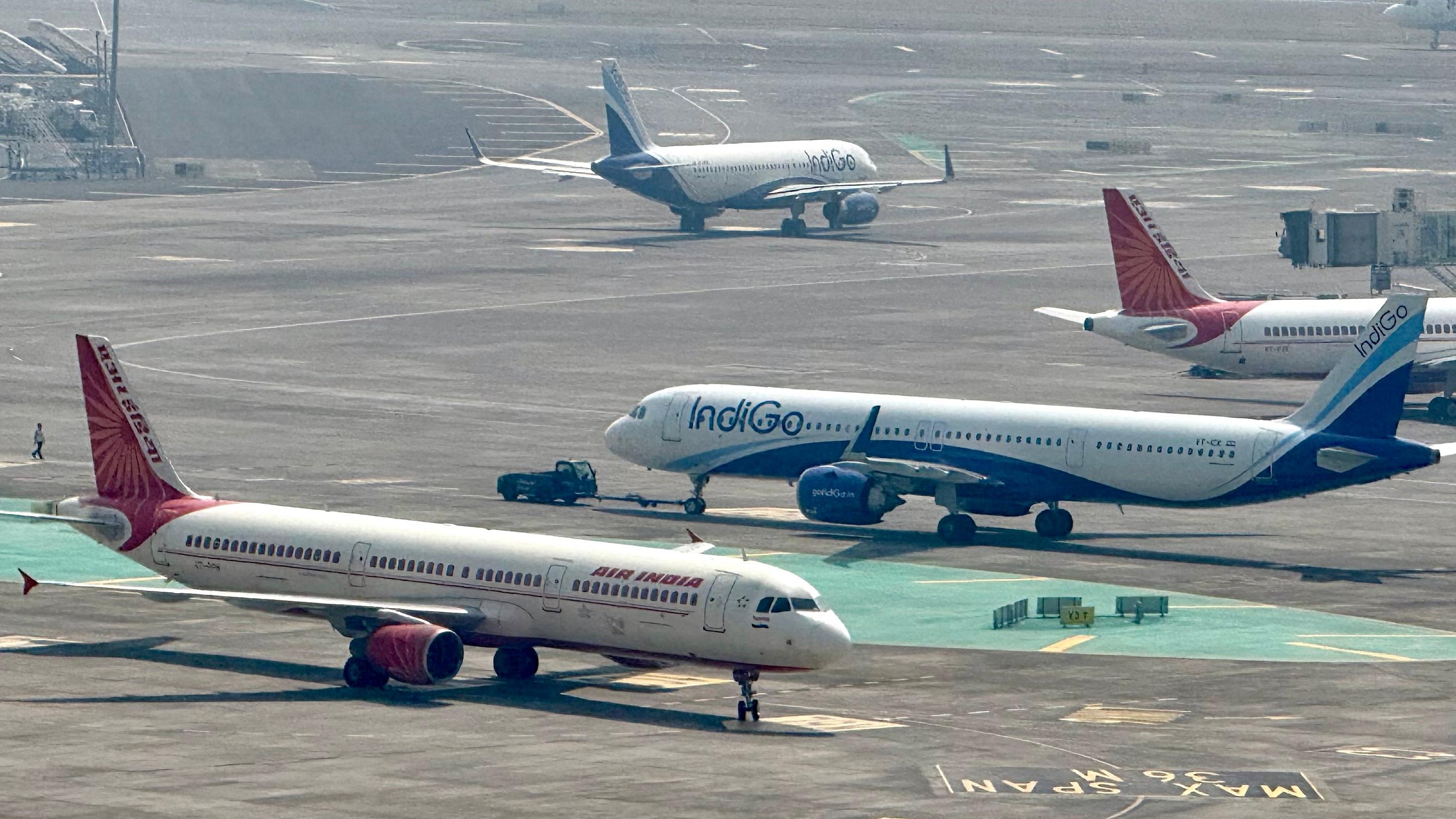
The proposed airlines — Shankh Air, Al Hind Air and FlyExpress — were granted NOCs in the face of one of the world's fastest growing duopoly in the aviation sector. IndiGo and the Air India group cumulatively control 90% of the domestic market.
The government's decision to introduce new players into the sky comes after the aviation sector was driven to a near meltdown because of massive operational flight disruptions faced by India's largest airline IndiGo.
In the beginning of December, IndiGo's failure to adapt to new crew-rostering rules triggered widespread flight disruptions, leaving tens of thousands of travellers stranded at airports across the country.
At the centre of the crisis were regulations requiring pilots and cabin crew to get more rest, including 48-hour weekly breaks instead of 36 hours earlier and stricter limits on night landings.
After the collapse of major carriers, such as Jet Airways, Kingfisher Airlines and GoFirst, India's airline industry has undergone repeated consolidation over the past decade. The consolidation also led to the restructuring of Tata Group's aviation businesses.
As part of the restructuring, AirAsia India was merged into Air India Express and Vistara into Air India, ultimately resulting in IndiGo and the Air India group controlling 90% of the domestic market.
As of October, IndiGo carried over 91 lakh passengers and held 65.6% of the market share, while Air India held 25.7% of the market share and ferried 36 lakh passengers, according to the Directorate General of Civil Aviation's data.
While SpiceJet is seen as the third major carrier in the Indian skies, it stands at a distant third, with a miniscule market share of 2.6%. The airline carried only 3.62 lakh passengers in October.
Of the three airlines, Alhindair is preparing to make its debut in the aviation industry as a regional commuter airline, with operations scheduled to commence later this year.
The airline will begin its journey with a fleet of ATR 72- 600 model aircraft, initially focusing on providing efficient and reliable domestic air travel.
Similarly, Shankh Air will offer airline services from Noida International Airport. As per information on the official website, it will connect major cities within and outside Uttar Pradesh, boosting regional connectivity and economic growth.
Initial routes include Lucknow, Varanasi, Gorakhpur, and key metros like Delhi, Mumbai, and Bengaluru, with service expected to begin by year-end for seamless travel across the state.
Civil Aviation Minister Meets Executives Of Three New Airlines Amid IndiGo Monopoly ConcernsEssential Business Intelligence, Continuous LIVE TV, Sharp Market Insights, Practical Personal Finance Advice and Latest Stories — On NDTV Profit.