- Canadian PM Mark Carney will visit India, Australia, and Japan from Feb 26 to Mar 7, 2026
- The trip focuses on diversifying trade, investment, and Indo-Pacific partnerships across sectors
- In India, Carney will meet PM Modi to discuss trade, clean energy, AI, defence, and CEPA progress
Canadian Prime Minister Mark Carney will travel to India, Australia and Japan from Feb. 26 to March 7, 2026, as part of Ottawa's push to diversify trade, attract investment and strengthen Indo-Pacific partnerships.According to a statement from the Government of Canada, the visit aims to “unlock new opportunities for Canadian workers and businesses” across trade, energy, technology, defence and artificial intelligence (AI).
“In a more uncertain world, Canada is focused on what we can control. We are diversifying our trade and attracting massive new investment to create new opportunities for our workers and businesses,” Carney said in a statement.
“We are forging new partnerships abroad to create greater certainty, security and prosperity at home.”
Also Read: Canada, India Pledge To Grow Oil, Petroleum Trade In Energy Reset
India Visit: Focus On Trade, Energy, AI
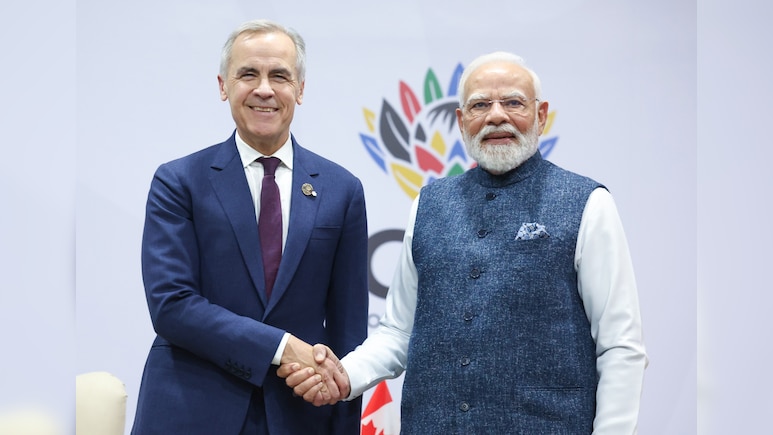
Carney will begin his trip in Mumbai before heading to New Delhi, where he is scheduled to meet Prime Minister Narendra Modi. The leaders are expected to discuss expanding cooperation in trade, clean energy, technology, AI, defence, talent mobility and cultural ties.
Carney will also meet business leaders to explore new investment opportunities. The visit comes amid renewed momentum on the long-pending Comprehensive Economic Partnership Agreement (CEPA) between the two countries.
India's High Commissioner to Canada, Dinesh Patnaik, has said a trade deal could be finalised within a year.
“We expect it to be much faster, given that we both have had enough experience of doing these kinds of free trade agreements in the last one or two years,” Patnaik told The Canadian Press.
Trade talks, which began in 2010, have stalled several times. However, in November, Modi and Carney agreed to formally relaunch negotiations on a high-ambition CEPA aimed at boosting bilateral trade.
On the sidelines of the G20 Summit in Johannesburg, the two leaders agreed to begin negotiations on a CEPA “aimed at doubling bilateral trade to USD 50 billion by 2030,” according to a statement from India's Ministry of External Affairs.
Patnaik said both leaders are keen to strengthen ties. “Both the prime ministers are very keen, so the intent is there on both sides,” he said.
He added that there are no major policy conflicts between the two nations. “We really don't compete on many issues,” Patnaik said, highlighting the complementary nature of the two economies. In 2024, India was Canada's seventh-largest trading partner, with two-way goods and services trade valued at $30.8 billion, according to Canadian government data.
Australia Leg: Defence, Critical Minerals In Focus
After India, Carney will travel to Sydney and Canberra to meet Australian Prime Minister Anthony Albanese. The discussions will centre on defence and maritime security, critical minerals, trade and advanced technologies, including AI. Carney will also address both Houses of Australia's Parliament — the first such address by a Canadian prime minister in nearly 20 years. Canada and Australia share a strong trade relationship, with bilateral merchandise trade reaching $6.1 billion in 2024 and Canadian direct investment in Australia standing at $58.8 billion, according to official figures.
Japan Stop: Clean Energy, Manufacturing, Security
In Tokyo, Carney will meet Japanese Prime Minister Takaichi Sanae to strengthen cooperation in clean energy, advanced manufacturing, critical minerals and food security. The two leaders are also expected to discuss closer security and defence collaboration to support a “free and open Indo-Pacific.”
Japan is Canada's fourth-largest national economy partner, with bilateral trade valued at $36.4 billion annually.
Bigger Indo-Pacific Push
The Canada visit follows a broader Indo-Pacific strategy aimed at reducing reliance on traditional markets and building new supply chains in critical minerals, energy and technology.
Last year, on the margins of the G20 Summit, Canada, India and Australia launched a trilateral technology and innovation partnership to deepen cooperation on critical and emerging technologies. As geopolitical uncertainties grow, Ottawa's message is clear: Canada wants to expand trade ties, secure new investments and strengthen strategic partnerships across the Indo-Pacific region.
Essential Business Intelligence, Continuous LIVE TV, Sharp Market Insights, Practical Personal Finance Advice and Latest Stories — On NDTV Profit.