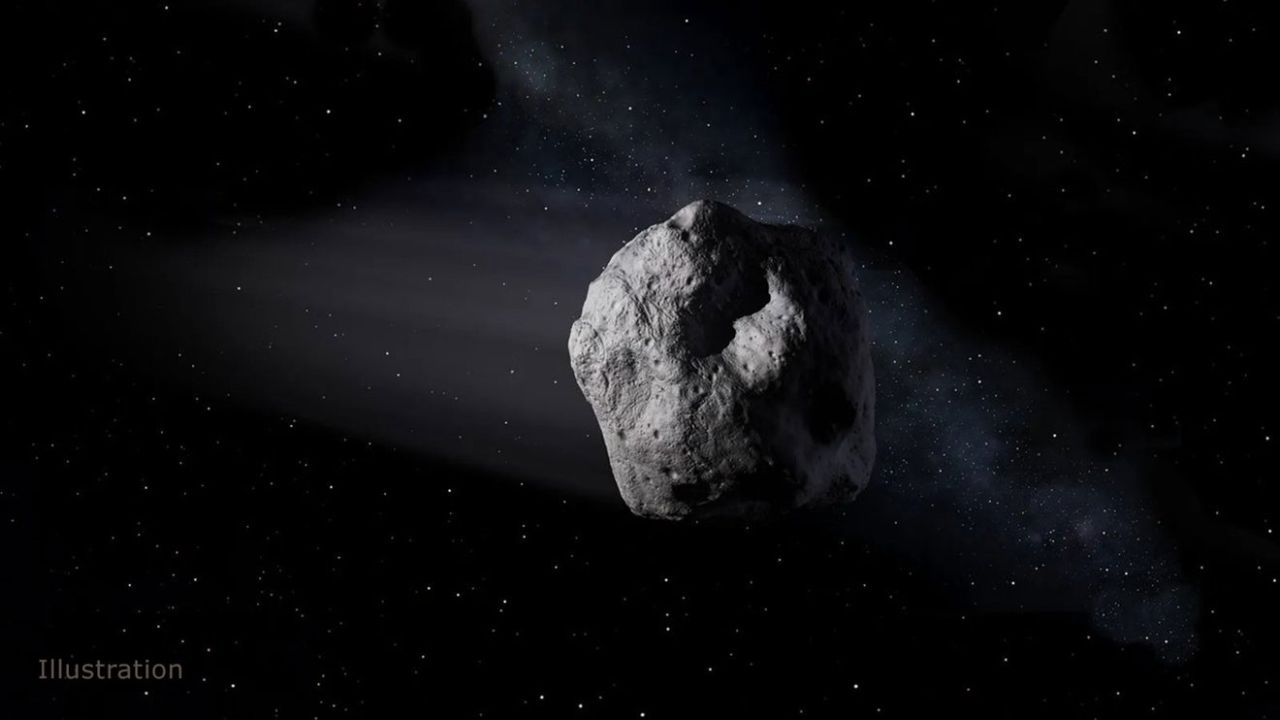
A massive 170-foot asteroid passed as close as 2.13 million kilometres to Earth on Wednesday, the National Aeronautics and Space Administration (NASA) revealed.
This airplane-sized asteroid has been tracked by NASA as it had come extremely close to Earth. For perspective, just know that our moon is, on average, about 239,000 miles (385,000 kilometres) from Earth.
Dubbed as Asteroid 2014 CE 13, it is travelling as fast as 16.81 km per hour (37593 mph). According to the US Space Agency, this asteroid belongs to the Aten group of asteroids and has been classified as a near-Earth object (NEO).
The asteroid may have passed, but it will be coming back. However, it will not be visiting Earth's vicinity till 2034, reveals the data on NASA's Small-Body Database Lookup.
NASA has deployed a lot of technology on the ground and in the skies to keep a constant watch on these dangerous asteroids that come too close to Earth for comfort. These telescopes, combined with data analysis and modeling, help NASA track asteroids. In turn this throws up their potential orbits, which allows analysis of risks they pose to Earth.
Ground-based telescopes keep a watch on the sky, taking multiple images of specific areas of the sky to identify objects that may be moving against the still background. This is how many near-Earth asteroids are initially detected. It is not the perfect model, but the most viable one available.
NASA has been using space-based telescopes like NEOWISE to detect asteroids. But NEOWISE is not retired. NASA says, "NASA's NEOWISE mission ended on Aug. 8, 2024, after more than a decade of discovering and tracking near-Earth objects — asteroids and comets that come close to Earth's orbit."
However, there are others too and among them is the venerable and quite iconic Hubble Space Telescope that has been in Earth's orbit for decades.
Essential Business Intelligence, Continuous LIVE TV, Sharp Market Insights, Practical Personal Finance Advice and Latest Stories — On NDTV Profit.