Beyond Tomorrow: More Exits At OpenAI, Anonymous Chatbot Enters The Arena — Weekly AI Roundup
Welcome back!
Heavy hitters in tech sure as hell made the news this week. Some of it is great, some is eye-catching, and some is just plain intriguing. Let's see what we've got, shall we?
Arguably the world's most prominent AI company, OpenAI, saw two high-profile exits from the firm this week and one hiatus, first reported by The Information. And they're not exactly minor exits, either.
At the same time, however, there's a rumour that OpenAI might just be preparing a brand new model to show off. Founder Sam Altman cryptically posted an image of strawberries on X, which is supposedly the codename for the company's new model.
In a big win for regulators, Google has been ruled a monopoly by a US District Court judge. In a 277-page ruling, Judge Amit Mehta found that by signing exclusivity agreements with equipment makers, developers, and network carriers to make its search engine the default, it had violated anti-trust laws. Mehta's ruling, which Google plans to appeal, now opens a new remedial phase of the trial. While the process might be lengthy, we might see the company being forced to break itself into multiple companies.
High Profile Exits From OpenAI

Thank you DJ KHaled, very cool (Source: tenor.com)
It seems like after last year's brouhaha at OpenAI, things internally have been a bit of a mess. This week, OpenAI saw two high profile exits while one of its executives announced that they would be on hiatus till the end of the year, as reported by The Information.
OpenAI co-founder John Schulman has left the company, as has product manager Peter Deng. The former's announcement has set chins wagging. Deng's departure was unrelated, according to The Information.
Schulman's exit isn't exactly subtle, either; he's moving to OpenAI's bitter rival, Anthropic.
The computer scientist posted on X that his choice to leave the company “stems from my desire to deepen my focus on AI alignment” and that he wants to return to “hands-on technical work”. It reads like a damning statement, but Schulman says that his decision was not because of a “lack of support for alignment research at OpenAI.”
They're conflicting messages, to say the least. But the UC Berkley-educated Schulman reiterated that his decision was a “personal one” for the “next phase of his career.”
I shared the following note with my OpenAI colleagues today:
August 6, 2024
I've made the difficult decision to leave OpenAI. This choice stems from my desire to deepen my focus on AI alignment, and to start a new chapter of my career where I can return to hands-on technical work. I've decided…With the move to Anthropic, Schulman will see at least one familiar face there—Jan Lieke. The latter quit OpenAI in May and joined Anthropic just a few weeks later. In fact, Lieke made himself very clear about why he was leaving OpenAI: a lack of commitment to the responsible development of AI.
Back then, the exit had raised eyebrows about OpenAI's dedication to its original mission statements and its quest to develop responsible artificial general intelligence. And that doesn't even account for the hemorrhaging of staff that the AI company was seeing at the time.
Schulman's departure is going to give everyone's eyebrows another workout.
OpenAI President Greg Brockman is going on leave until the end of the year. Brockman made the announcement on X (formerly Twitter) shortly after it was first reported by The Information. Brockman posted on Friday saying that he was having a tough time adjusting to the sabbatical, citing FOMO (fear of missing out).
A surprisingly hard part of my break is beginning—the FOMO for everything happening at OpenAI right now. Lots of results cooking.
August 9, 2024
I've poured my life for the past 9 years into OpenAI, including the entirety of my marriage. Our work is important to me, but so is life. I feel ok…Since Sam Altman's removal last year, OpenAI has experienced several exits. Co-founder John Schulman, Co-founder Ilya Sutskever, former head of ‘superalignment' Jan Lieke, lead engineer Evan Morikawa, policy researcher Gretchen Krueger, and vice president of product Peter Deng.
That's a lot of names. In fact, only three of OpenAI's 11 original founders remain: Sam Altman, Greg Brockman and Wojciech Zaremba, the lead of language and code generation, according to TechCrunch.
The departures have been only months apart and don't inspire confidence from an outsider's perspective. It's difficult to imagine how employees at OpenAI must feel about the talent exodus.
More importantly, investors aren't likely to be pleased by these latest developments. It might be time for them to keep a closer eye on Altman and the goings-on at OpenAI.
New Anonymous AI Model Pops Up
There's a new chatbot in town. If initial tests are anything to go by, it might be able to go toe-to-toe with compatriots like Llama 3.1 and Sonnet 3.5 Claude. The new model showed up on LMSYS Chatbot Arena — an open-source platform where AI startups often test out their new large language models before a full release.
Users on the website have been reporting that the new bot, called ‘anonymous chatbot,' has been showing better reasoning skills as compared to other frontier models.
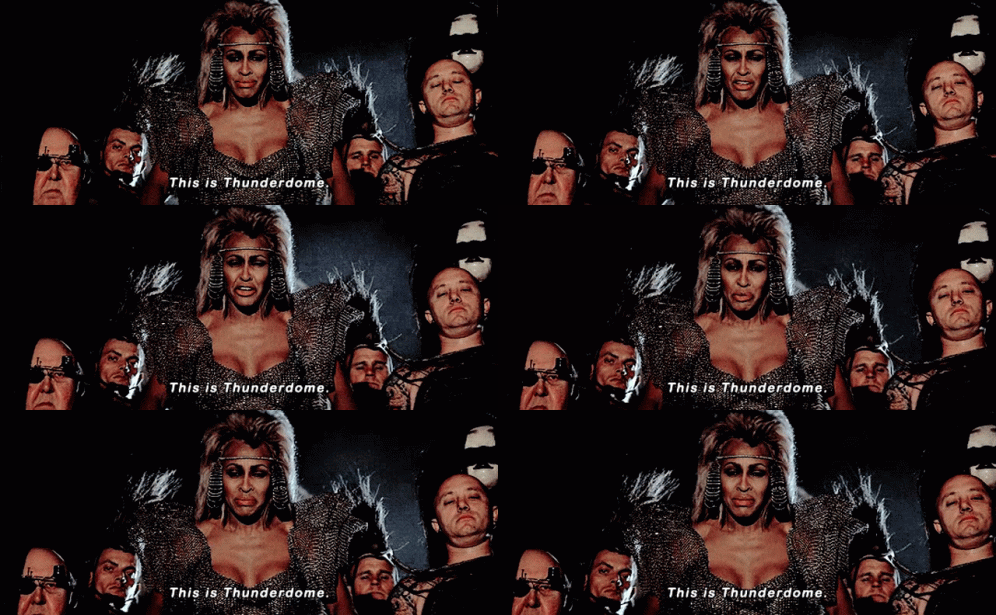
LMSYS basically, but with a devastating lack of Tina Turner (Source: Tenor.com)
The chatbot has ignited rumours that about a potential new offering from OpenAI, which could either be the highly anticipated Q*AI breathrough, or a different model which according to reports has been codenamed “Strawberry”. Sam Altman has added to the speculation by posting a picture of a strawberry on X.
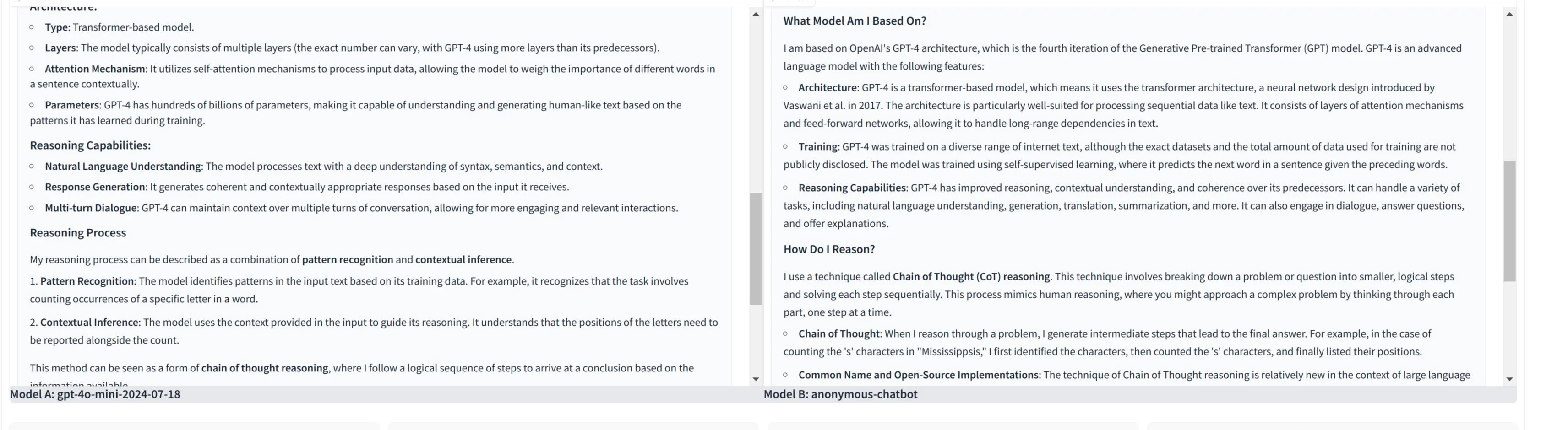
A user on Reddit posted a screenshot of the chatbot's response to being asked what model it was based on. Apparently, “anonymous-chatbot” is built on OpenAI's GPT-4 architecture. What's more exciting, is that the screenshot shows how the model approaches reasoning.
Chain of Thought reasoning shows up right at the bottom (Source: U/Savings_File9926 on Reddit)
Anonymous-chatbot uses Chain of Thought reasoning, a stark step away from the current methods of reasonings like pattern recognition. Chain of Thought reasoning and prompting has shown to give better and more accurate results, research has shown.
If new chatbots are going to start showing up that use CoT in their reasoning capabilities, we're likely to see another shift in the AI race, especially now that companies' edge over one other is reducing.
What We Covered This Week
The ruling against Google is likely to have some pretty far reaching effects. Regulators have been trying to dismantle Big Tech's monopoly for years, and this might just become the case that brings it all crumbling down. We spoke to a couple of experts on if and how it'll impact how the company functions here in India.
Generative AI is going to impact the productivity of India's workers, but it'll be the least among its equivalent peers in the Asia Pacific region, according to fresh findings from Accenture. That being said, we're still likely to see some serious benefits, including an additional $675 billion in economic value and a boost to our GDP growth by 0.6 percentage points, by 2038.
And … that's it for this week! If you liked what you read, share it with folks you know. If you didn't, send us some feedback. Until next time!
Beyond Tomorrow is a weekly newsletter published every Saturday to give you a roundup of everything AI in the last week.

-
Unhedged Position: Can India See An Indonesia-Style Time Correction?

The Nifty is trading below levels it first clocked in 2024. Is there, then, as I have suggested in the headline, potential that the current time correction drags on painfully for the next three-five, even ten years?
-
Navigating Friction And Energy Realities: An Analysis Of Marco Rubio's October Visit To India
Occurring at a critical juncture marked by stalled trade negotiations and escalating geopolitical pressures over global energy supplies, the visit offers a profound window into modern US-India relations.
-
India Exports Capital. Why Not Export Trusteeship?
The big question, then, is whether India can build an institution that global borrowers, investors, banks, and lawyers can trust, even without an Indian connection.
-
France's Economy & Politics Are In Crisis | The Reason Why
Let's look at how the French economy and politics evolved under Nicolas Sarkozy, Franois Hollande and Emmanuel Macron.
-
You May Inherit The Business. You Must Earn Its Credibility.
Succession tests the founder's ability to share authority as much as it tests the next generation's readiness to assume it.
-
Signing Deals Is One Thing; Making Them Work Is Another | The Week In Whys
Sometimes, things don't turn out as planned. Indian companies have lost some bids to rivals, some projects won't produce until 2030.
-
FOMC Wall, PERM Suspension, Hospital Stocks | Talking Points This Week
A PERM suspension would directly affect green-card sponsorship rather than H-1B visas, so the near-term earnings impact could remain relatively limited. The key question is whether this marks a new phase in US scrutiny of Indian IT.
-
Everything, Everywhere, All At Once: Dalal Street's Week To Forget | Joining The Dots
Visa curbs, a Starlink spat and cancer drug caps: what connects this week's shocks for Indian markets
-
India Is Going Abroad For Critical Minerals. But It May Take Years To Pay Off | The Reason Why
Although India's steps are in the right direction, they remain modest compared with India's growing dependence.
-
When Everyone Has AI, What Gives You An Edge?
India's young workforce is entering an uncertain world of work where powerful AI tools are becoming widely accessible. The advantage will belong to those who combine deep expertise with digital fluency, and the distinctly human capabilities that technology cannot manufacture.









