Scan to Download
The Bharatiya Janata Party's bid to hold on to power in India's most-populous state comes as the Covid-19 pandemic enters its third year, and less than 12 months after the deadly Delta-variant wave swept through Uttar Pradesh in April-May 2021.
Soaring prices and joblessness have also been weighing on U.P. voters' minds, reports Bloomberg's Bibhudatta Pradhan. This election outcome could define the political priorities Prime Minister Narendra Modi choses to pursue for the remainder of his second term. Western Uttar Pradesh was among the regions that saw year-long protests to the Modi government's farm laws, before their repeal in November 2021.
The build-up to the U.P. election was marked by a "rising tide of religious polarisation", wrote Bloomberg Opinion's Ruth Pollard. While concurring on the spike in hate speech, fellow Bloomberg columnist Mihir Sharma argued that the election result in U.P. would be determined by voters' assessment of their economic prospects.
The BJP's election manifesto released in February promised that if it returns to power in Uttar Pradesh state it will enact even tougher punishments for those found guilty of indulging in “love jihad” – a reference to an alleged conspiracy of Muslim men luring Hindu women into marriage for conversion.
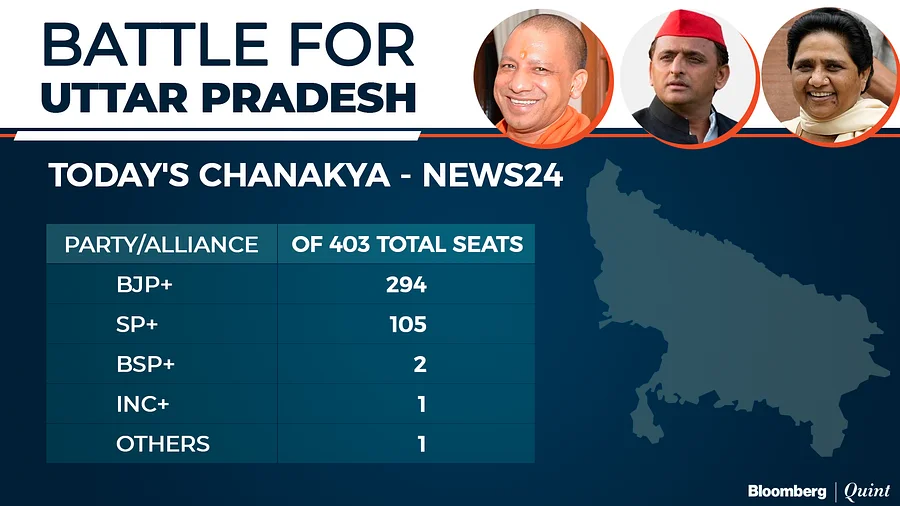
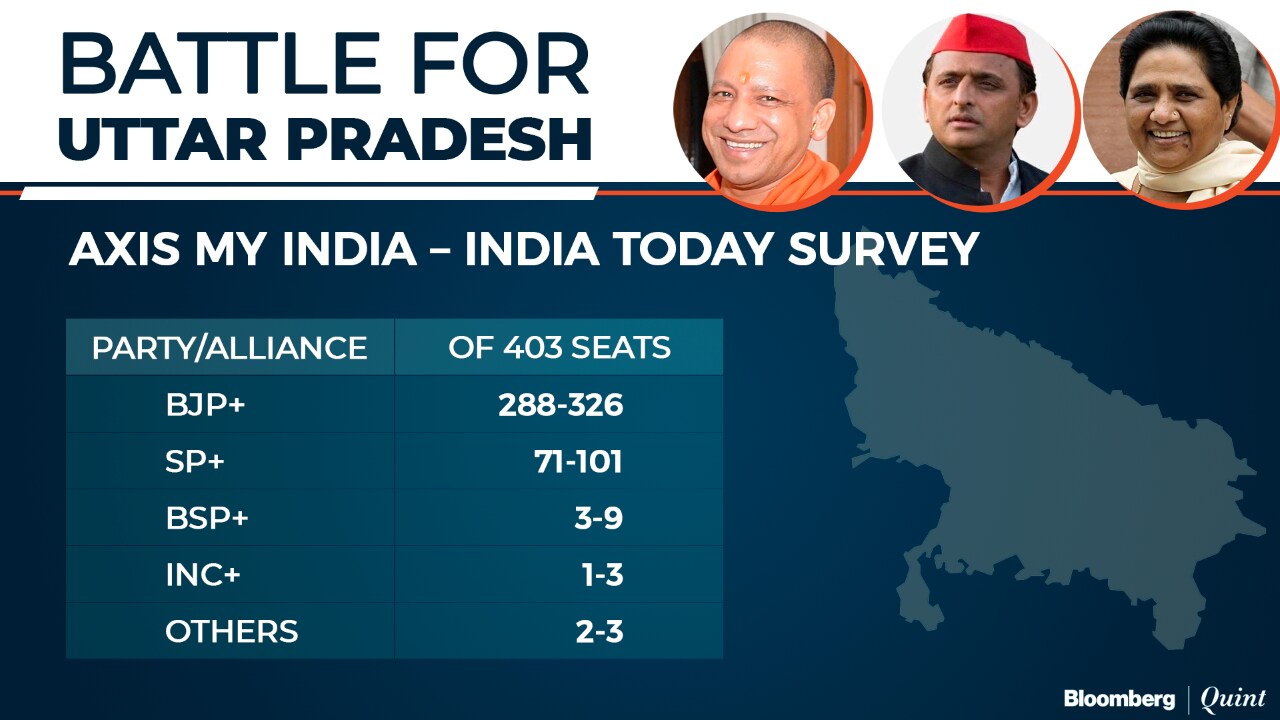
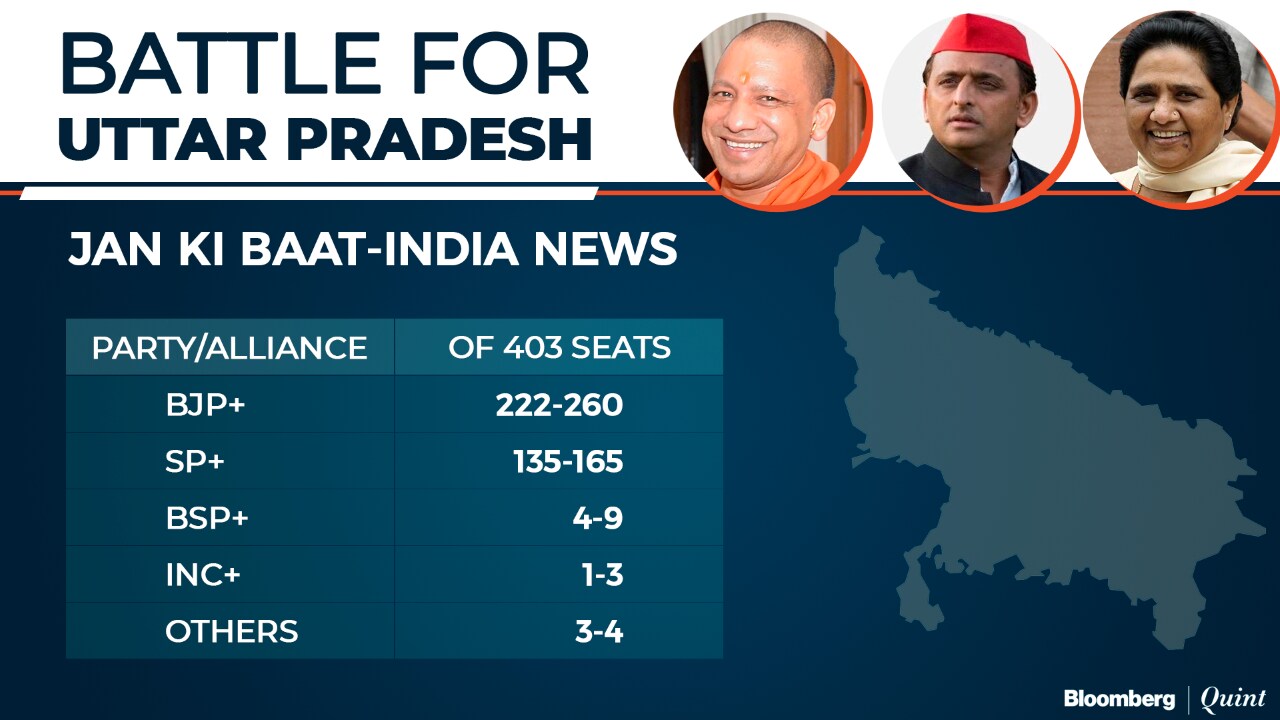
While opinion polls in the lead-up to voting showed the BJP retaining power, they predicted a margin that could be much tighter than the landslide the BJP won in 2017. Five years ago, the National Democratic Alliance won 325 seats in the 403-member assembly, with the BJP notching up a record 312 wins, following which Yogi Adityanath was appointed chief minister.
Data analysis by The Quint's Aditya Menon illustrates the gulf that the BJP's challengers have to bridge to be in contention for power in Lucknow.
The month-long assembly election process in Uttar Pradesh concluded on Monday, with voters in the seventh and final phase of polling casting their ballots in the eastern region of the state. The poll results for the five states will be known on March 10, when the Election Commission of India counts the votes cast beginning 8:00 am on Thursday, a month after the exercise got underway in U.P. on Feb. 10.
With voting over, research agencies and media houses are releasing the findings of exit poll surveys carried out across the five states.
Catch all the live coverage of the exit poll data here, as it is released through the evening.
Essential Business Intelligence, Continuous LIVE TV, Sharp Market Insights, Practical Personal Finance Advice and Latest Stories — On NDTV Profit.